How Discharge Curves Inform Lithium Ion Forklift Battery Selection in Four-Wheel Counterbalance Electric Forklift Fleet Planning
News 21/10/2026
When planning a new or upgraded fleet of four-wheel counterbalance electric forklifts, discharge curve data gives critical insight into lithium ion forklift battery performance under real operating conditions. Many fleet managers overlook this data when choosing battery sizes or chemistries, leading to mismatched capacity, unexpected downtime, or wasted capital investment. A discharge curve plots battery voltage against discharged capacity under specific load and temperature conditions, and its shape directly tells you how the battery will perform during your worksite operations.
Core Discharge Curve Characteristics Impact Lithium Ion Battery Performance
Not all lithium ion forklift batteries produce identical discharge curves. Key characteristics shape overall performance your operation will experience:
- Voltage flatness: Most modern lithium iron phosphate (LFP) batteries, common in four-wheel counterbalance electric forklifts, produce a very flat discharge curve across 80% or more of their total capacity. This flat profile keeps output voltage consistent, which maintains forklift speed and lifting power through most of the shift. Chemistries with steeper declining curves deliver dropping power as capacity depletes, forcing early recharge.
- High discharge rate response: Discharge curves change when the battery delivers power at higher rates, common when lifting heavy loads repeatedly. A high-quality battery will retain most of its rated capacity even at high discharge rates, shown by minimal shift in the discharge curve shape. Batteries that lose significant capacity at high rates cannot handle demanding daily work without extra recharging.
- Temperature response: Discharge curves shift dramatically when operating temperature moves outside optimal ranges. Cold temperatures pull the entire curve down, reducing total available capacity. High temperatures can speed up capacity fade over time, changing the curve shape across the battery’s service life.
These characteristics all tie back to battery design, cell quality, and overall engineering. Understanding how to read these traits from a discharge curve eliminates guesswork during selection.
Key Selection Criteria Derived From Discharge Curve Data
You can use discharge curve data directly narrow down the best lithium ion forklift battery options your four-wheel counterbalance electric forklift fleet. Follow these actionable criteria:
Match Capacity to Your Daily Operational Demand
Calculate your total average energy use per shift, then cross-reference this against the discharge curve. If your operation runs multiple shifts without opportunity charging, you need a battery that delivers full rated capacity at your average discharge rate. The discharge curve will show you how much usable capacity you can actually expect at the load levels your forklifts encounter daily. Avoid overbuying oversized batteries, as this adds unnecessary upfront cost without adding operational benefit. Underbuying capacity leads to unexpected mid-shift shutdowns.
Factor Ambient Temperature Variations At Your Worksite
If your forklifts operate outdoors or in unconditioned warehouse space, you must reference discharge curves collected at temperatures matching your worksite. A curve collected at 25°C (77°F) will not reflect real capacity you get when working in 0°C (32°F) conditions. Look for batteries that retain a high percentage of their rated capacity at your typical lowest operating temperature, shown by a smaller downward shift of the discharge curve.
Align Voltage Range to Your Forklift’s Powertrain Specifications
Every four-wheel counterbalance electric forklift has a defined operating voltage range its powertrain needs deliver full rated performance. If your discharge curve drops below this minimum voltage before the battery reaches your target discharge level, the battery will trigger low-voltage shutdowns long before it is fully depleted. Select batteries that keep voltage within your forklift’s required range through at least 80% of the discharge cycle to maximize usable runtime.
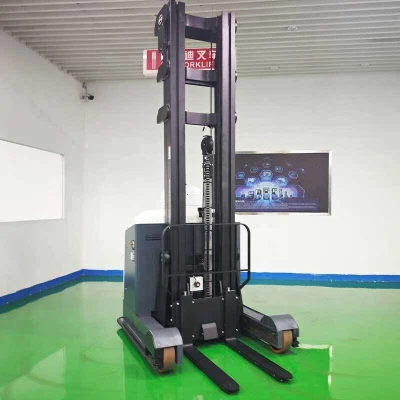
After applying these criteria, you can narrow your shortlist to 2-3 options that match your operational needs. Next step involves confirming compatibility your specific forklift model and confirming any warranty terms before final purchase.
Frequently Asked Questions
Do all lithium ion forklift batteries share the same discharge curve shape?
No. Discharge curve shape changes based on cell chemistry, cell design, battery management system programming, and battery age. New LFP batteries typically have much flatter discharge curves than other lithium chemistries common in material handling equipment. As batteries age, their discharge curves shift to reflect lower total capacity.
Can I use discharge curve data estimate battery lifespan?
Discharge curve data from a new battery can give you clues about long-term performance, but it cannot predict exact lifespan. Repeated testing across charge cycles will show how the curve changes over time, indicating capacity fade. New batteries with flatter discharge curves and higher capacity retention at high discharge rates generally experience slower fade than lower quality alternatives, but actual lifespan depends heavily on your charging habits and operating conditions.
Where can I get discharge curve data my potential lithium ion forklift battery?
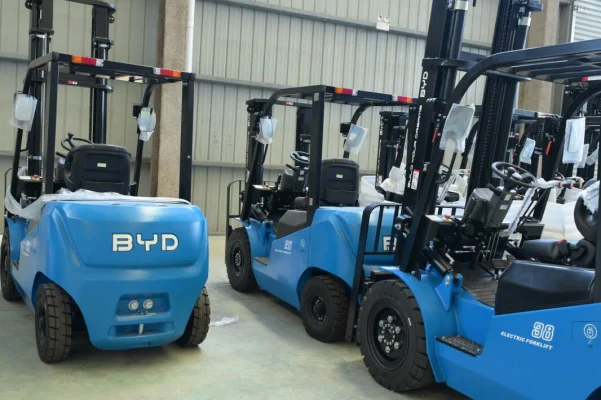
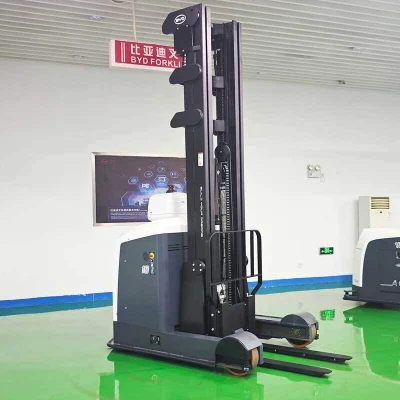
Reputable battery manufacturers and forklift suppliers provide discharge curve data covering different operating conditions upon request. You can share your worksite details and operational requirements to get relevant data matching your use case. With BYD four-wheel counterbalance electric forklifts, you can share your specific worksite conditions get matching discharge and performance data from our team.