Lithium Ion Forklift Sizing: Matching Battery Capacity and Charging Strategy to Duty Cycle in Four-Wheel Counterbalance Electric Forklifts
News 21/10/2026
Incorrect battery sizing on lithium ion four-wheel counterbalance electric forklifts leads to two common costly outcomes: oversized batteries tie up unnecessary capital, while undersized batteries cause mid-shift downtime and premature cell degradation. This guide walks through step-by-step sizing principles to align your battery capacity and charging approach with your unique duty cycle requirements.
Key Duty Cycle Factors That Impact Sizing
Daily Operating Hours
Longer daily operating hours increase total energy consumption. Most four-wheel counterbalance electric forklifts operate between one and two shifts daily. Shift length directly determines total energy draw your battery must deliver each full day.
Average Load Weight
Heavier average loads increase energy use per travel and lift cycle. Operations moving materials at or near your forklift’s maximum rated load require higher battery capacity than operations moving lighter loads most time.
Operating Environment
Cold environments reduce effective lithium ion battery output. Facilities maintained below 10 degrees Celsius require adjusted capacity ratings to offset this effect. Sloped work areas also increase energy consumption during travel, adding to total daily energy demand.
How To Match Battery Capacity To Your Duty Cycle
Start by calculating your estimated daily energy consumption. Use this simple framework to get a baseline:
- Count total daily operating hours your forklift will run
- Multiply hours by average energy consumption per hour matching your forklift’s typical load range
- Add a 10-15 percent safety buffer to account for unexpected peak demand or environmental factors
Match your calculated total energy requirement to available lithium battery capacity options from BYD. Lithium ion batteries support deeper discharge than older lead acid options, so you do not need large excess capacity to preserve cell lifespan. Oversizing beyond the 15 percent buffer adds unnecessary upfront cost without meaningful benefit to operation.
For four-wheel counterbalance electric forklifts used in high intensity daily operations, confirm your battery’s rated capacity matches your actual continuous output needs. Some low capacity options may meet total daily energy requirements but cannot sustain peak continuous draw during extended busy periods.
Align Charging Strategy With Your Operational Setup
Your charging approach directly influences required battery capacity. Different operational setups work better with different strategies:
| Operational Setup | Recommended Charging Strategy | Impact On Battery Sizing |
|---|---|---|
| Single shift operation, 6-8 hours daily | Opportunity charging during breaks, full charge overnight | Base capacity matching calculated daily demand works well |
| Two shift operation, 16 hours daily | Opportunity charging during break periods, full charge between second shift and first shift next day | Slightly larger capacity adds buffer between charging opportunities |
| Three shift continuous operation | Battery swap during scheduled shift changes | Each battery sized to cover one full shift energy demand |
Opportunity charging lets you use smaller capacity batteries because you top up energy during natural breaks in operation. This reduces upfront battery cost while meeting total daily energy needs. If your facility has available charging space near your work area, this approach delivers the best balance of cost and reliability.
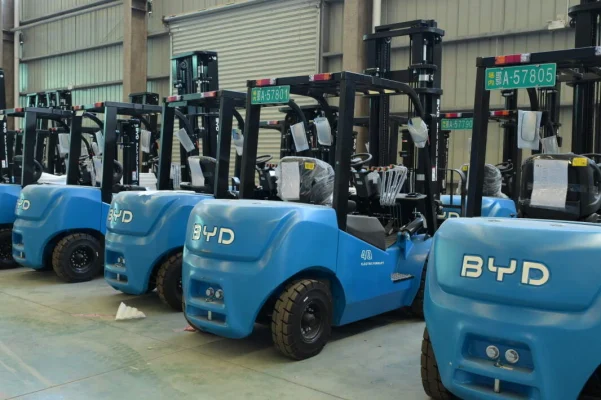
Battery swap works well when you cannot interrupt operation mid-shift for charging. You need enough space to store and charge spare batteries, and equipment to handle swap procedures safely.
Common Sizing Mistakes To Avoid
- Matching lead acid battery sizes directly: Lithium ion batteries deliver higher usable capacity from the same rated size. You do not need the same capacity you would use with a lead acid battery, so downsizing appropriately cuts cost.
- Ignoring environmental factors: Cold storage or sloped facilities increase energy demand, skipping this adjustment leads to undersized batteries and unexpected downtime.
- Overbuying capacity “just in case”: Excess capacity beyond the 15 percent safety buffer increases upfront cost without adding operational value. Lithium ion technology already delivers more consistent performance than older battery chemistries.
- Failing to coordinate charging and sizing: If you plan regular opportunity charging, you do not need a large oversized battery. Align your sizing decision with your actual planned charging routine.
Always confirm your sizing decisions against your specific operational data, not generic industry rules of thumb. Generic recommendations rarely match your unique facility needs.
Frequently Asked Questions
Can I resize an existing lithium ion forklift battery?
Most lithium ion batteries integrated into four-wheel counterbalance electric forklifts come in fixed capacity configurations from the manufacturer. Modifying capacity after installation requires full battery replacement, so correct sizing during initial purchase avoids costly changes later.
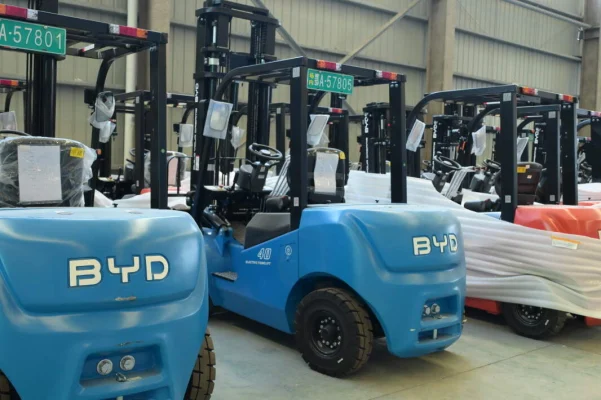
Does higher battery capacity affect my forklift’s lifting performance?
Larger capacity batteries add additional weight to the forklift’s counterbalance. This can slightly increase maximum load rating in some cases, but it also adds extra weight that increases energy consumption during travel. You only need to account for this effect when your sizing choice deviates significantly from the manufacturer’s standard recommended size.
What should I do if my duty cycle changes after purchase?
First review your charging strategy to see if adjustments can accommodate changed demand. If your energy demand increased beyond what your existing battery can support with optimized charging, share your updated operational details with our team to discuss available options matching your current four-wheel counterbalance electric forklift model.
If you need help sizing your BYD four-wheel counterbalance electric lithium ion forklift, share your facility’s duty cycle details with our team to get customized guidance.