Electric Forklift 3 Ton Price in India: Comparing Lithium Battery Capacity and Charger Options Across Four-Wheel Counterbalance Quotes
News 31/10/2026
Quotes you receive as an electric forklift 3 ton price in India rarely describe the same machine, even when two suppliers name the same load rating. The gap usually sits in two line items that buyers skim past: the lithium battery’s usable capacity and the charger’s power and control features. A quote with a smaller pack and a basic overnight charger can look cheaper than one with a larger pack and a faster charger, yet the two trucks will not do the same work across a shift. This comparison explains what those differences mean, which questions to put to each supplier, and how to compare four-wheel counterbalance electric forklift offers on equal terms.
Why Two 3 Ton Quotes Can Differ So Much
A 3 ton rating describes rated load, not the full working package. Around that rating, suppliers can vary battery chemistry and capacity, charger type and output, and the auxiliary equipment included in the offer. Each choice changes the purchase price and the daily operating routine.
Because published prices vary by configuration, region, duties and currency movement, this article does not give a fixed rupee figure. Treat any single number you see online as a starting reference only, and ask each supplier to state exactly what the price covers.
When you compare offers, put these items side by side:
- Battery chemistry, nominal voltage and rated capacity, plus usable capacity at the end of discharge
- Whether the battery is included in the quoted price or priced separately
- Charger type, output power, connector standard and whether it is included
- Rated load, load center and lift height the quote assumes
- Warranty terms covering the truck, battery and charger separately
Battery Capacity: The Number That Shapes Shift Coverage
Rated capacity versus usable capacity
Battery capacity is usually stated in kilowatt-hours or amp-hours at a given voltage. The figure on a datasheet is a rated value. Usable capacity is lower once you respect the depth-of-discharge limit the battery management system enforces, and it depends on temperature, age and how the truck is driven. Ask the supplier to confirm both the rated figure and the recommended depth of discharge, and do not assume the full rated number is available every shift.
How to estimate the pack size you need
You can build a rough estimate without trusting a marketing claim:
- Estimate the truck’s average power draw during your heaviest duty cycle, in kilowatts.
- Multiply by the number of working hours between charging opportunities.
- Add a margin to respect the recommended depth of discharge.
For example, if a truck draws an average of 4 kW over a 6 hour shift, it uses about 24 kWh of energy. If the recommended depth of discharge is 80 percent, the pack should be roughly 30 kWh or larger. These are illustrative figures, not product specifications. Your actual draw depends on load weight, lift height, travel distance, floor conditions and operator behaviour, so confirm the real duty cycle with the supplier before fixing a pack size.
Opportunity charging and multi-shift work
Lithium batteries generally accept partial charging without the memory effects associated with older lead-acid practice, which makes opportunity charging practical during breaks. That flexibility does not remove the need to size the pack correctly. A truck on a two-shift schedule with short charging windows may need a larger pack or a second battery, and the quote should show which option is included. Ask whether the battery management system allows charging at any state of charge and what charging current it accepts.
Charger Options and What They Change
Charger power and charging time
Charger output determines how quickly a pack returns to service. A higher-power charger shortens the charging window but may require a stronger electrical supply and a higher-capacity connection at your site. Ask each supplier to state the charger’s output power, the input voltage and phase it needs, and the expected charging time from a given depth of discharge. Without those three figures, a charging-time claim is not comparable.
Charger features that affect daily operation
- Charge profile control: the charger should match the battery chemistry and follow the battery management system’s limits.
- Connector compatibility: confirm the plug type matches the truck and any existing charging infrastructure.
- Mounting and location: wall-mounted and floor-standing chargers need different space and ventilation arrangements.
- Monitoring: some chargers report charge data that helps you track battery health and plan replacements.
Electrical supply and site readiness
Before comparing charger prices, check what your facility can supply. A charger that exceeds your available power will need electrical work, and that cost belongs in your comparison. Ask the supplier what input supply the quoted charger requires and whether installation is included.
Comparing Quotes on Equal Terms
A practical comparison checklist
Use one table to record each offer, so differences are visible rather than buried in prose. The table below shows a structure, not real prices or specifications.
| Item to confirm | Quote A | Quote B |
|---|---|---|
| Rated load and load center | Supplier to state | Supplier to state |
| Lift height quoted | Supplier to state | Supplier to state |
| Battery chemistry and voltage | Supplier to state | Supplier to state |
| Rated and usable capacity | Supplier to state | Supplier to state |
| Recommended depth of discharge | Supplier to state | Supplier to state |
| Charger output and input supply | Supplier to state | Supplier to state |
| Battery and charger included? | Supplier to state | Supplier to state |
| Warranty terms by component | Supplier to state | Supplier to state |
An empty cell is a question to send back, not a gap to fill with an assumption.
Total cost across the working life
Purchase price is only one part of the comparison. Consider charging energy, battery replacement timing, charger maintenance and any electrical upgrades. Do not accept savings percentages or payback figures unless the supplier shows the assumptions behind them. Where such figures are offered, ask which duty cycle, energy tariff and battery life they assume.
Questions to send each supplier
- What duty cycle and shift pattern does the quoted configuration suit?
- What battery capacity is needed to complete my shift without a mid-shift charge?
- What charger output and electrical supply does the quote assume?
- Are battery, charger and installation included in the price?
- What documentation and warranty terms come with the truck?
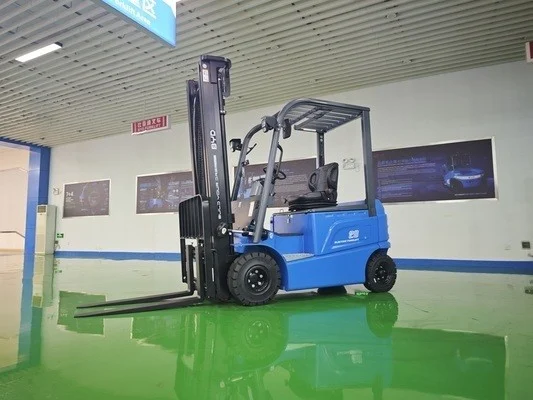
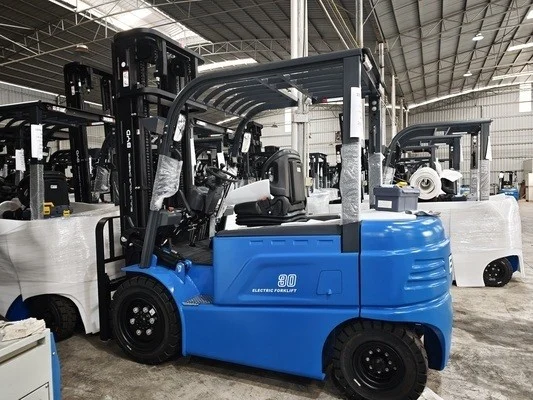
If you are evaluating a four-wheel counterbalance electric forklift, share your actual load weight, lift height, aisle width, floor and ramp conditions, shift pattern and charging windows. Those details let a supplier propose a configuration that matches your work rather than a generic package.
Frequently Asked Questions
Does a larger lithium battery always raise the price of a 3 ton electric forklift?
Usually a larger pack costs more than a smaller one, but the difference depends on chemistry, voltage and what else is included. Compare the battery line item separately rather than judging the total alone.
Can I use my existing charger with a new lithium battery truck?
Only if the charger’s charge profile and connector match the battery and its management system. Confirm compatibility with the supplier before relying on existing equipment.
How do I know if a quote’s battery capacity suits my shift?
Estimate your energy use from average power draw and working hours, then check the recommended depth of discharge. Ask the supplier to confirm the duty cycle their figure assumes.
Is a faster charger always the better choice?
Not necessarily. A faster charger can shorten charging windows, but it may need a stronger electrical supply and a higher connection cost. Match charger power to your shift pattern and site supply.