Selecting a Lithium Ion Forklift Attachment Package: Hydraulic Flow, Lift Height, and Load Center Checks
News 30/10/2026
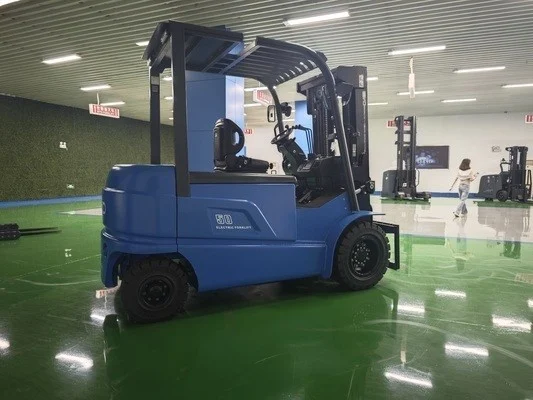
A lithium ion forklift attachment package only works when the attachment, the hydraulic system, the carriage, and the load chart agree with one another. Buyers often choose a clamp, side shifter, or fork positioner from a catalog and then discover that the truck cannot supply enough oil flow, that the extra lift height reduces capacity, or that the load center has moved forward enough to exceed the rated load. This guide explains the three checks that decide whether a package is workable: hydraulic flow, lift height, and load center. It treats the four-wheel counterbalance electric forklift as the default platform, because that is the type most often fitted with these attachments in general factory and warehouse handling.
Start with the Attachment, Then Match the Truck
Attachment selection usually begins with the load, not the truck. Identify what the attachment must do: grip and rotate a drum, clamp a carton, shift a pallet sideways, or reposition forks without leaving the seat. Each function adds weight, moves the center of gravity, and consumes hydraulic capacity. Write those requirements down before comparing models.
A practical sequence looks like this:
- Describe the load: dimensions, weight range, surface, and how it must be handled.
- Choose the attachment type and confirm its own weight and lost load capacity with the attachment maker.
- Check the truck’s rated capacity at the actual load center and lift height, not at the nominal rating.
- Verify hydraulic flow, pressure, and the number of hydraulic functions the truck can supply.
- Confirm the carriage class, mounting, and hose routing fit the truck.
This order matters because the attachment changes the machine’s geometry. A heavy clamp mounted on a standard carriage can shift the effective load center forward by a significant distance, and that shift must be reflected in the capacity calculation. Attachment manufacturers publish a derating figure or a revised capacity chart; use that data rather than estimating.
Hydraulic Flow and Pressure Checks
Hydraulic flow determines how fast an attachment opens, closes, rotates, or shifts. Pressure determines how much force it can apply. Both must meet the attachment maker’s stated requirements, and both must be measured at the attachment, not assumed from the truck’s brochure.
Flow: Enough Oil at the Right Moment
Most attachments specify a minimum and a recommended flow range. Too little flow makes the attachment sluggish and can prevent it from clamping with full force within an acceptable time. Too much flow can cause overheating, erratic movement, or damage to seals if the attachment is not rated that high. When a truck supplies oil through an auxiliary valve, confirm the flow available at that valve and whether it is proportional to engine or motor speed.
On electric trucks, flow comes from a hydraulic pump driven by the traction or a dedicated motor. The available flow can differ between a standard and a high-flow configuration, and it can change with battery state of charge. Ask the supplier to state the flow at the valve, at a defined pressure, and under a defined test condition. If that figure is unavailable, treat the flow as unconfirmed and plan a measurement before committing.
Pressure and Function Count
Count the hydraulic functions the attachment needs. A simple side shifter uses one function; a fork positioner may use two; a rotating clamp may use two or three. The truck must have enough auxiliary valves and a control arrangement that lets the operator work the attachment and the lift together safely. Confirm the rated pressure of the auxiliary circuit against the attachment’s maximum working pressure. A circuit that runs at higher pressure than the attachment allows needs a pressure-reducing arrangement, and that decision belongs with the truck and attachment suppliers together.
Oil Cleanliness and Temperature
Attachments add cylinders, hoses, and valves, and each is a place where contamination can enter. Confirm the filtration and oil cleanliness requirement the attachment maker states, and check that the truck’s system meets it. Also confirm the expected oil temperature range in the application; continuous clamping or rotation can raise oil temperature, and the attachment’s seals and hoses must suit the working range.
Lift Height and Load Center Checks
Lift height and load center are linked. As the carriage rises, the truck’s stability margin changes, and as the load center moves forward, the allowable load falls. Both effects appear on the capacity chart, and both must be read at the real working point.
Reading the Capacity Chart Correctly
A capacity chart gives rated load at a stated load center and lift height. If the actual load center is farther forward than the chart’s reference point, the rated load is lower than the headline number. If the load must be raised above the chart’s highest stated height, the rated load may be lower again, or the height may be outside the rated range. The attachment’s own weight and forward offset must be included in this calculation.
The load center itself is measured from the vertical face of the forks to the center of gravity of the load, including the pallet or container. A load that overhangs the fork tips, or a bulky item whose mass sits well forward, has a larger load center than a neat cube of the same weight. Measure the real load rather than assuming a standard pallet dimension.
Free Lift, Overhead Guards, and Doorways
Check the lift height the task actually needs, then add clearance. If the truck must enter a trailer or pass under a rack beam, the collapsed height and free lift matter as much as the maximum height. An attachment adds depth and can reduce the space between the carriage and the mast, so confirm that the combined unit still fits the openings on site. Also confirm that the overhead guard and any added attachment components do not reduce the operator’s view to an unsafe degree; visibility is part of the selection, not an afterthought.
Stability and Ground Conditions
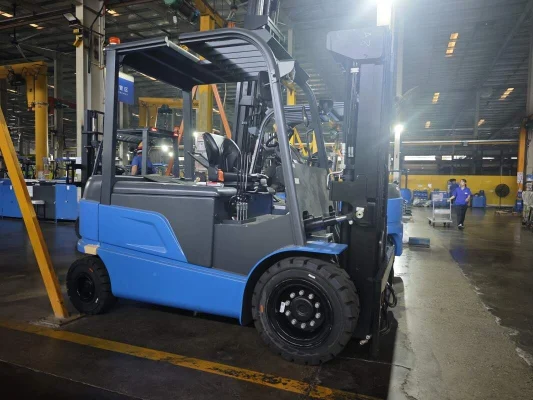
Capacity charts assume a level surface and a defined operating condition. Slopes, uneven floors, and outdoor surfaces change the picture. A four-wheel counterbalance electric forklift is a common general-purpose choice in factories and warehouses, but its suitability still depends on the floor, the aisle width, the gradient, and the duty cycle. Where the floor is rough or the route includes ramps, describe those conditions when asking the supplier to confirm the configuration.
Common Mistakes and Questions to Ask Before Ordering
Most failed attachment projects trace back to a small number of omissions. The list below is a practical checklist rather than a set of rules that fits every site.
- Using the truck’s nominal capacity without applying the attachment derating.
- Assuming brochure flow equals flow at the auxiliary valve.
- Ignoring the attachment’s own weight in the load calculation.
- Forgetting to check hose routing, clearance, and carriage class.
- Overlooking the effect of battery state of charge on hydraulic speed.
- Buying an attachment rated below the actual working pressure or flow range.
When requesting a quotation, provide the load weight and dimensions, the required lift height, the load center, the floor and aisle conditions, the shift pattern, and the charging arrangement. These details let the supplier confirm whether a four-wheel counterbalance electric forklift with the proposed attachment meets the duty, and which parameters still need measurement. If a figure cannot be verified from published data, ask what test condition produced it and whether it applies to your site.
The safest conclusion is a conditional one: a package is suitable when the attachment’s flow and pressure requirements are met at the valve, the capacity chart is read at the real load center and lift height, and the site conditions match the assumptions behind the chart. Any one of those checks left open is a reason to pause before ordering.
Frequently Asked Questions
Can any attachment be fitted to a lithium ion forklift?
No. Fit depends on hydraulic flow and pressure, carriage class, mounting, hose routing, and the resulting capacity at the working load center. A lithium ion truck can be a good platform because the battery supports opportunity charging and steady hydraulic supply, but the attachment still has to match the truck’s published hydraulic and capacity data. Confirm compatibility with both suppliers before purchase.
Does a higher lift height always reduce capacity?
Not always in the same way, but lift height is a variable on the capacity chart and capacity generally falls as height increases. The exact relationship depends on the truck model and mast. Read the chart at the height you will actually use, and remember that the attachment’s weight and forward offset change the starting point of that calculation.
How do I measure load center on an odd-shaped load?
Measure from the vertical face of the forks to the estimated center of gravity of the complete load, including any pallet or container. For irregular loads, the center of gravity may sit farther forward than the physical middle. If the result is close to the chart’s limit, treat the load as over the limit until a more precise assessment is available.
What if the truck’s flow is lower than the attachment recommends?
The attachment may still function, but more slowly and possibly with reduced clamping force. Whether that is acceptable depends on the duty cycle and the attachment maker’s minimum requirement. Do not assume the combination is safe because it moves; ask the attachment supplier to confirm the minimum flow and the consequences of operating below it.