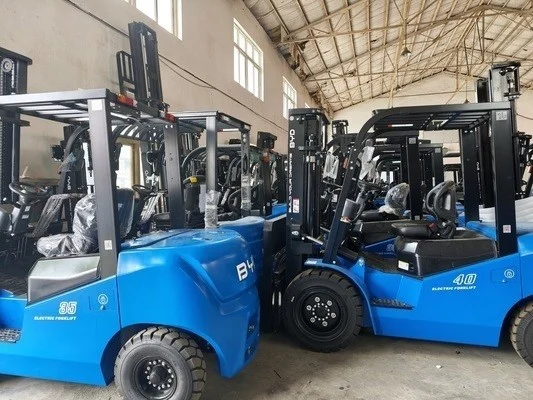
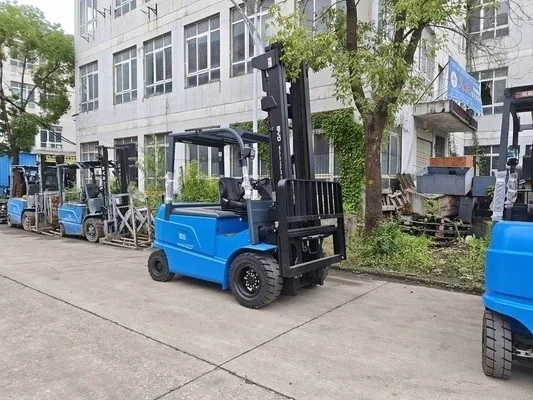
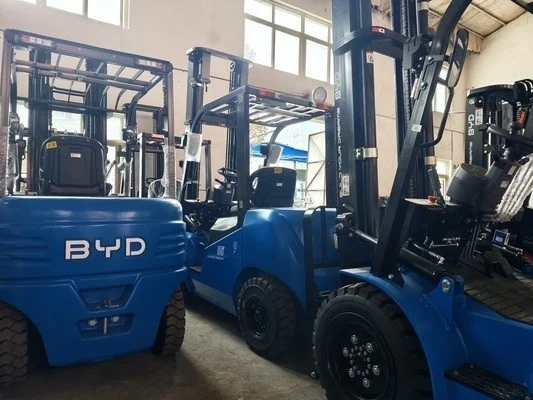
Electric Forklift Price: How Load Center and Attachment Weight Ratings Change Four-Wheel Counterbalance Quotes
News 05/11/2026
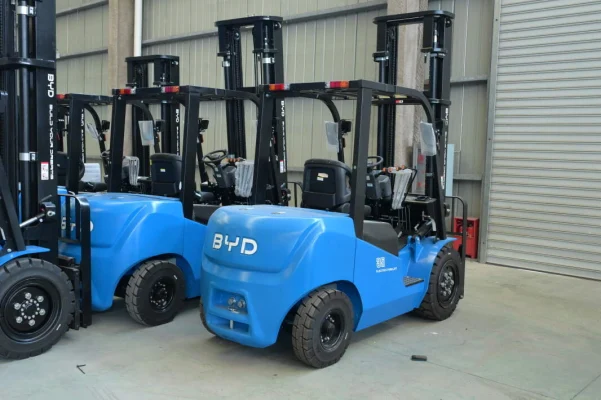
An electric forklift price quote is only meaningful when it states the load center and attachment weight ratings the truck is built to handle. Two four-wheel counterbalance electric forklifts with the same nominal capacity can carry very different real loads once you account for where the load sits and what hardware hangs on the carriage. This procurement guide explains how those two ratings shift the configuration—and therefore the quote—so you can ask suppliers the right questions and compare offers on equal terms.
Why Nominal Capacity Alone Cannot Anchor a Quote
Forklift capacity is normally published at a defined load center, often 500 mm or 600 mm from the fork face, with a standard carriage and no attachment. Move the load farther out or add an attachment, and the truck’s allowable load drops. A quote that lists only “3-ton capacity” leaves the real working limit undefined.
When you request pricing on a four-wheel counterbalance electric forklift, describe the actual load: weight, dimensions, how far its center sits from the fork face, and any attachment. Suppliers then size the mast, counterweight, and hydraulic system to that duty rather than to a generic figure. This is also where battery voltage, charger type, and duty cycle enter the discussion, because a heavier-duty configuration usually carries a higher price.
Load Center and Attachment Ratings: What Changes in the Configuration
Load center effects
A load center beyond the rated distance reduces safe capacity. The machine must resist a larger overturning moment, so the manufacturer may specify a derated capacity, a heavier counterweight, a stronger mast, or a different chassis. Any of these can move the price. Ask each supplier to confirm the rated capacity at your actual load center, not only at the standard one.
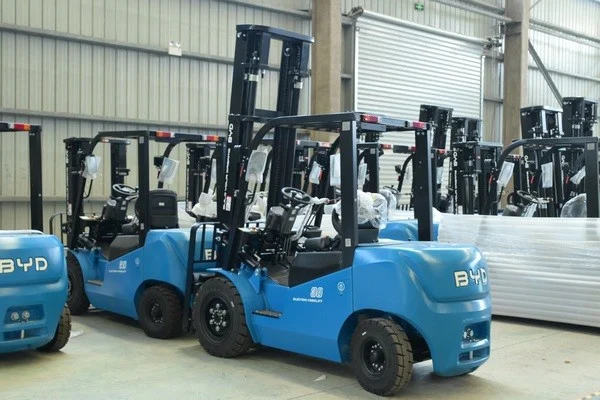
Attachment effects
Attachments add weight ahead of the carriage and move the effective load center outward. Common examples include sideshifters, fork positioners, clamps, and rotators. Each has its own weight and center-of-gravity effect, and the combined result determines the residual capacity. A quote should identify the attachment, its weight, and the resulting capacity rating. If the attachment is supplied separately, clarify who confirms compatibility and who accepts responsibility for the derated capacity.
Information to put in the inquiry
- Maximum load weight and load dimensions
- Load center distance from the fork face
- Attachment type, weight, and mounting
- Required lift height and mast type
- Ground conditions, aisle width, and any ramps or slopes
- Shift pattern and charging window
These details let a supplier propose a defensible configuration. Where a data sheet is silent, ask which parameters still need confirmation and under what test conditions they were established.
Reading a Quote and Verifying the Configuration
Compare offers line by line. A lower headline price may reflect a lighter mast, a smaller battery, or a capacity rating taken at a shorter load center than your duty requires. Check that each quote states:
| Item to verify | Why it matters |
|---|---|
| Rated capacity and load center | Defines the real working limit |
| Attachment weight and residual capacity | Prevents overloading after installation |
| Battery voltage, capacity, and charger | Affects runtime and total cost |
| Mast type and lift height | Changes structure and price |
| Delivery, warranty, and service terms | Affects lifecycle cost |
At acceptance, confirm the data plate matches the quoted rating, check that the attachment is the specified model, and verify the load chart reflects your load center. If any figure is unclear, request the manufacturer’s technical documentation rather than relying on verbal assurances.
Frequently Asked Questions
Does a longer load center always raise the price?
Not automatically. It changes the required configuration, and the price effect depends on whether a derated capacity, heavier counterweight, or stronger mast is needed. Ask the supplier to explain the basis of the rating.
Can I add an attachment after delivery?
Possibly, but the truck’s capacity must be reassessed. Adding weight ahead of the carriage reduces residual capacity, so confirm the new rating with the manufacturer before use.
Why do two quotes differ so much?
They may assume different load centers, attachments, batteries, or mast heights. Normalize the specifications before comparing prices.
What should I send with my inquiry?
Load weight and dimensions, load center, attachment details, lift height, aisle and ground conditions, and shift pattern. These let the supplier quote a configuration suited to your work.