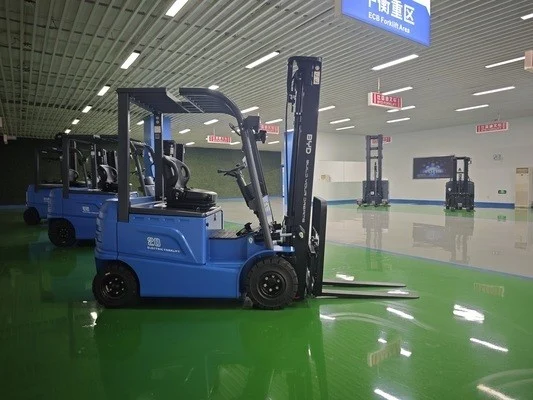
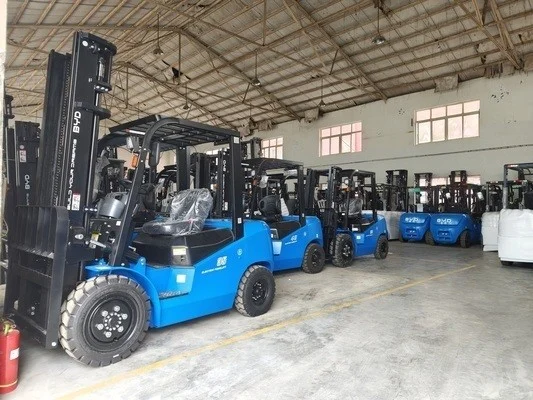
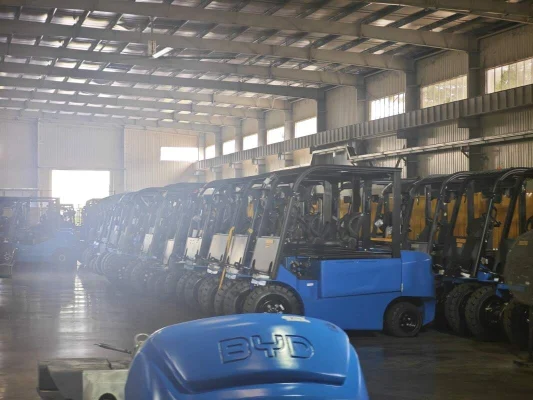
Four-Wheel Counterbalance Electric Forklift: Verifying Floor Loading and Wheel Configuration Before Delivery
News 31/10/2026
Floor loading and wheel configuration are the two checks most often left until the forklift is already on the truck. Both are difficult and expensive to correct after delivery. The floor check confirms the building can carry the truck and its load; the wheel check confirms the tires suit the surface, the aisle, and the duty cycle. This article explains how a buyer of a four-wheel counterbalance electric forklift can verify both points using documents, site measurements, and a pre-delivery checklist. It focuses on general selection practice and does not quote model-specific figures, because those must come from the manufacturer’s technical data sheet.
Why Floor Loading and Wheels Deserve a Separate Review
A counterbalance truck carries most of its weight on the front axle, and the load sits ahead of that axle. The resulting point loads at the wheels can be far higher than the truck’s nominal capacity suggests, especially when a load is lifted and the mast is extended. Warehouse floors, mezzanine edges, dock levellers, and older concrete slabs may not have been designed with those concentrated loads in mind. Wheel choice interacts with the same problem: a tire that spreads load over a larger contact area behaves differently from a hard, narrow one, and the surface finish, joints, ramps, and drainage all affect how the truck tracks and brakes.
Treat these as engineering checks, not paperwork. A delivery acceptance that ignores them can leave you with a truck that cannot legally or safely operate in the intended area, or one that damages the floor over time.
Floor Loading: What to Confirm and How
Start with the manufacturer’s load data
Ask the supplier for the axle load figures at the wheels, not just the rated capacity. The relevant documents are the technical data sheet and the load chart. Confirm the conditions behind those figures: rated load, load center distance, lift height, any attachment fitted, and whether the values are static or include a dynamic allowance. If the supplier cannot provide wheel-by-wheel loads, that is a gap to resolve before ordering, not after.
Compare against the actual floor
Obtain the structural information the building owner or facility engineer holds: slab thickness, reinforcement, sub-base, joint layout, and any posted floor capacity limits. Where no reliable data exists, a structural engineer should assess the slab against the proposed wheel loads. Pay particular attention to:
- Slab joints and cracks, where concentrated loads can propagate damage.
- Mezzanine and upper floors, which usually have stricter limits than ground slabs.
- Dock levellers and ramps, which see dynamic loads during transitions.
- Drainage channels and trench covers, which may not be rated for wheel loads.
- Expansion joints and repaired patches, which can behave differently from the main slab.
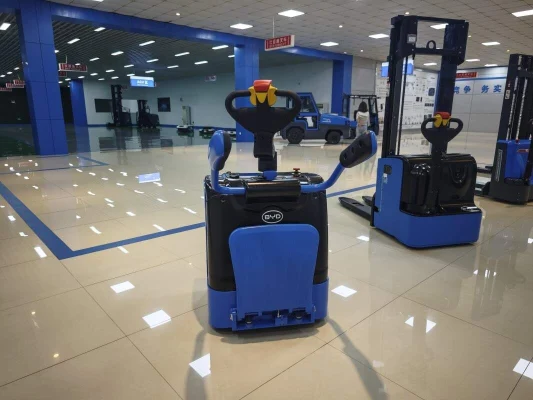
As a general rule, the truck plus its rated load plus any attachment weight should be compared against the floor’s stated capacity with a margin agreed with the structural engineer. Do not assume a floor that carries a loaded pallet truck will carry a counterbalance forklift; the load path is different.
Check the route, not just the parking spot
Floor loading is a route question. Walk the intended paths: storage aisles, transfer points, inclines, doorway thresholds, and the charging area. Note any point where the truck will turn under load, since turning shifts load between wheels. Record these locations so the structural review covers them.
Wheel Configuration: Matching Tires to Surface and Duty
Understand the options in general terms
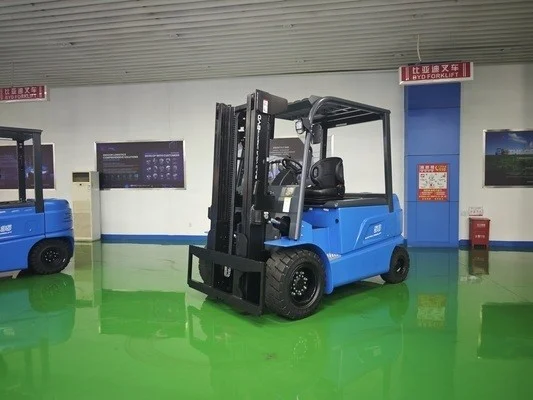
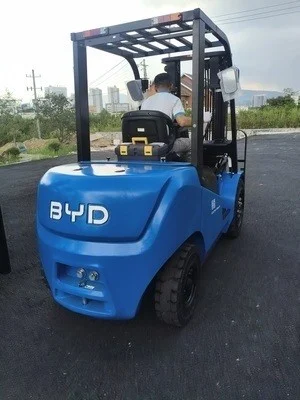
Counterbalance electric forklifts are commonly offered with pneumatic, cushion, and solid (press-on) tires. Pneumatic tires suit uneven outdoor surfaces and absorb shock; cushion tires suit smooth indoor floors and tight turning; solid tires resist wear and puncture in demanding yards. Each type changes the contact patch and therefore the floor pressure and the ride. The right choice depends on the surface, the aisle width, the load, and how many hours the truck runs each shift.
Match the tire to the operating environment
Indoor smooth concrete with tight aisles usually points toward cushion or solid tires, provided the floor can take the resulting pressure. Outdoor yards, gravel, or mixed surfaces may call for pneumatic tires, but check whether the truck is rated for those conditions. Cold-store, wash-down, and food-handling areas raise additional questions about tire compound, traction on wet floors, and cleaning. Ask the supplier which tire options are available on the specific model and what each does to the truck’s dimensions and load capacity.
Verify dimensions that affect the aisle
Wheel configuration changes the truck’s overall width, turning radius, and ground clearance. Confirm these figures on the data sheet with the chosen tires fitted, then compare them with the measured aisle width, including clearance at racking uprights and doorways. If the aisle is too narrow, a four-wheel counterbalance truck may not be the right tool; state that limit honestly rather than forcing the application.
Check the charging and parking area
Wheel and floor checks should extend to where the truck will stand and charge. Confirm the floor condition there, ventilation, and the space needed to maneuver. For lithium battery models, ask the supplier about charging temperature and storage conditions; do not assume a value without the manufacturer’s data.
Pre-Delivery Checklist and Supplier Questions
The table below summarises the key items to confirm before the truck ships. It separates what is normally standard, what is optional, and what must be confirmed with the manufacturer, without quoting figures that this article cannot verify.
| Item | Why it matters | What to confirm | Status |
|---|---|---|---|
| Wheel-by-wheel axle loads | Determines floor pressure | Load chart, load center, lift height, attachment weight | Manufacturer data required |
| Floor capacity data | Confirms the slab can take the load | Slab thickness, reinforcement, posted limits, engineer’s assessment | Site data required |
| Tire type and size | Affects traction, floor pressure, aisle fit | Available options on the chosen model, effect on dimensions | Confirm with supplier |
| Overall width and turning radius | Confirms aisle clearance | Values with the selected tires fitted | Manufacturer data required |
| Battery charging conditions | Affects charging area design | Charging temperature range, ventilation, space | Confirm with supplier |
| Route survey | Catches thresholds, ramps, joints | Measured aisle widths, slopes, floor defects | Site measurement |
Before delivery, ask the supplier these questions in writing:
- What wheel loads apply at rated capacity, and at what load center and lift height?
- Which tire options are available on this model, and how do they change width, turning radius, and capacity?
- What documents will be supplied at handover: data sheet, load chart, and operating manual?
- What are the charging and storage temperature limits for the battery as configured?
- Which items are standard, which are optional, and which need factory confirmation?
If you share your actual aisle widths, floor data, load weights, lift heights, and shift pattern, the supplier can help match a four-wheel counterbalance electric forklift configuration to your site. Where the data is incomplete, agree a handover check that measures the truck and verifies the floor assessment before the unit enters service.
Frequently Asked Questions
Can I use the rated capacity as the floor load figure?
No. Rated capacity describes what the truck can lift under defined conditions; it does not describe the pressure at each wheel. Ask the manufacturer for axle or wheel load data at the relevant load center and lift height.
Do pneumatic tires always reduce floor pressure?
They usually spread load over a larger contact area than hard tires, but the actual pressure depends on tire size, inflation, load, and surface. Confirm the figures with the supplier rather than assuming a benefit.
What if the aisle is too narrow for a four-wheel counterbalance truck?
Then the application may need a different truck type or a revised layout. A four-wheel counterbalance truck has a defined turning radius and width; do not assume it will fit an aisle designed around a narrower machine.
Which documents should be ready at delivery?
At minimum, the technical data sheet, load chart, operating manual, and battery charging instructions as configured. Keep the floor assessment and route survey on file so the acceptance check can reference them.