Planning a Lithium Forklift 3 Ton Purchase: Questions to Resolve Before Requesting Quotes
News 09/11/2026
A lithium forklift 3 ton purchase usually stalls because the buyer and the supplier are not comparing the same thing. A nominal 3,000 kg rating means little until load center, lift height, attachment, aisle width and duty cycle are known. Before you request quotes, settle the points below and put them in writing. That way every supplier prices the same requirement, and you can judge the offers on configuration rather than headline capacity.
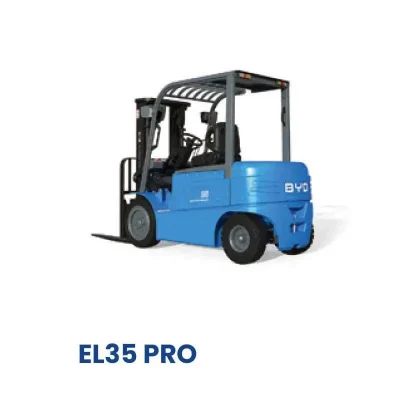
This guide assumes a four-wheel counterbalance electric forklift, the type this site sells in its BYD range. It is written as general procurement guidance, not as a quotation or a statement of specific model performance.
Define the Load Before You Define the Truck
The rated capacity on a data plate applies under stated conditions. Change the load center or add an attachment, and the usable capacity changes. Gather these facts first.
Load weight, shape and center
- Heaviest load in normal use, plus a margin your safety assessment supports.
- Load dimensions and where the center of gravity sits relative to the fork face.
- Whether loads are palletized, clamped, or handled with a non-standard attachment.
- Any load that is off-center, long, or unstable during transport.
If your heaviest load is close to 3,000 kg at a load center greater than the one stated on the data plate, a 3 ton rating may not be enough. Ask the supplier to confirm the derated capacity at your actual load center and lift height, using their published technical data. Do not accept a verbal assurance in place of a capacity chart.
Lift height and mast choice
State the maximum fork height you need and the overhead clearance available. A higher lift generally affects mast type, free lift and residual capacity, so the same 3 ton truck may not suit every racking layout. Note whether you need full free lift to enter containers or low doorways, and whether the mast must pass under sprinklers or beams.
Match the Truck to the Building and the Shift
Building geometry and working patterns decide whether a counterbalance truck is practical at all, and which configuration fits.
Aisle width, floor and ramps
- Measured aisle width, including the narrowest point between racking and walls.
- Floor condition and any joints, drains or slopes on the route.
- Ramp gradient and length, if the truck must climb between levels.
- Door widths, clear heights and turning space at loading docks.
A four-wheel counterbalance electric forklift is a common general-purpose choice in factories, warehouses and loading areas, but it needs adequate aisle width and a suitable floor. If your aisles are very narrow, discuss the constraint openly with the supplier rather than assuming a standard truck will fit. Where a different truck category is genuinely better suited, ask about the trade-offs instead of forcing a counterbalance unit into an unsuitable layout.
Duty cycle and charging routine
Describe a typical shift: hours of actual driving, number of lift cycles, and whether operation is continuous or intermittent. Then describe the charging window. Lithium batteries generally allow opportunity charging, but the practical pattern depends on charger availability, shift breaks and the supplier’s instructions. Confirm the battery capacity, charger type and charging time from the manufacturer’s data rather than relying on general claims.
Operator and environment factors
Note whether operators need side shift, fork positioners, or specific fork lengths. Mention cold storage, dusty areas, outdoor yards or wet surfaces, because these affect enclosure ratings and options. Also state who will operate and maintain the truck, so training and service access can be included in the discussion.
What to Put in the Quote Request and How to Check It
A clear request saves a round of questions and makes offers comparable. Include the following.
| Item | What to state |
|---|---|
| Load | Maximum weight, dimensions, load center, attachment |
| Lift | Maximum fork height, free lift need, overhead clearance |
| Site | Aisle width, floor, ramps, door heights, indoor or outdoor use |
| Work pattern | Shift length, lift cycles, charging window and charger location |
| Configuration | Mast type, forks, attachments, lighting, operator aids |
| Service | Delivery, commissioning, training, spare parts and response expectations |
When quotes arrive, check that each one repeats your stated load center and lift height, lists the battery and charger explicitly, and states what is excluded. Ask which capacity chart applies and request the relevant page from the manufacturer’s technical documentation. Confirm warranty terms, service coverage and lead time in writing. Where a figure is missing, mark it as unconfirmed rather than filling the gap with an assumption.
If you are considering a BYD four-wheel counterbalance electric forklift, share your actual load, lift height, aisle measurements and shift pattern with us. We can then discuss configuration against the published specifications we hold, and tell you plainly where a requirement needs further verification.
Frequently Asked Questions
Is a 3 ton rating enough if my heaviest load is 2,800 kg?
It depends on load center, lift height and any attachment. A rating is valid only under the conditions stated on the capacity chart. Ask the supplier to confirm capacity at your actual load center and height before you commit.
Can a four-wheel counterbalance electric forklift work in narrow aisles?
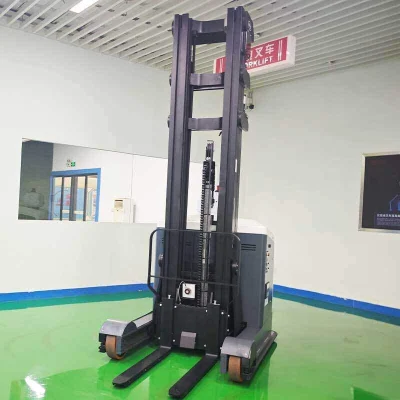
It can work in many layouts, but aisle width must be measured and compared with the truck’s dimensions and turning requirements. Very narrow aisles may call for a different approach; discuss the constraint rather than assuming a standard unit fits.
What charging information should I request?
Ask for battery capacity, charger type, charging time and the supplier’s guidance on opportunity charging. Match this against your shift breaks and available power supply, and treat any figure not in the documentation as unconfirmed.
Which details are most often missing from quote requests?
Load center, maximum lift height, measured aisle width and the charging window. Adding these four items usually removes the most common source of misquoted configurations.