How To Choose The Right Battery And Charging Configuration On A Four-Wheel Counterbalance Electric Forklift In Cold Storage
News 07/11/2026
Cold storage duty exposes a four-wheel counterbalance electric forklift to conditions that quickly separate a workable battery and charging plan from an expensive mistake. The right configuration depends less on a single headline number than on how the truck will actually operate: ambient temperature, shift length, opportunity charging habits, available power, and the space you can dedicate to charging equipment. This guide walks through the decision points that matter when you specify a battery and charger on a cold storage forklift, and it flags the parameters you must verify with your supplier before committing.
Match Battery Chemistry And Capacity To Cold-Room Duty
Battery selection starts with the duty cycle, not with a default pack size. In a cold store, the truck may run continuously in sub-zero air, move between freezers and docks, or spend part of each shift outside the cold envelope. Each pattern changes how much usable capacity you need and how the battery behaves.
Lead-acid versus lithium-ion in cold conditions
Both lead-acid and lithium-ion batteries are used in cold storage, but they respond differently to low temperatures. As a general material property, lead-acid batteries lose usable capacity as temperature falls, and their charging acceptance is reduced when the battery is cold. Lithium-ion packs generally tolerate cold discharge better, but charging below certain temperatures can damage cells unless the battery management system limits or heats the pack. These are general tendencies; the actual limits must come from the battery manufacturer’s data sheet.
When you compare options, ask the supplier to state the minimum and maximum operating temperatures, the charging temperature window, and whether the pack includes internal heating. Do not assume a pack that performs well at room temperature will deliver the same capacity at -20 °C without written confirmation.
How to size capacity from shift data
Capacity sizing should be based on measured or estimated energy consumption per shift, not on the truck’s nominal rating. Collect the following inputs before choosing a pack:
- Average and peak load weight, plus the attachment weight if one is used.
- Lift height and the number of lifts per hour.
- Travel distance per shift and floor conditions.
- Hours of actual operation, excluding idle time.
- Ambient temperature range the truck will see, including any warm-weather docking.
With those inputs, the supplier can recommend a capacity that leaves a sensible margin. A pack sized only to the average shift may leave no reserve for busy days, cold-weather capacity loss, or battery aging. Conversely, an oversized pack adds cost and weight without improving throughput.
Voltage, compartment, and physical fit
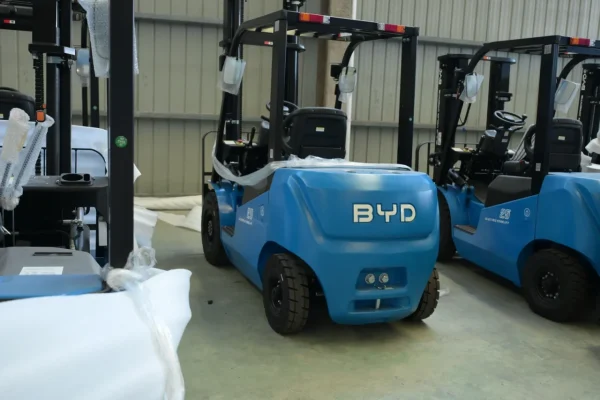
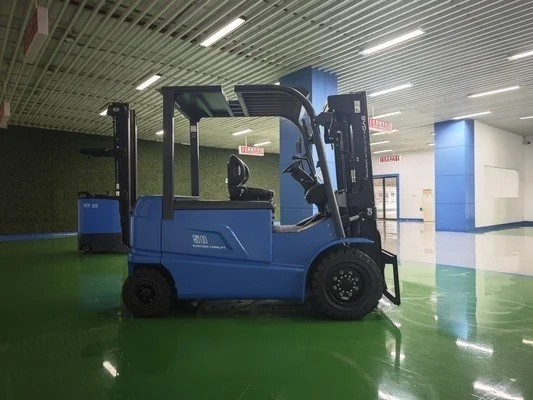
The battery voltage and dimensions must match the truck’s compartment and connector. On a four-wheel counterbalance electric forklift, the battery is a structural counterweight, so the replacement pack must meet the specified weight and center of gravity. Never substitute a lighter or differently shaped pack without written approval from the truck manufacturer. Confirm the connector type, cable length, and restraint system as part of the specification.
Design A Charging Configuration That Fits The Cold Store
Charging is where many cold storage projects run into trouble, because the charger location, power supply, and operating routine all interact. The goal is a charging plan that keeps trucks available without forcing batteries outside their safe temperature window.
Charger placement and temperature
Chargers are often installed in a warmer area outside the freezer, with trucks returning to a charging bay. This keeps the charger within its rated ambient range and gives the battery a chance to warm before charging. If charging must occur inside the cold room, verify that both charger and battery are rated for that environment. Do not assume standard chargers are suitable; condensation and low temperatures can affect electronics and charging behavior.
Allow enough space around the charging area for safe connection, cable management, and ventilation. Lead-acid charging can release hydrogen, so ventilation and clearance requirements from the charger and battery documentation must be followed. Lithium-ion packs require their own safety provisions, including clearance from combustible materials and compliance with the battery manufacturer’s instructions.
Opportunity charging versus full-shift charging
Opportunity charging means connecting the truck during breaks and idle periods rather than waiting for a full discharge. It can reduce the need for battery changes, but it is not suitable for every chemistry or routine. Lead-acid batteries generally require a full charge and cooling period to avoid overheating and reduced life, so frequent partial charging must be checked against the battery supplier’s guidance. Lithium-ion packs often accept partial charging more readily, but the battery management system and charger must be configured correctly.
Decide which model fits your operation:
- Single-shift with full charge: one pack per truck, charged between shifts. Simpler, but requires a charging window long enough to complete the cycle.
- Multi-shift with battery change: two packs per truck, with a change area and spare-pack charging. Adds handling equipment and space.
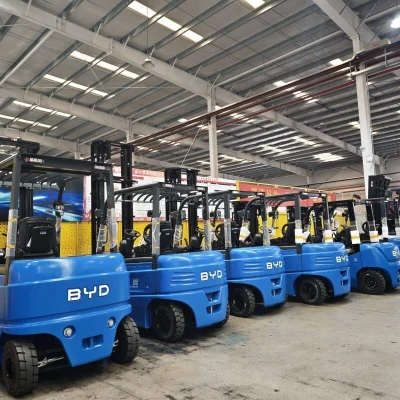
- Opportunity charging: short, frequent connections during breaks. Requires compatible chemistry, charger, and operator discipline.
Each model has trade-offs in capital cost, floor space, and labor. The right choice depends on your shift pattern and the charging time the battery supplier confirms.
Power supply and electrical capacity
Confirm the available voltage, phase, and current at the charging location. High-capacity chargers may require upgrades to the electrical service. Ask the charger supplier for the input current and any derating that applies at elevated ambient temperatures. If several trucks charge at once, the combined load may exceed the existing supply, so plan the charging schedule around the available capacity.
Verify The Parameters That Decide Suitability
Before you approve a battery and charging configuration, obtain written confirmation of the following points. This checklist is a practical way to avoid surprises after delivery.
| Parameter | What to confirm | Why it matters |
|---|---|---|
| Operating temperature range | Battery and charger minimum and maximum ambient temperatures | Cold-room and dock conditions may fall outside standard ratings |
| Charging temperature window | Minimum battery temperature at which charging is allowed | Charging a cold pack can reduce capacity or damage cells |
| Usable capacity at low temperature | Capacity derating curve or statement from the battery supplier | Prevents undersizing and unexpected mid-shift shutdowns |
| Battery weight and dimensions | Match to truck compartment and counterweight specification | Affects stability and compliance with the truck design |
| Charger input power | Voltage, phase, current, and any supply upgrades needed | Ensures the charger can operate on site |
| Ventilation and safety | Hydrogen ventilation (lead-acid) or lithium-ion safety clearances | Required by the manufacturer and local codes |
Also ask how the battery management system behaves in cold conditions: does it block charging, reduce charge current, or activate heating? The answer determines whether your charging schedule is realistic. If the supplier cannot provide a written statement, treat the configuration as unverified.
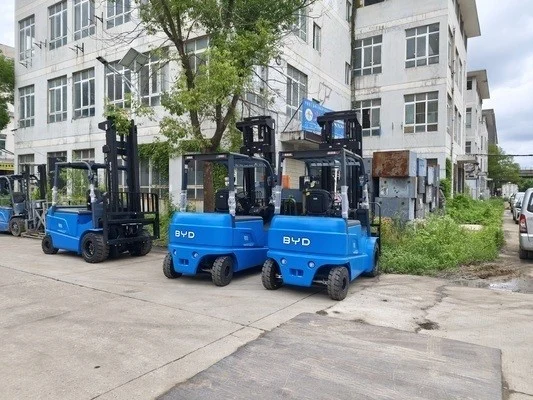
Because cold storage layouts vary widely, a configuration that suits one facility may not suit another. Share your actual operating profile—load weight, lift height, shift pattern, temperature range, and charging location—with the forklift supplier so the battery and charger can be specified together. If you are considering a four-wheel counterbalance electric forklift, ask for the cold-storage options that the manufacturer supports, including any heated battery compartments or cold-rated components, and confirm which models are available in your market.
Frequently Asked Questions
Can a standard lead-acid battery be used in a freezer?
It can be used only if the battery manufacturer confirms the operating temperature range and the charging routine accounts for cold conditions. Standard lead-acid batteries lose usable capacity in low temperatures, and charging a cold battery may be restricted. Without a written rating, do not assume suitability.
Is lithium-ion always the better choice cold storage?
Not necessarily. Lithium-ion packs often handle cold discharge better than lead-acid, but charging below the manufacturer’s minimum temperature can cause damage unless the system includes heating or charge inhibition. The better choice depends on shift pattern, charging infrastructure, and the supplier’s confirmed temperature limits.
How do I decide between opportunity charging and battery changes?
Start with the charging time the battery supplier states and the length of your breaks. If partial charging is permitted and the charger can deliver enough energy during breaks, opportunity charging may reduce handling. If not, a spare-pack change routine may be more reliable. Confirm both options against the battery documentation.
What information should I give a supplier to get an accurate recommendation?
Provide the load weight and attachment weight, lift height, number of lifts per hour, travel distance, shift length, ambient temperature range, charging location, and available electrical supply. Also state whether the truck will move between cold and warm areas. These inputs let the supplier size the battery and charger without guessing.