Selecting Tire and Floor Surface Specifications When a Lithium Forklift 3 Ton Works on Concrete, Ramps, and Yard Transitions
News 03/11/2026
A lithium forklift 3 ton rating describes capacity, not traction. The tires and the surfaces they meet decide whether that capacity stays usable across smooth concrete, sloped ramps, and the mixed ground at yard transitions. Selection starts with the duty cycle: where the truck travels, how often it climbs, what it carries, and how clean the floor stays. This guide explains how to match tire type and floor condition to those three zones, which trade-offs matter, and what to verify before ordering a four-wheel counterbalance electric forklift.
Start With the Route, Not the Tire Catalog
Tire choice follows the route. Map every trip a truck makes during a shift before comparing tread patterns or compounds. A route that stays indoors on sealed concrete calls for different priorities than one that crosses a dock apron, climbs a ramp, and returns through a yard gate several times an hour.
Record these route facts first:
- Surface types and their approximate share of each trip: sealed concrete, coated concrete, asphalt, compacted gravel, dirt, or grating.
- Ramp length, gradient, and whether the slope is indoors, outdoors, or exposed to rain.
- Transition points where surfaces change, including door thresholds, expansion joints, dock plates, and drainage channels.
- Load weight and load center, plus any attachments that shift the center of gravity.
- Floor condition: dust, oil, water, loose grit, or debris from production.
- Shift length and charging windows, since battery weight and wheel loading stay constant while tire condition changes.
These facts determine which tire characteristics matter. They also reveal where a route may exceed what a four-wheel counterbalance electric forklift should handle, which is better discovered before purchase than after.
Matching Tire Types to Concrete, Ramps, and Yard Surfaces
Forklift tires generally fall into cushion (press-on) and pneumatic or pneumatic-shaped categories, with solid and resilient variants. Each behaves differently on hard floors, slopes, and uneven ground. The table below summarizes general material behavior, not verified performance of any specific model. Confirm the exact tire offering, size, and load rating against the manufacturer’s technical data before specifying.
| Tire category | Typical strengths | Typical limits | Surfaces to check carefully |
|---|---|---|---|
| Cushion / press-on | Low profile, tight turning, smooth ride on sealed floors | Limited ability to absorb shocks; poor on loose or uneven ground | Yard gravel, rough asphalt, curb transitions |
| Solid pneumatic-shaped | Puncture resistance with a softer ride than cushion tires | Heavier than cushion options; heat buildup on long runs | Long ramps, sustained travel, hot yard pavement |
| Pneumatic / air-filled | Good shock absorption on uneven outdoor surfaces | Puncture risk; requires pressure checks | Debris-strewn yards, nails, sharp gravel |
| Non-marking compounds | Reduced marking on light-colored or coated floors | Often a different wear profile than standard compounds | Food, pharma, and clean-warehouse floors |
On smooth concrete, cushion tires usually suit indoor work because they keep the truck low and maneuverable. Where the same truck must cross a yard, a solid pneumatic-shaped tire often balances puncture resistance with ride comfort. Air-filled tires absorb rough ground well but demand inspection routines. Non-marking compounds matter when floor appearance is part of the operation, but confirm their load and wear characteristics with the supplier.
Ramps add a traction question. Climbing and descending shifts weight between axles, and a wet or dusty slope reduces grip. Tire tread and compound matter, but so do ramp surface texture, drainage, and housekeeping. A ramp that stays wet should be treated as a traction constraint regardless of tire type.
Yard transitions are the most overlooked zone. A single threshold where smooth concrete meets rough asphalt can concentrate impact and side loading on tires and wheels. Observe how trucks cross it: slowly and square, or at an angle and at speed. The answer influences tire choice as much as the surface itself.
Floor Condition, Load, and Slope: The Constraints That Decide
Tire specifications only work within the limits of the floor and the load. Check four constraints together.
Floor strength and flatness
Concrete slabs, joints, and coatings have load limits and wear patterns. Heavy wheel loads concentrated at a small contact patch stress floors more than distributed loads. Confirm the slab design and coating compatibility with the facility team, especially where a three-ton truck will operate near joints or on mezzanine edges. Uneven slabs, spalled edges, and raised joints accelerate tire wear and can destabilize a load.
Load center and attachments
Rated capacity assumes a stated load center. A load held farther from the carriage reduces usable capacity, and side shifters or clamps change the geometry further. Tire type does not correct an overloaded condition. Verify the actual load center and any attachment derating against the manufacturer’s data plate.
Ramp gradient and surface
Slope affects both traction and stability. Confirm the maximum gradient the truck is rated to climb with the intended load, and check it against the actual ramp. Descending a ramp with a load also demands braking control, which is a truck specification question rather than a tire one. Keep ramp surfaces clean and drained; oil or loose grit on a slope is a hazard no tire fully solves.
Housekeeping and debris
Dust, metal chips, and oil change the friction available at the tire-floor interface. A cleaning routine and floor repair program often deliver more safety value than a tire upgrade. Where debris is unavoidable, puncture-resistant tire constructions deserve attention, but they do not replace sweeping and inspection.
Specification Checklist Before You Order
Use this checklist to turn route observations into a purchase specification. It also gives the supplier the information needed to recommend a configuration rather than guess.
- Route map: surface types, distances, ramp locations, and transition points.
- Load data: typical and maximum load weight, load center, and attachments.
- Ramp data: gradient, length, surface material, and weather exposure.
- Floor data: slab condition, coatings, joints, and cleaning routine.
- Tire preference: cushion, solid pneumatic-shaped, or pneumatic, plus marking requirements.
- Operating pattern: shift length, trips per shift, indoor/outdoor split, and charging windows.
- Verification items: tire size and load rating, rated ramp capability with the intended load, and wheel and tire availability as service parts.
Treat items 1 through 3 as mandatory. A supplier cannot responsibly confirm a tire specification without them. Where data is missing, request the manufacturer’s technical documentation and confirm the figures on the data plate of the exact configuration offered.
For a hypothetical example, consider a warehouse that receives pallets indoors, moves them up a short internal ramp, and occasionally crosses a paved yard to a covered staging area. The concrete section favors a cushion or solid pneumatic-shaped tire, while the yard crossing argues against a low-profile cushion tire unless the transition is smooth and slow. The honest answer depends on measured ramp gradient, yard surface condition, and trip frequency, which is why the route map comes first.
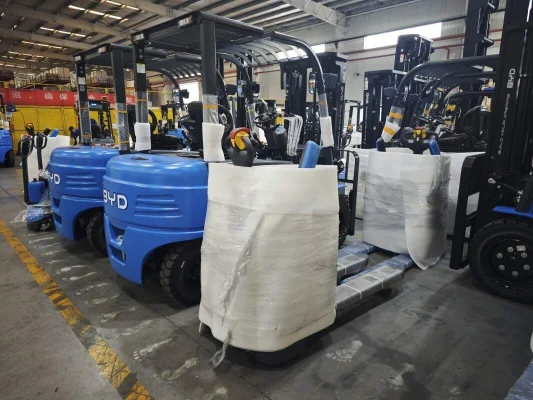
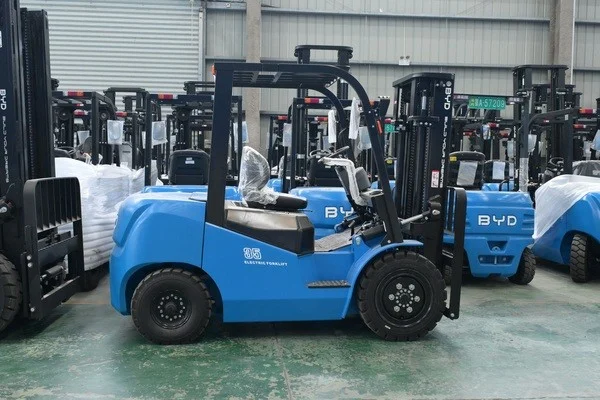
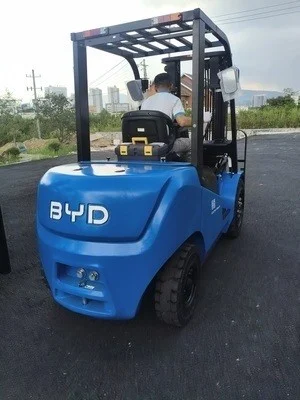
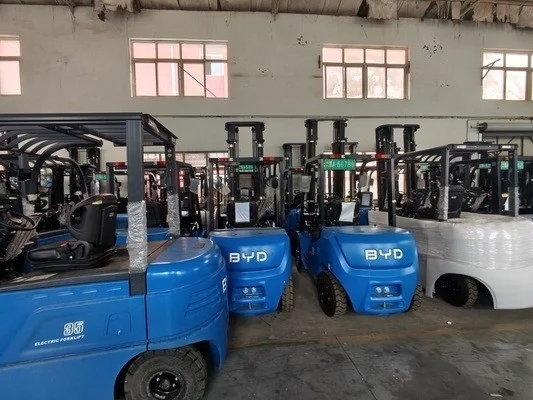
If your operation involves a four-wheel counterbalance electric forklift and you are unsure how tire choice interacts with your concrete, ramp, and yard conditions, share your route details, load weight, and lift height with our team. We can discuss configuration options within our BYD four-wheel counterbalance electric forklift range using available technical data, without guessing at figures the documentation does not support.
Frequently Asked Questions
Can one tire type handle concrete, ramps, and yard transitions?
Sometimes, but it involves trade-offs. A solid pneumatic-shaped tire is often a practical compromise where a truck must work indoors and cross paved yards, but it may not suit very tight indoor aisles or very rough ground. The right answer depends on the measured route, floor condition, and load data.
Does a 3 ton rating mean the truck can climb any ramp fully loaded?
No. Rated capacity and rated gradeability are separate specifications, and both depend on load center and configuration. Confirm the maximum gradient the truck is rated to climb with your intended load against the manufacturer’s technical data and the data plate.
How do I know whether my concrete floor is suitable?
Check slab condition, joints, coatings, and any posted load limits with the facility team. Look for cracking, spalling, and uneven joints along the actual route. A floor assessment is a facility engineering question, not a tire question, and it should be resolved before specifying the truck.
Are non-marking tires necessary?
Only where floor marking matters, such as light-colored or coated floors in clean environments. Non-marking compounds can differ in wear and load characteristics, so confirm the specific tire’s ratings with the supplier rather than assuming equivalence.