Narrow Aisle Warehouse Operations Shape Electric Forklift Truck Model Selection and Maneuverability Requirements
News 15/10/2026
Building materials production and storage facilities often rely on narrow aisle layouts maximize vertical storage space, accommodate bulky lumber, panels, and prefabricated components. This layout directly impacts which electric forklift truck models work well, as maneuverability becomes one of the most critical selection factors. This guide matches operational needs to viable model options, outlines key specifications to verify, and addresses common selection questions relevant this industry.
Key Electric Forklift Types Matching Narrow Aisle Building Materials Storage
Not all electric forklift types adapt well tight clearances common narrow aisle building materials warehouses. Below outlines each viable option, its applicable conditions and inherent limitations:
Stand-Up Reach Trucks
This is one of the most common options narrow aisle building materials storage. Their compact chassis and retractable mast design allow operation in much tighter spaces than standard counterbalance models. They work well facilities with high-bay racking holding palletized building materials such as cement bags, insulation panels, and packaged hardware.
Primary limitations: Operators must receive specialized training operate safely. Maximum load capacity drops as lift height increases, so you must confirm this relationship with your supplier before purchase.
Three-Wheel Counterbalance Electric Forklifts
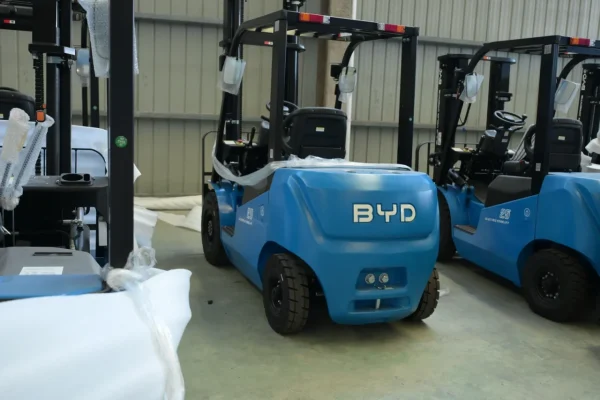
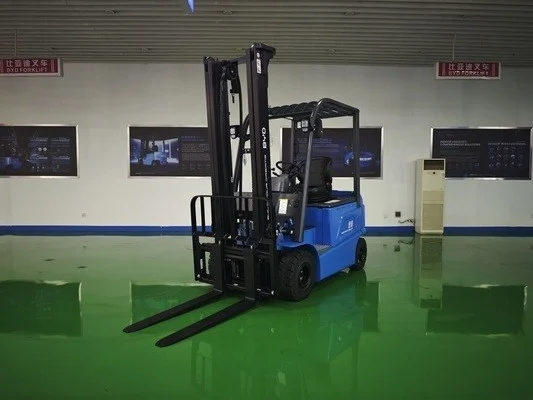
These models work well facilities that need both transport of bulk building materials from receiving docks to storage, and placement onto narrow aisle racking. Their tighter turning radius, compared four-wheel counterbalance models, fits narrower aisles while still handling heavier loads common building materials.
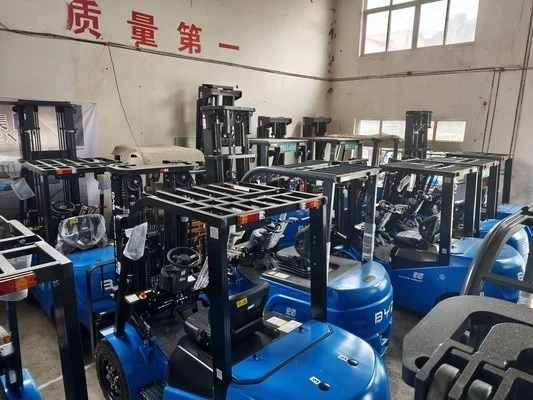
Primary limitations: Maximum lift height tops out lower than most reach trucks, so they do not work well very high-bay narrow aisle racking systems. They also require slightly wider aisle clearance than reach trucks.
Articulated Electric Forklifts
These models suit very tight aisles holding long bulky building materials such as lumber, piping, or pre-cut framing. Their articulated chassis allows forks position loads without turning the entire truck, making them ideal handling long loads in limited space.
Primary limitations: Upfront purchase cost exceeds other narrow aisle options, and operators need specialized training leverage their full maneuverability benefits.
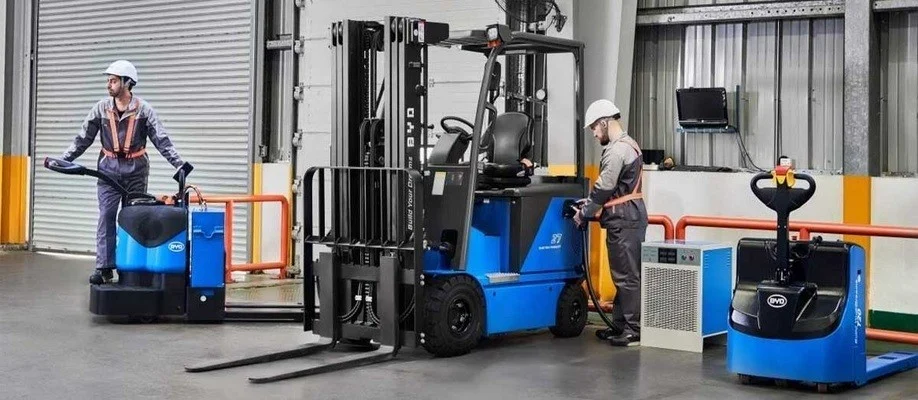
Core Specifications Impacting Maneuverability and Operational Safety
Building materials storage has unique load and layout requirements that make specific specifications more critical than general warehouse operations. The table below summarizes key items evaluate, along industry concerns and confirmation steps:
| Parameter | Industry Concern | Items Confirm With Supplier | Configuration Tradeoffs |
|---|---|---|---|
| Turning Radius | Maneuverability around tight corners when moving bulky, heavy building materials | Tested turning radius with your typical maximum load and standard fork length | Smaller radius enables operation in tighter aisles, may reduce maximum stable load capacity |
| Required Aisle Width | Clearance between rack uprights determines safe operation | Minimum aisle width to complete 180-degree turning with your typical load | Narrower required aisle boosts total storage capacity, typically increases equipment cost |
| Lift Height vs Load Capacity | Most facilities use high-bay racking maximize vertical storage space | Exact load capacity at your required maximum lift height | Higher lift capability supports more vertical storage, reduces available load capacity at maximum height |
| Mast Visibility | Operators need clear sight lines placing heavy loads on high racks | Design details that impact through-mast visibility | Full free lift masts improve low-clearance dock operation, may reduce visibility at higher lift heights |
Follow these steps before finalizing your selection:
- Measure all working aisles across your storage area, account any protrusions such as rack anchors or safety rails that reduce usable clearance.
- Document your maximum required lift height and the heaviest load you move on a regular basis.
- Request on-site test operation with a representative load, if possible, to confirm maneuverability matches your actual layout.
- Confirm battery capacity matches your daily shift length, especially facilities running multiple consecutive shifts moving heavy loads.
Frequently Asked Questions
Can standard four-wheel electric forklifts operate narrow aisles in building materials storage?
Most standard four-wheel electric counterbalance forklifts require much wider aisles turn and maneuver. Attempting operation in narrow aisles increases risk of rack impacts, load damage, and operator injury. Only use models rated your measured aisle width.
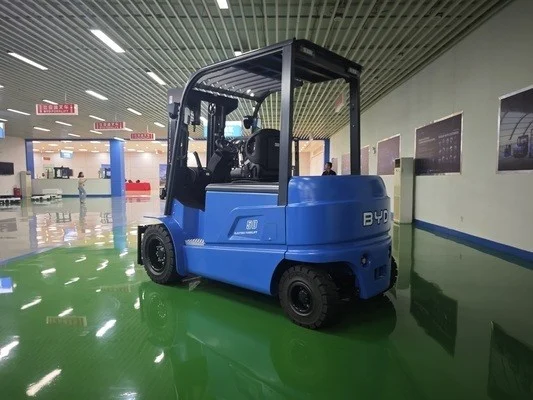
What maneuverability features matter most when moving long lumber in narrow aisles?
Articulated chassis design allows forks reposition without moving the entire truck, which simplifies positioning long loads in tight spaces. Shorter overall chassis length also improves turning ability in limited space. Always confirm the model can handle your maximum load length before completing purchase.
Do I need special tires narrow aisle operation in building materials warehouses?
Tire selection depends your warehouse floor surface. Cushion tires work well smooth concrete floors common indoor storage, provide lower chassis height and better stability. Pneumatic tires suit facilities with outdoor access or rough cracked concrete, but increase overall chassis height and may require wider clearance. Confirm tire options match your site conditions with your supplier.
Before completing any purchase, compile all site-specific data including aisle measurements, load characteristics, lift height requirements and shift schedules. Share this full dataset your supplier, to ensure they match you with an electric forklift model that meets your narrow aisle operational needs. Selecting the right model improves storage density, boosts operational safety, and reduces long-term maintenance costs your building materials storage facility.