Traction Battery Sizing and Runtime Planning When Specifying a 2.5 Ton Electric Forklift
News 07/11/2026
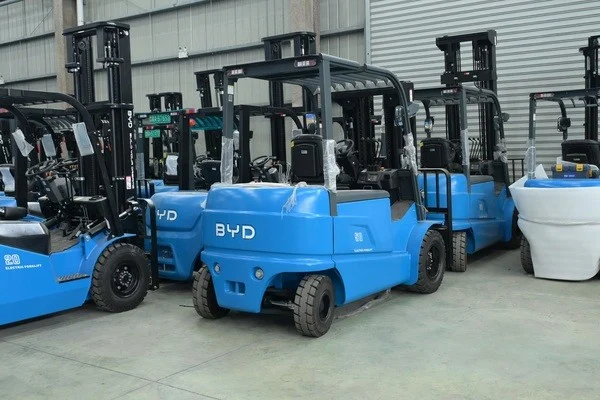
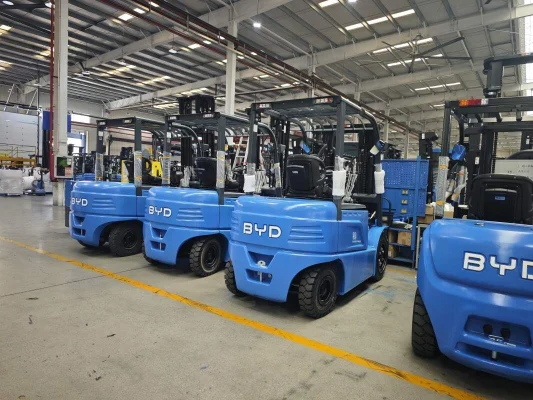
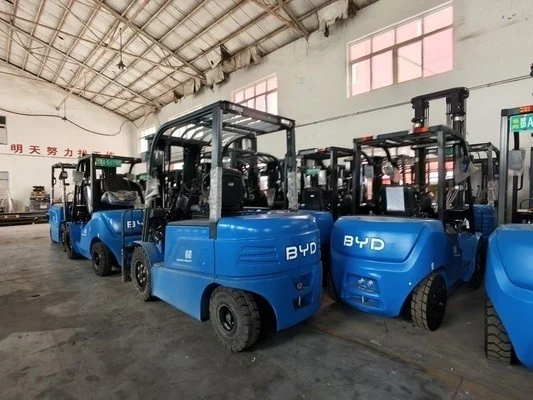
A 2.5 ton electric forklift is usually a four-wheel counterbalance electric forklift, and the traction battery is the single component that most directly shapes its working day. Sizing the battery is not simply a matter of choosing the largest pack available. The correct capacity follows from the load, the duty cycle, the lift height, and the charging window you can realistically provide. Get those four inputs right and the runtime estimate becomes a planning figure you can defend; skip them and the truck may idle mid-shift or carry a battery larger than the application needs.
This guide sets out the conditions that drive traction battery sizing and runtime planning when you specify a 2.5 ton electric forklift, the figures you must collect before asking a supplier to quote, and the trade-offs that matter in real operations.
What Determines Battery Capacity on a 2.5 Ton Electric Forklift
Battery capacity is expressed in ampere-hours (Ah) at a stated voltage, and the energy actually available is measured in kilowatt-hours (kWh). Two packs can share a voltage and differ in Ah, so always compare both figures. On a four-wheel counterbalance electric forklift in this class, the battery also acts as part of the counterweight, so its physical size and mass must match the truck’s battery compartment and the manufacturer’s approved configuration. A lighter or differently shaped pack is not a safe substitution.
The capacity you need is driven by energy consumed per shift, not by truck weight alone. Four variables dominate:
- Load and lift height. Raising a load consumes energy; heavier loads and greater lift heights increase consumption per cycle.
- Duty cycle. The number of lift, travel, and lower cycles per hour, plus the share of time spent traveling loaded.
- Travel distance and surface. Long runs, ramps, and rough floors raise consumption compared with short, level transfers.
- Shift pattern and charging window. One long shift with a single break is a different problem from two shifts with an opportunity to charge.
Manufacturers publish battery voltage, Ah rating, and compartment dimensions in their technical data. Treat those documents as the authority on what fits a given model, and treat your own cycle data as the authority on what the work demands.
Collecting the Inputs Before You Size Anything
Sizing starts with a short survey of the actual job. The aim is a defensible estimate, not a precise prediction. Gather the following before requesting a configuration.
Load, attachment, and load center
Record the heaviest load you will routinely handle and the load center at which it is carried. A 2.5 ton rating applies at a specified load center; attachments and off-center loads reduce the usable capacity. State the attachment type and weight, because it changes both energy use and stability.
Lift height and cycle profile
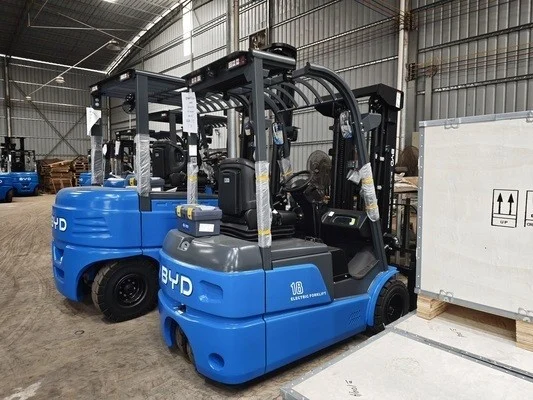
Note the maximum lift height, the average lift height, and how many full lift-and-lower cycles occur per hour. Also record average travel distance per trip and whether the route includes ramps. These figures let a supplier translate your operation into an energy estimate rather than a guess.
Shift structure and charging availability
Describe the working pattern: hours per shift, shifts per day, breaks long enough to plug in, and whether a dedicated charging area exists. Confirm the available power supply and whether charging can occur during breaks or only between shifts. This is often the constraint that decides between one large battery and a smaller pack with opportunity charging.
Environment and floor conditions
Cold storage, freezer work, dusty areas, and uneven floors all affect both energy use and battery choice. Note ambient temperature ranges and floor condition, and pass them to the supplier so the recommended configuration reflects them.
Turning Duty Cycle Data into a Runtime Estimate
A runtime estimate is a calculation with stated assumptions, not a guarantee. The honest approach is to build the estimate from measured or observed cycle data and then apply a margin.
A practical method:
- Count representative cycles over a full shift, including lifts, lowers, and loaded travel.
- Estimate energy per cycle from the load, lift height, and travel distance, using consumption figures supplied by the manufacturer or measured with a battery monitor if one is fitted.
- Multiply by cycles per shift to get energy per shift in kWh.
- Divide by the usable energy of the candidate battery, allowing for the depth of discharge the supplier permits.
- Compare the result with the shift length and add a margin that reflects variation in workload.
Where data is thin, present the estimate as a range and identify which input is least certain. A supplier who asks for cycle counts, lift heights, and charging windows is doing the calculation properly; one who quotes a runtime without those inputs is guessing.
| Planning input | Why it matters | What to record |
|---|---|---|
| Peak and average load | Drives energy per lift and usable capacity | kg, load center, attachment weight |
| Lift height and cycles | Sets energy per cycle | Max and average height, cycles per hour |
| Travel profile | Adds consumption and time | Distance per trip, ramps, floor type |
| Shift and charging window | Decides pack size and charging strategy | Hours, breaks, available power |
| Ambient conditions | Affects battery behavior and choice | Temperature range, dust, moisture |
Trade-Offs: One Large Pack, Opportunity Charging, and Battery Type
Once the energy demand is estimated, the choice usually narrows to a few configurations. Each has conditions under which it works well and conditions where it does not.
A single large battery sized to the full shift
This suits operations with long, uninterrupted shifts and no convenient charging window. The trade-off is higher upfront cost and the need for a battery handling method when replacement is eventually required. Confirm the compartment dimensions and approved battery mass with the truck manufacturer.
A smaller pack with opportunity charging
This suits multi-shift operations where breaks allow partial charging. It can reduce the battery capacity carried, but it depends on reliable access to a charger and disciplined charging practice. It is a poor fit where breaks are short, chargers are shared, or the power supply is limited.
Lithium versus lead-acid considerations
Battery chemistry affects charging behavior, maintenance needs, and how the pack can be used during breaks. Lithium packs generally tolerate opportunity charging well, while lead-acid packs have different charging and ventilation requirements. The right choice depends on your shift pattern, charging infrastructure, and the manufacturer’s approved configuration, not on a general preference. Ask the supplier to state which chemistry and capacity are approved for the specific truck model.
Site power is a frequent limiting factor. Before committing to a charging strategy, confirm the available supply, charger rating, and whether multiple trucks will charge at once. A configuration that ignores the electrical capacity of the building is not a plan.
Frequently Asked Questions
Can I estimate runtime from the battery’s Ah rating alone?
Not reliably. Ah at a given voltage gives you energy capacity, but runtime depends on how much energy your cycles consume. Two sites with the same battery can see very different runtimes because of load, lift height, travel distance, and floor conditions. Use the Ah rating as one input and build the estimate from cycle data.
Is a larger battery always the safer choice?
No. A larger battery costs more, weighs more, and may not fit the compartment or the approved configuration. If your operation has adequate charging windows, a smaller pack with disciplined opportunity charging can be the better fit. The safe choice is the configuration the manufacturer approves for the truck and your duty cycle supports.
What information should I give a supplier when requesting a quote?
Provide peak and average load, load center, attachment type and weight, maximum and average lift height, cycles per hour, travel distance and floor conditions, shift pattern, charging windows, available power supply, and ambient temperature range. These inputs let the supplier size the battery and propose a charging approach rather than quote a generic pack.
How do cold storage or outdoor work affect battery planning?
Low temperatures can reduce the energy a battery delivers and change charging behavior, so the estimate needs a wider margin and the configuration must be approved for the temperature range. Share the actual ambient conditions with the supplier and ask which chemistry and capacity they recommend under those conditions.
Before you finalize a specification, confirm three things with the supplier: the approved battery voltage, capacity, and mass for the exact truck model; the charging equipment and power supply the plan assumes; and the assumptions behind the runtime estimate. Share your real load, lift height, shift pattern, and charging conditions, and ask for a configuration proposal covering the four-wheel counterbalance electric forklift models in the 2.5 ton class that fit your operation.