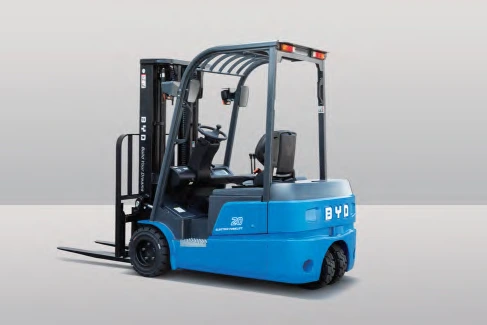
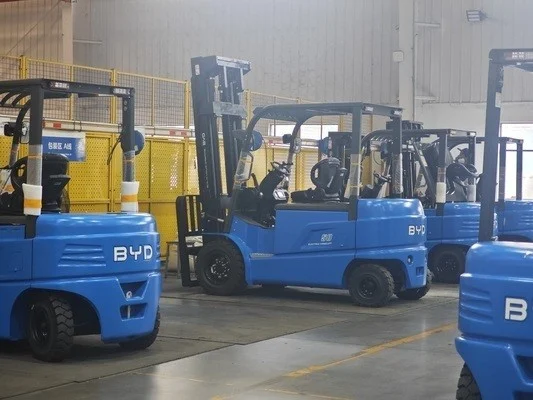
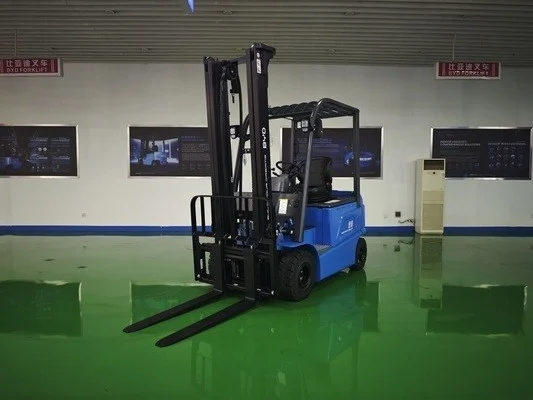
5 Ton Four-Wheel Counterbalance Electric Forklift: Matching Motor Power and Hydraulic Response to Demanding Duty Cycles
News 03/11/2026
A 5 ton forklift earns its keep only when motor power and hydraulic response stay matched to the work cycle it actually faces. A four-wheel counterbalance electric forklift in this class is a heavy, high-throughput machine, and buyers often compare headline kilowatt ratings without asking how those ratings behave under repeated lifting, travel and attachment use. This article explains which duty-cycle factors drive the powertrain and hydraulic choices, how to check supplier data, and where the limits sit.
Why Duty Cycle, Not Just Capacity, Decides the Powertrain
The rated capacity tells you the maximum load at a stated load center. It says little about how the truck behaves when that load is lifted hundreds of times per shift, carried along ramps, or handled with a clamp or side-shifter that moves the load center forward. Three variables shape the real demand:
- Cycle frequency and lift height. Frequent lifts to full mast height keep the hydraulic pump and motor working under load, which raises heat and energy draw.
- Travel distance and gradients. Long runs and ramps ask more of the traction motor and battery than short shuttle moves.
- Attachment use. Clamps, rotators and push-pull devices add hydraulic consumers and shift the effective load center, which reduces remaining capacity.
A demanding cycle is not automatically a reason to specify the largest motor. The right question is whether the motor, controller and hydraulic system can sustain the required work rate without overheating or forcing long recovery pauses. That answer depends on manufacturer data, not on a single number.
Motor Power and Hydraulic Response: What to Verify
Electric counterbalance trucks typically use separate traction and hydraulic motors, each with its own controller. Published figures may describe peak or short-term output rather than continuous duty, so comparisons must use the same basis. Ask the supplier to state the rating basis and the conditions under which it applies.
Traction motor and controller
Check continuous and peak ratings, the controller current limit, and how the truck manages thermal protection during long shifts. Also confirm the rated drawbar pull or gradeability at the actual load, and whether those figures assume a specific battery state of charge.
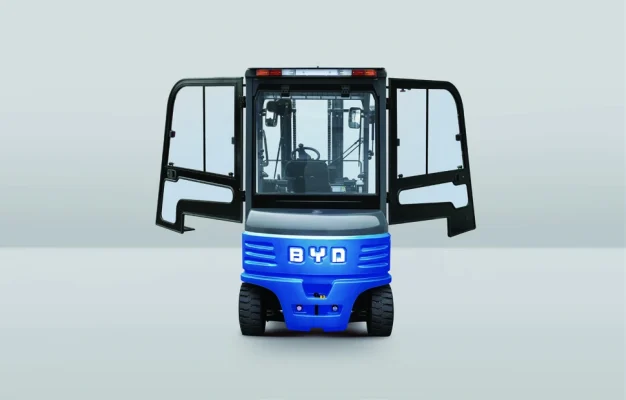
Hydraulic pump and lift speed
Lift and lower speeds should be quoted at rated load, not empty. Ask whether the figures hold at full mast height and with the attachment fitted. Lowering control matters as much as lifting: precise, proportional descent protects pallets and racking in high-throughput warehouses.
Battery and thermal management
Lithium battery packs deliver strong power across a wide state of charge, but sustained high-current work still produces heat. Confirm the battery’s continuous discharge capability, the BMS current limits, and the charging regime that fits your shift pattern. Do not assume a pack size from another application will suit yours.
Cooling and duty rating
Ask how the motors, controllers and hydraulic oil are cooled and whether the truck carries a defined intermittent duty rating. If the supplier cannot state one, treat sustained high-cycle operation as a point to verify through a supervised trial rather than an assumed capability.
Matching Configuration to a Demanding Application
Consider a hypothetical application: a building-materials distributor handling palletized blocks and bagged goods, with lifts to racking at moderate height, repeated loading of flatbed trucks, and a two-shift pattern. The loads are dense, the cycle is repetitive, and the yard has slight gradients.
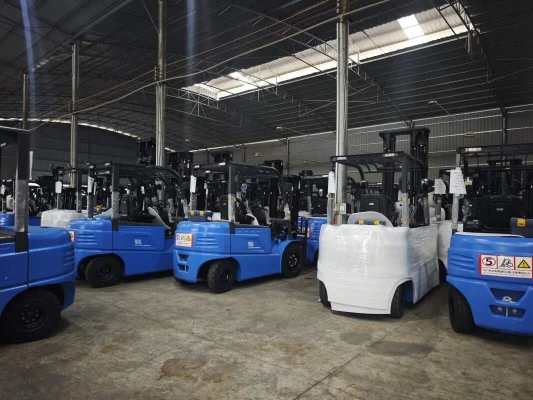
A four-wheel counterbalance electric forklift is a common general-purpose choice here because it combines stability under heavy loads with the ability to work both indoors and in covered yard areas. Whether it suits this site depends on verified figures: remaining capacity at the actual load center with any attachment fitted, lift speed at rated load, gradeability on the yard ramps, aisle width against the truck’s turning radius, and the charging schedule across two shifts.
Where the aisle is narrow or the lift height demands a different mast type, the four-wheel counterbalance layout may not be the best fit, and that limitation should be acknowledged rather than worked around with optimistic specifications.
| Parameter or configuration | Why the application cares | What to confirm with the supplier | Typical status |
|---|---|---|---|
| Rated capacity and load center | Dense loads and attachments reduce usable capacity | Capacity plate at the actual load center, with attachment derating | Standard data; attachment derating needs confirmation |
| Traction motor rating | Ramps and long runs raise thermal load | Continuous versus peak rating and rating basis | Confirm from technical documentation |
| Lift and lower speed | Cycle time and load control | Figures at rated load and full height | Confirm; empty-load figures are not enough |
| Battery capacity and BMS limits | Two-shift energy demand | Continuous discharge limit, charging window, temperature range | Configuration-dependent |
| Mast, attachment, tyres | Height, load center, yard surface | Compatibility and effect on remaining capacity | Optional; must be specified together |
Frequently Asked Questions
Does a higher motor rating always mean faster work?
No. Cycle time also depends on hydraulic flow, lift height, controller tuning and operator behaviour. A larger motor may add energy draw without improving throughput if the hydraulic system or duty rating limits sustained operation. Compare complete system data at rated load.
Can a 5 ton electric truck handle continuous two-shift work?
It can be configured to, but only when battery capacity, charging arrangements and thermal limits are matched to the shift pattern. Ask the supplier to confirm continuous discharge limits and the charging window, and plan a supervised trial before committing to a demanding schedule.
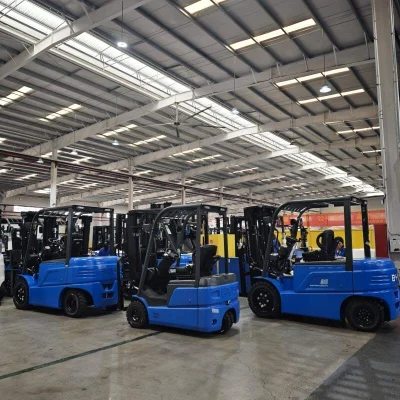
How do attachments change the power and hydraulic requirement?
Attachments add hydraulic consumers and move the load center forward, which reduces remaining capacity. They can also change lift and clamp cycle times. Provide the attachment specification to the supplier so capacity, hydraulic flow and control settings are assessed together.
What should I measure before requesting a quotation?
Record the heaviest load and its center of gravity, required lift height, aisle and door widths, ramp gradients, floor surface, cycles per shift, and available charging time. These figures let the supplier propose a configuration grounded in verified data rather than assumptions.
Before purchase, assemble a data pack covering load weights and centers, lift heights, aisle dimensions, gradients, shift and charging patterns, and any attachment requirements. Ask the supplier to confirm capacity at the actual load center, motor and hydraulic ratings with their basis, battery limits and temperature ranges, and which items are standard, optional or subject to factory confirmation. Then check those answers against a supervised trial in your own conditions. Buyers seeking a four-wheel counterbalance electric forklift in this class can share their duty-cycle details to receive a configuration proposal built on verified specifications.