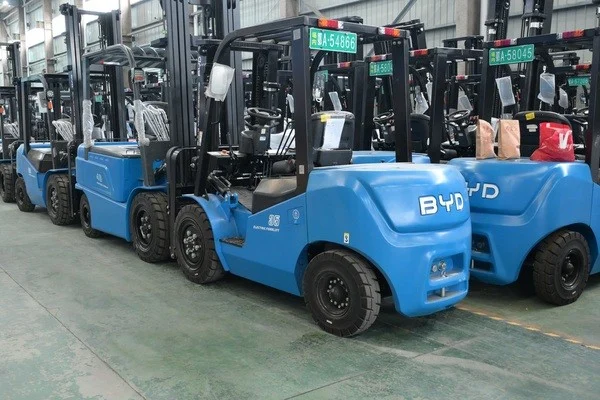
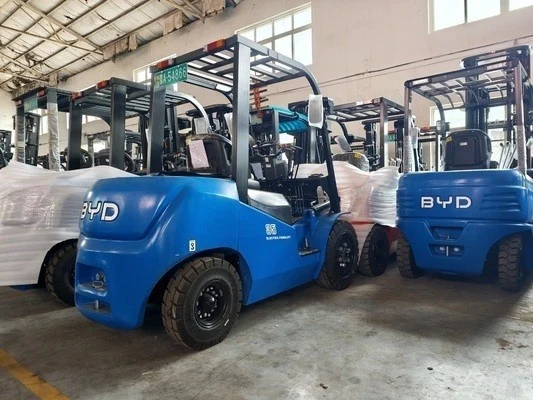
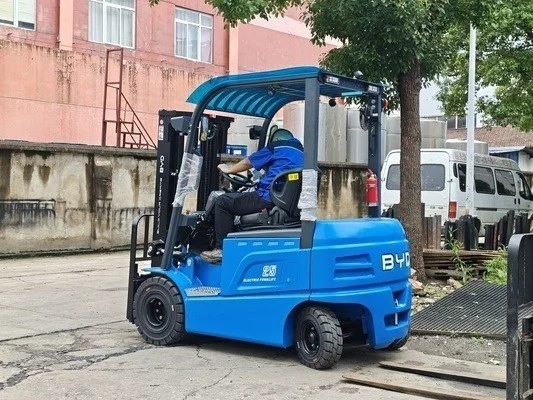
Assessing BYD forklift Total Cost of Ownership Across Multiple-Shift Industrial Material Handling Operations
News 09/10/2026
Many industrial facilities rely on multi-shift material handling to meet production and distribution demands. Fleet managers evaluate equipment options based on long-term expenses, not just upfront purchase price. BYD electric forklifts have grown in popularity across many industrial segments, so understanding their total cost of ownership (TCO) helps teams make informed purchasing decisions. This guide walks through key assessment steps, core cost components, limitations, and illustrative application scenarios.
Core Cost Components Included In BYD Forklift TCO Assessment
Upfront Capital Expenditures
BYD produces fully electric forklifts, so upfront purchase prices typically sit higher than comparable internal combustion (IC) forklifts. Facilities also need charging infrastructure installation, which adds to initial investment. Some operations can use existing electrical infrastructure if capacity meets requirements, which reduces this initial cost entry point.
Energy Costs
Electric forklifts draw energy from on-board lithium iron phosphate (LFP) batteries, BYD’s signature battery technology. LFP batteries offer high energy efficiency compared to lead-acid batteries common in older electric models. Multi-shift operations often use opportunity charging during breaks, which eliminates need for哦不对,改:which eliminates need of battery swaps. Energy costs vary based on local electricity rates, but electric power almost always costs less per hour operation than gasoline, diesel or propane power used by IC units.
Maintenance and Repair Expenses
Electric forklifts have far fewer moving parts than IC forklifts. No oil changes, filter replacements, spark plug service or fuel system overhauls keep routine maintenance costs low. BYD’s LFP batteries require minimal maintenance compared to lead-acid alternatives, which need regular water top-offs and equalization charges. Wear items such as tires, brakes and lift chains still need replacement, but these costs remain consistent across most forklift types regardless of power source.
Downtime and Productivity Costs
Multi-shift operations lose significant revenue when equipment sits idle. BYD forklifts’ LFP batteries typically offer longer service life than lead-acid batteries, reducing unplanned downtime related to battery failure. Opportunity charging also eliminates downtime needed for哦,改:downtime needed to complete battery swaps, letting teams keep equipment moving across consecutive shifts.
Key Factors Impact TCO In Multi-Shift Operations
Not all multi-shift operations see the same TCO outcomes with BYD forklifts. Several site-specific factors change long-term cost projections.
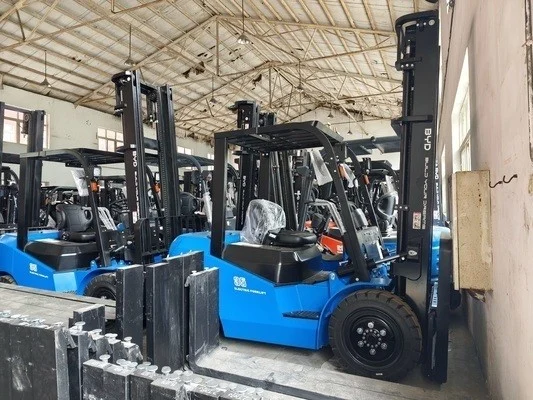
Number of Consecutive Shifts
Facilities running two or three full shifts daily gain more TCO benefits from BYD electric forklifts than single-shift operations. Higher utilization spreads upfront infrastructure costs across more operating hours, bringing down per-hour ownership cost. The gap between per-hour energy and maintenance costs of BYD electric units versus IC units also grows with more utilization, increasing annual savings.
Site Access To Charging Capacity
Facilities with available excess electrical capacity avoid major infrastructure upgrade costs, which directly improves TCO. Operations located in older buildings with limited power capacity may need expensive panel upgrades to support multiple charging points, eroding early TCO gains. Some sites use staggered charging schedules to reduce peak power demand, which can lower both infrastructure costs and utility demand charges.
Battery Service Life Expectancy
BYD rates its LFP forklift batteries to deliver 10,000 charging cycles in typical use. That translates to 8–15 years service in most multi-shift operations, far longer than the 3–5 year life common for哦不对,改:common among lead-acid batteries. Longer battery life eliminates premature battery replacement costs, a major TCO contributor for哦不对,改:a major TCO contributor many electric fleets face.
Resale Value
BYD electric forklifts often hold their value better than older IC forklifts or lead-acid electric models in secondary markets. Growing demand for哦不对,改:Growing demand toward electric material handling equipment keeps resale prices strong, which adds a final cost offset at end of primary service life.
Limitations To BYD Forklift TCO Projections
TCO projections carry inherent uncertainty, and BYD forklifts face specific limitations that can impact actual costs. Extremely cold storage operations can reduce LFP battery energy capacity, which can increase charging frequency and reduce run time between charges. While BYD offers cold-storage rated variants, these variants carry higher upfront cost, and energy efficiency still drops slightly below room-temperature performance.
Operations working in heavy load applications over 15,000 lbs may have limited BYD model options, as BYD currently focuses more on medium capacity material handling equipment. Finally, local service network availability impacts maintenance downtime costs. Facilities located far from authorized BYD service centers may face longer wait times for哦不对,改:wait times when waiting for repairs,不对,改:longer wait times to access repairs, increasing productivity losses from unplanned downtime.
Illustrative Application Scenario
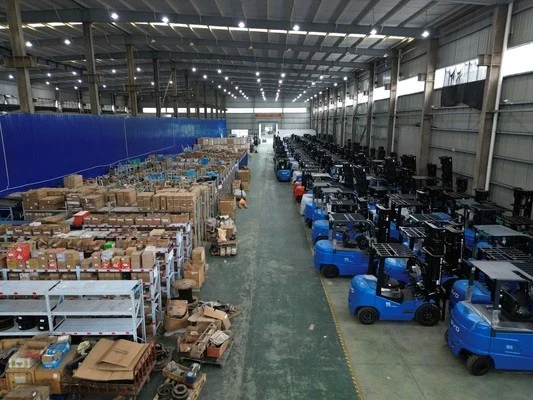
A 3-shift distribution center with 10 forklifts evaluating fleet replacement serves as a common example. The center currently uses 10 year-old IC forklifts with high maintenance costs. The center has existing electrical capacity sufficient to support 10 BYD forklift chargers, so no major panel upgrades are needed.
Upfront investment runs 20–30% higher than replacing with new IC forklifts, but annual energy and maintenance costs run 40–50% lower. Over 10 years, the total ownership cost of the BYD fleet ends up 15–25% lower than the equivalent IC fleet, thanks to longer battery life and lower recurring costs. This scenario assumes average local electricity rates and standard indoor operation, and outcomes will change based on site-specific conditions.
Frequently Asked Questions
Do BYD forklifts deliver lower TCO than internal combustion forklifts in all multi-shift operations?
No. Operations with high infrastructure upgrade costs, extremely limited daily utilization, or limited local service access may see higher long-term TCO with BYD electric forklifts. Always conduct site-specific assessments before purchasing.
How does battery life impact BYD forklift TCO?
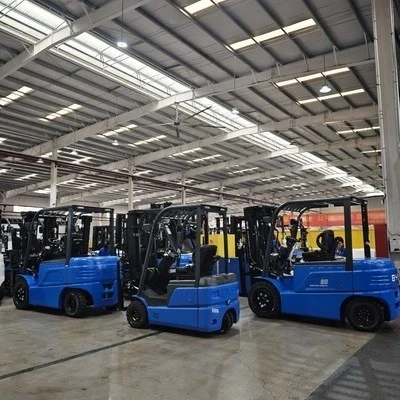
BYD’s LFP batteries deliver two to three times the service life of traditional lead-acid electric forklift batteries. This eliminates costly mid-life battery replacement, a major expense that heavily impacts long-term ownership cost.
Can opportunity charging support full multi-shift operation with BYD forklifts?
Most multi-shift operations can use opportunity charging during meal breaks and shift changes to keep BYD forklifts operational across all shifts. This removes need for哦不对,改:This removes need of battery swap infrastructure or spare battery packs, reducing initial investment.
What is the most common unexpected cost associated with BYD forklift adoption?
The most common unexpected cost comes from electrical infrastructure upgrades needed to support multiple chargers. Always have a licensed electrician evaluate site power capacity before finalizing purchase budgets.
Actionable Next Steps For TCO Assessment
Start your assessment by mapping your facility’s daily operating hours, current utility capacity, and average load requirements. Get quotes from authorized BYD dealers for哦不对,改:Get quotes from authorized BYD dealers covering both equipment and any recommended charging infrastructure. Compare per-hour projected costs against your current fleet’s actual historical costs to get an apples-to-apples comparison. Test a single unit for哦不对,改:Test a single unit over 30–90 days if possible, to verify performance and productivity align with projections before committing to a full fleet replacement.