Assessing BYD forklift Maneuverability Within High Density Indoor Warehouse Storage Layouts
News 17/10/2026
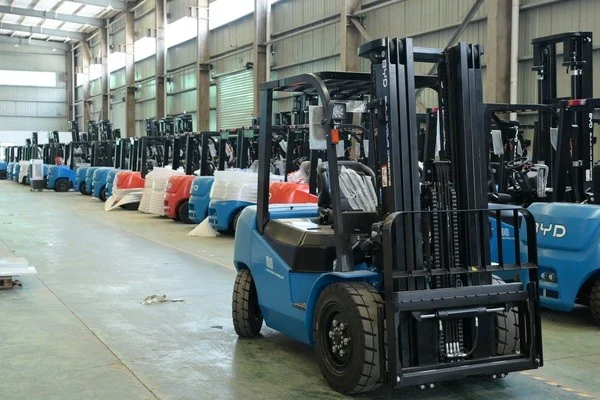
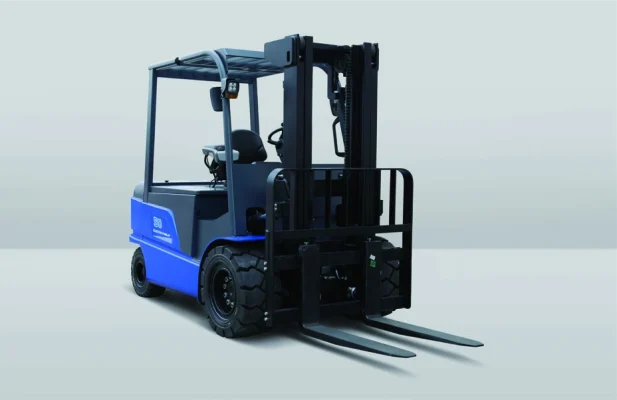
High density indoor warehouse storage layouts maximize storage capacity within existing building footprints, but require equipment with precise, responsive maneuverability to avoid rack damage, reduce operator error and maintain throughput. Assessing BYD forklift maneuverability against your layout specific needs ensures you select a model that matches your density goals without sacrificing safety or productivity.
Key Maneuverability Metrics Critical To High Density Layouts
High density layouts typically feature aisles 10 to 30 percent narrower than standard warehouse layouts, so two core metrics define usable maneuverability: turning radius and minimum aisle width.
Turning radius determines how much space a forklift needs complete a turn without hitting racking or walls. Three-wheel BYD forklift models generally offer smaller turning radii than four-wheel counterbalance models, making them better suited tight spaces. Articulated models add even tighter turning capability, but require more operator skill navigate consistently.
Minimum aisle width is the smallest clearance a forklift needs pick up and place a loaded pallet into racking. This value always depends on the size of the pallets your facility uses. A model that fits 1000mm x 1200mm pallets may not fit larger custom pallets, so you must align this metric your own pallet dimensions, not just generic manufacturer claims.
Secondary metrics include mast flexibility and center of gravity distribution. BYD’s lithium battery platform allows more flexible battery placement compared to traditional lead acid batteries, which can lower overall vehicle center of gravity and improve stability during tight turns. Exact benefits vary by model, so you need check specific specifications rather than assume all BYD models share this advantage.
BYD Forklift Configuration Checks Indoor Storage Applications
Below is a breakdown of key configurations, their relevance high density operations and steps confirm compatibility:
| Parameter | Industry Concern | Required Verification | Configuration Notes |
|---|---|---|---|
| Turning Radius | Narrow aisle navigation without rack damage | Confirm radius matches your aisle clearance after accounting for rack overhang | Standard on 3-wheel standup and sit-down models; articulated 4-wheel variants offer smaller radii on select models |
| Minimum Aisle Width | Safe access all rack positions with loaded pallets | Test pass with your actual loaded pallet size before accepting delivery | Depends on mast type and load capacity; share your specific requirement manufacturer to confirm |
| Lithium Battery Placement | Center of gravity impact on turning stability | Confirm placement matches manufacturer provided spec sheet | Under-body or under-seat placement lowers overall center of gravity most BYD indoor models |
| Mast Visibility | Operator accuracy during tight navigation | Check unobstructed view through mast during in-person test operation | Full view masts are optional upgrades that improve maneuvering accuracy |
| Tire Type | Traction and floor protection indoor concrete surfaces | Confirm tire material matches your facility floor condition | Solid non-marking tires are standard indoor use; cushion tires optional for high-traffic layouts |
Common Configuration Tradeoffs
Smaller turning radius and narrower minimum aisle width often come with slight reductions maximum load capacity at full lift height. This means you must balance your storage density goal against your daily load requirements. If your facility stores mostly light to medium loads, tighter maneuverability models will meet your needs. If you regularly handle heavy loads at full lifting height, you may need accept slightly wider aisles maintain safe load capacity and maneuvering stability.
Common Limitations To Expect High Density Operations
Even models designed narrow aisle high density operation have clear limitations you should account during selection:
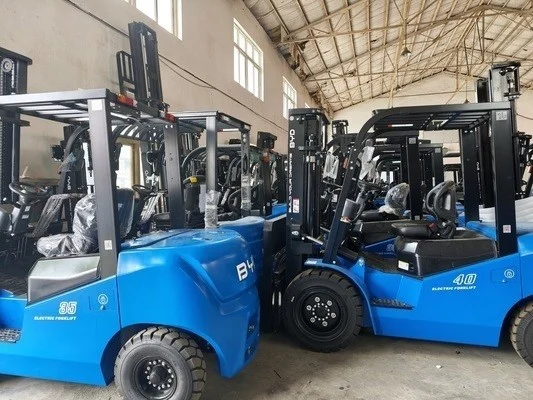
- Articulated maneuverable models require more advanced operator training. New operators may take longer adapt to tight turning dynamics, which can reduce throughput during initial adoption.
- High mast models used very high bay dense storage can shift center of gravity during turns, requiring slower turning speeds maintain safety. This can increase average pick time compared to lower lift standard models.
- Indoor-specific non-marking tires wear faster if your facility requires occasional travel between connected outdoor storage yards or loading areas. If you need mixed indoor-outdoor operation, confirm your selected model supports tire upgrades that match your use case.
None of these limitations disqualify BYD forklift use high density layouts, but they require advance planning training or configuration adjustments get optimal results.
Pre-Purchase Assessment Steps
- Measure all aisle dimensions on-site after rack installation. Architectural drawings often omit support columns, rack overhang or irregular layout adjustments, so on-site measurement ensures accurate data.
- Document your average and maximum load specifications, including exact pallet dimensions and maximum load weight per pallet. Share this information your BYD dealer narrow down compatible models.
- Request an on-site test drive with a loaded pallet matching your typical load size and weight. Test turning into all rack positions, including corners and areas near loading docks, confirm the model fits your space.
- Confirm all required configurations are included or available as verified upgrades. Common requirements include non-marking tires, full view masts and any temperature-related adjustments your facility needs.
- Confirm local service access your selected model. Tight maneuverability components require regular inspection and maintenance, so local support helps reduce unplanned downtime.
This process eliminates unexpected compatibility issues after delivery, and ensures your selected BYD forklift matches your layout specific requirements.
Frequently Asked Questions
Can all BYD forklift models operate in high density indoor storage?
No. Only narrow aisle-specific BYD forklift models offer the small turning radius and reduced minimum aisle width required by high density layouts. Standard counterbalance BYD forklift models need wider aisles, so they do not perform well in dense storage layouts.
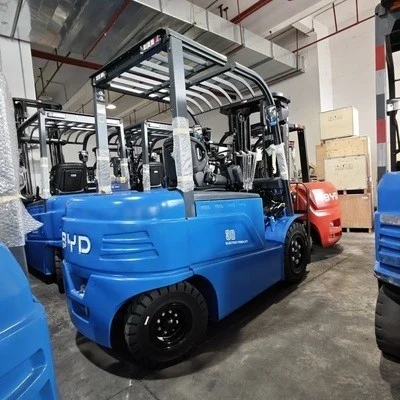
How do I account for rack overhang when calculating required aisle width?
Add total overhang from both sides of the aisle to the nominal clearance between rack supports. Your required minimum aisle width equals the manufacturer stated value plus this total overhang measurement. Always share your adjusted total aisle width your BYD dealer when selecting a model.
Does BYD’s lithium battery design improve maneuverability?
Lithium batteries are smaller and lighter than equivalent capacity lead acid batteries, which lets manufacturers adjust center of gravity placement more easily. This often leads to better balance and tighter turning capability, but exact benefits vary by model. Always check the specific model’s turning radius and aisle width specifications rather than assume all lithium-powered BYD models offer improved maneuverability.