Assessing Compatibility Between Existing Industrial Site Charging Infrastructure BYD lithium forklift
News 06/10/2026
Core Requirements BYD Lithium Forklifts Impose on Charging Infrastructure
BYD lithium forklifts rely on lithium iron phosphate battery packs, which have different charging needs compared to the lead-acid batteries common many older industrial sites. Understanding these core requirements helps you identify compatibility issues early before investing in new equipment.
Voltage and Current Matching
BYD lithium forklift battery packs operate within set voltage ranges, typically 24V, 36V, 48V or 80V depending on unit capacity. Existing charging infrastructure must output voltage within 2% of the range your specific forklift battery requires to avoid cell damage or inefficient charging.
Current rating also plays a critical role. Existing chargers must support the maximum charge current BYD specifies your forklift model. If output current falls too low, charge times extend far beyond expected levels, disrupting daily operations. If output current exceeds the maximum allowed by your battery’s BMS, cell degradation speeds up over time.
Communication Protocol Alignment
All BYD lithium batteries integrate built-in battery management systems (BMS) that work with chargers to adjust charge rates, stop charging when cells reach full capacity and protect against overheating. Many older lead-acid chargers lack compatible communication protocols, so they cannot interact correctly with the BMS. This leads to consistent overcharging or undercharging, even when voltage and current appear aligned.
Step-by-Step Compatibility Assessment
Follow this structured process to confirm whether your existing infrastructure works with your new BYD lithium forklift.
Gather Official Technical Documentation
First, pull your BYD lithium forklift model’s official charging specifications directly from BYD public product resources. Next, collect specification sheets your existing on-site charging infrastructure. This step eliminates guesswork and highlights obvious mismatches early in the process.
Check Physical Connection Compatibility
Mismatched connector types rank among the most common obvious compatibility issues. BYD lithium forklifts use specific connector designs aligned with modern lithium charging industry standards. Existing lead-acid chargers often use different connector sizes or pin configurations that do not plug into BYD units.
Some sites use adapters to bridge mismatched connections, but adapters can introduce voltage drop or communication failures when not rated correctly matching your system’s output. Only use adapters approved by BYD matching your specific model combination.
Conduct Controlled Charging Test
If all specifications align and connectors fit, conduct a 15-minute controlled charging test under typical site conditions. Monitor battery temperature, charger output status and BMS readings via the forklift’s onboard display. If the charger triggers an error or battery temperature rises more than 10°C above ambient temperature, hidden compatibility issues exist that require further evaluation.
Key Limitations To Account For During Assessment
Existing infrastructure built before 2018 rarely meets all requirements most modern BYD lithium forklift models need. Old site electrical panels often lack sufficient power capacity to support multiple simultaneous lithium forklift charges, which draw higher peak current than typical lead-acid battery charges.
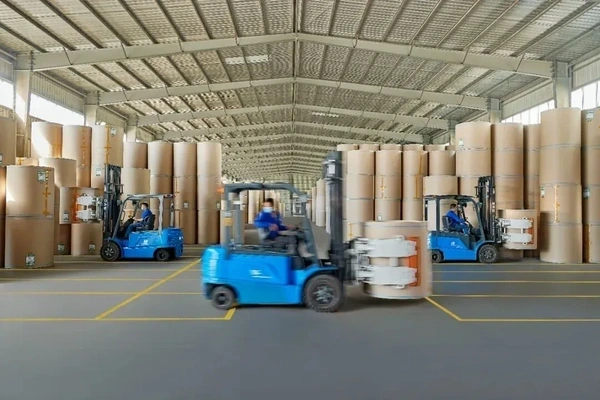
Many older chargers also do not include integrated overheating protection that syncs with BYD’s BMS system. Retrofit options exist some scenarios, but full charger replacement often delivers lower long-term cost than piecemeal upgrades. Industrial sites with large fleets of older forklifts may need partial site power upgrades to support new BYD lithium units.
Frequently Asked Questions
Can I use my old lead-acid forklift charger with a BYD lithium forklift?
This works only in rare cases where voltage, current and communication protocol match exactly. Most older lead-acid chargers lack BMS communication and have incorrect voltage outputs that damage BYD lithium battery cells over time. Even if the connector fits, mismatched charge profiles shorten battery lifespan significantly.
What changes does my site electrical system need to support BYD lithium forklifts?
Your site electrical distribution panel must have enough spare amperage capacity to handle peak charging demand from all connected forklifts. BYD lithium forklifts often support opportunity charging during work breaks, which means multiple units may charge at the same time during shift changes. Calculate total peak current draw across all chargers to confirm your panel can handle the load.
Do uncertified third-party chargers work with BYD lithium forklifts?
Third-party chargers work safely only if they carry official BYD certification and match your specific forklift model charging specifications. Uncertified third-party chargers can void your battery warranty and create safety risks from incorrect charge management. Always check BYD’s public list of approved third-party chargers before moving forward with installation.
How much does a typical compatibility upgrade cost?
Total cost varies widely based on number of forklifts, existing site power capacity and charger requirements. No universal standard price exists, so you should get a custom quote from a licensed electrical contractor and BYD authorized dealer after your on-site assessment. Many small operations with one or two new forklifts can complete upgrades at moderate cost, while large fleets require more significant investment.
Actionable Next Steps After Assessment
If your full assessment confirms full compatibility, you can start using your BYD lithium forklift with existing infrastructure immediately. If minor mismatches exist, work with an authorized BYD technician to confirm whether a safe, warranty-compliant retrofit is possible.
If major mismatches or site capacity issues appear, plan a phased upgrade of chargers or site power distribution to support your new equipment. Regular annual checks of charging compatibility help preserve battery health and extend overall service life of your BYD lithium forklift.