Battery Chemistry and Charging Strategy Decisions When Specifying a Four-Wheel Counterbalance Electric Forklift
News 01/11/2026
Specifying a four-wheel counterbalance electric forklift often starts with load capacity and lift height, then stalls at the battery. The chemistry decision (lead-acid or lithium-ion) and the charging strategy (opportunity, fast, or overnight) shape shift coverage, infrastructure, and long-term operating cost. Treat them as a linked pair: a chemistry chosen without a charging plan can leave a truck idle, and a charging plan built around the wrong chemistry can shorten pack life. This guide sets out the decision points a buyer should settle before requesting a quotation, with attention to warehouse and production-floor use.
How Battery Chemistry Changes the Specification
Two chemistries dominate four-wheel counterbalance electric forklifts: flooded lead-acid and lithium-ion. Each imposes different constraints on the truck, the building, and the work schedule. The table below summarizes general material characteristics; it does not describe any specific model sold here.
| Decision area | Lead-acid (general) | Lithium-ion (general) |
|---|---|---|
| Charging behavior | Typically charged in full cycles; frequent partial charging and deep discharge can affect life | Generally suited to opportunity charging during breaks |
| Battery changing | Often requires a change bay, hoist, and spare pack | Usually stays on board; no routine swap |
| Ventilation and gas | Charging releases hydrogen; ventilation and refill routines matter | No watering; charging area requirements differ |
| Weight and counterweight | Heavy pack contributes to counterbalance | Lower pack weight can change truck balance; confirm with the manufacturer |
| Cold and heat sensitivity | Capacity drops in cold conditions | Charging and discharging limits vary by cell specification |
| End-of-life handling | Established recycling routes | Recycling routes vary by region and supplier |
These are general tendencies, not guarantees. Actual cycle life, charge acceptance, and temperature limits depend on the cell, battery management system, charger, and duty cycle. Ask the supplier to state those figures in writing, along with the test conditions behind them.
Questions that decide the chemistry
- How many hours does the truck run between available charging windows?
- Is a battery change bay feasible, or must the pack stay on the truck?
- What is the ambient temperature range in storage and on the floor?
- Does the building have ventilation and wash-down arrangements suited to lead-acid charging?
- How will the pack be recycled or returned at end of life?
Matching Charging Strategy to the Duty Cycle
Charging strategy is a schedule and infrastructure decision as much as an electrical one. Three common patterns appear in warehouse and production settings.
Overnight charging with a spare pack
A truck runs one shift, charges overnight, and a second pack covers the next shift. This pattern suits lead-acid fleets with a change bay and predictable single-shift demand. It requires floor space, lifting equipment, and a routine that keeps packs watered and equalized.
Opportunity charging during breaks
The truck plugs in during operator breaks and between tasks. Lithium-ion packs generally tolerate this pattern better than lead-acid, but the charger, connector, and battery management system must be specified to support it. Confirm how many charge events per day the supplier permits and what state of charge range is recommended.
Fast charging and multi-shift coverage
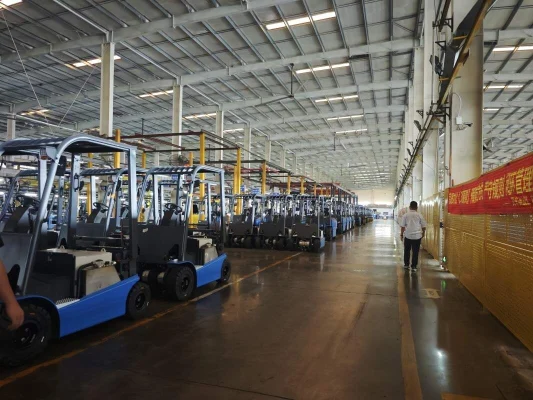
High-rate charging can reduce downtime, but it places demands on the charger, the building’s electrical supply, and the pack’s thermal management. Before specifying fast charging, obtain the maximum charge rate, the required supply capacity, and the temperature limits from the manufacturer. Do not assume a standard wall supply will support it.
In all three patterns, the charger must match the battery’s voltage and communication protocol. A mismatched charger can void warranties or trigger faults. Ask the supplier to confirm compatibility in writing rather than relying on connector shape alone.
Site Conditions that Constrain the Choice
Battery and charging decisions cannot be separated from the building and the work. Check these conditions before committing.
- Electrical capacity: Confirm available voltage, phase, and spare capacity at the planned charging point. Fast charging may require an upgraded supply.
- Charging location: Decide whether charging happens at a dedicated bay, at a wall point near the aisle, or at multiple points. Cable routing and traffic flow affect safety.
- Ventilation: Lead-acid charging produces gas; confirm the charging area meets local requirements.
- Temperature: Unheated docks and cold stores affect both chemistries. Ask the supplier for the operating temperature range and any derating guidance.
- Floor and aisle: A four-wheel counterbalance electric forklift needs adequate aisle width and a floor rated for the loaded truck. Battery weight affects the center of gravity, so confirm the configuration with the manufacturer.
- Shift pattern: Map actual run hours, break times, and peak periods. A truck that runs 4 hours a day and one that runs 16 hours a day need different answers.
Where the site cannot support the preferred strategy, the specification should change rather than the assumption. For example, if the electrical supply cannot support fast charging, a spare-pack routine may be the more honest choice.
Specification Checklist and Common Mistakes
Use the following checklist when preparing a request. It keeps the conversation focused on verifiable parameters rather than brochure claims.
- State the load weight, load center, and maximum lift height required.
- Describe the duty cycle: hours per shift, shifts per day, and peak demand periods.
- List the available charging windows and their duration.
- Provide the electrical supply details at each proposed charging point.
- Record ambient temperature ranges in storage and on the floor.
- Ask the supplier to confirm battery chemistry, capacity, charger compatibility, and warranty terms in writing.
- Ask how the pack will be serviced and recycled at end of life.
Common mistakes include choosing a chemistry based on headline claims without checking the charger and supply, planning opportunity charging without confirming the pack supports it, and ignoring how battery weight changes truck balance. Another frequent error is assuming a four-wheel counterbalance electric forklift suits every aisle; narrow aisles may call for a different truck type, and that should be discussed openly rather than forced into a counterbalance specification.
When the site conditions and duty cycle are clear, the next step is a configuration review. Share your load, lift height, shift pattern, and charging constraints so the battery and charging options can be checked against the available four-wheel counterbalance electric forklift configurations.
Frequently Asked Questions
Can I use opportunity charging with a lead-acid battery?
It is generally not recommended as a routine practice because frequent partial charging and deep discharge can affect life. If opportunity charging is essential, discuss it with the battery supplier and confirm the permitted charging pattern and warranty conditions.
Does a lithium-ion pack change the truck’s lifting capacity?
Battery weight contributes to counterbalance, so a lighter pack can change the truck’s balance and rated capacity. The manufacturer must confirm the rated capacity with the specific battery configuration. Do not assume the capacity stays the same across chemistries.
How do I decide between a spare pack and fast charging?
Compare the available charging windows, the electrical supply at the charging point, and the floor space available. A spare pack requires a change bay and handling equipment; fast charging requires a compatible charger and sufficient supply capacity. Ask the supplier to confirm the permitted charge rate and thermal limits before deciding.
What information should I provide when requesting a quotation?
Provide load weight, load center, maximum lift height, aisle width, floor and ramp conditions, hours per shift, shifts per day, charging windows, electrical supply details, and ambient temperature range. These details let the supplier check battery and charger compatibility rather than guess.