Four-Wheel Counterbalance Electric Forklift Procurement: Verifying Load Charts, Load Center Ratings, and Attachment Derating Before Purchase
News 04/11/2026
When you procure a four-wheel counterbalance electric forklift, the published load chart is a starting point, not a guarantee. The rated capacity applies only under specific conditions: a defined load center, a particular attachment configuration, and a mast type. Before you issue a purchase order, verify that the load chart, load center rating, and attachment derating align with your actual handling tasks. This guide explains what to check and what information to request from the supplier.
Understand What the Load Chart Actually Tells You
A load chart shows the maximum load a forklift can handle at various lift heights and load centers. The rated capacity is typically stated at a standard load center—commonly 24 inches (600 mm)—with a standard fork carriage and no attachment. If your load is deeper, or if you add an attachment, the allowable capacity decreases.
Key terms to confirm on the data sheet:
- Rated capacity: The maximum weight at the standard load center and specified lift height.
- Load center: The horizontal distance from the vertical face of the forks to the center of gravity of the load.
- Lift height: The height at which the rated capacity is valid; capacity may be reduced at higher lifts.
- Mast type: Different masts (e.g., duplex, triplex) can affect capacity retention at height.
Always request the manufacturer’s load chart specific to the model and mast configuration you are considering. Do not rely on a generic brochure.
Verify Load Center Ratings and Attachment Derating
Load center is not a fixed number; it depends on your actual load. Pallets with overhang, non-uniform loads, or loads that shift during transport can increase the effective load center. If the load center exceeds the rated value, capacity must be reduced.
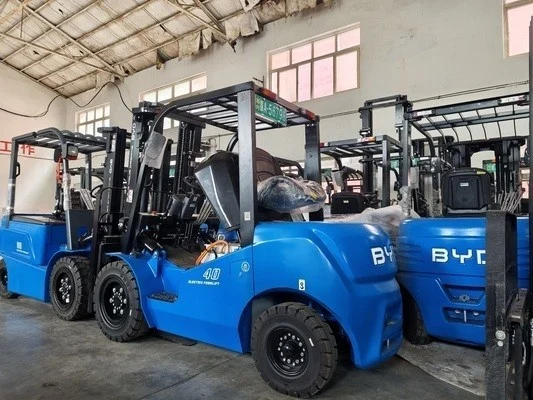
Attachments—such as sideshifters, fork positioners, or clamps—add weight and move the load forward, increasing the load center. This is called attachment derating. The attachment manufacturer or forklift supplier should provide a derating factor or a revised load chart that accounts for the attachment.
To verify:
- Measure the actual load center of your heaviest loads, including pallet depth and any overhang.
- Obtain the attachment’s weight and its effect on load center from the supplier.
- Request a revised capacity rating that combines the forklift and attachment.
- Check that the revised rating covers your required lift height and load weight.
Without these steps, you risk overloading the forklift, which can affect stability and component life.
Procurement Checklist: Information to Request and Verify
Use this checklist when requesting quotes or evaluating suppliers. It focuses on the data you need to confirm before purchase.
| Item | What to request | Why it matters |
|---|---|---|
| Load chart | Model-specific load chart with your chosen mast and carriage | Ensures rated capacity matches your configuration |
| Load center | Rated load center and capacity reduction curve if load center increases | Prevents overloading with deeper loads |
| Attachment derating | Attachment weight, forward movement, and revised capacity rating | Accounts for capacity loss when using attachments |
| Lift height | Capacity at your maximum lift height | Capacity may decrease at higher lifts |
| Battery and charger | Battery type, voltage, capacity, and charging profile | Affects duty cycle and operational availability |
| Documentation | Declaration of conformity, test reports (if available) | Supports verification of claimed specifications |
Also confirm the following with the supplier:
- Whether the load chart includes the weight of the battery and any optional equipment.
- If the forklift will operate on ramps or uneven surfaces, ask how grade and floor conditions affect stability and capacity.
- Request the actual measured data if the supplier claims performance beyond the standard chart.
When you contact us about a four-wheel counterbalance electric forklift, provide your load weights, load centers, lift heights, and any attachments so we can help you verify the correct configuration.
Frequently Asked Questions
Can I use the load chart from a similar model?
No. Load charts are specific to the model, mast, and carriage. Using a chart from a different configuration can lead to unsafe operation. Always request the chart that matches the exact forklift you are purchasing.
How do I determine the load center of my loads?
Measure from the vertical face of the forks to the center of gravity of the load. For palletized goods, this is often half the pallet depth, but overhang or irregular shapes can increase it. Use the largest load center among your typical loads.
What if I add an attachment after purchase?
Adding an attachment changes the capacity rating. You must obtain a new load chart or derating information from the attachment manufacturer or forklift supplier. Operating without updated capacity information may violate safety regulations.
Does lift height affect capacity?
Yes. Many load charts show reduced capacity at higher lift heights. Check the chart for the specific height you need. If your application requires high lifts, confirm the capacity at that height.