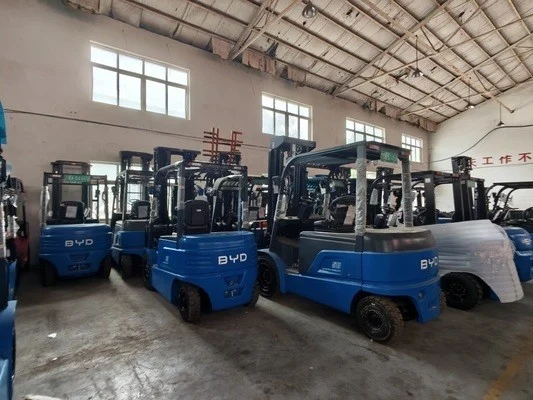
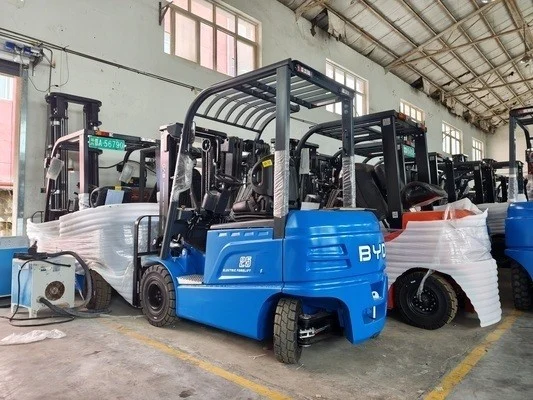
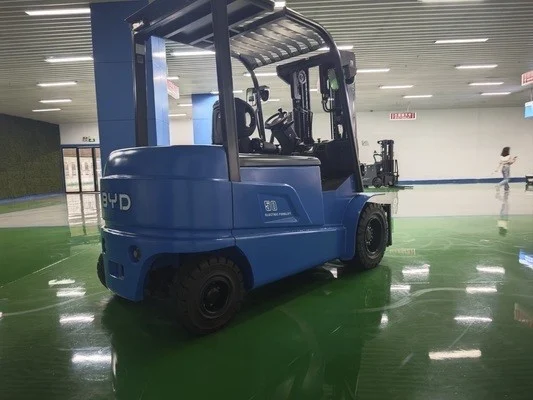
Critical Design Features BYD counterbalance forklift That Impact Long-Term Operational Reliability
News 05/10/2026
BYD counterbalance forklifts have gained traction across global material handling operations thanks to its electric powertrain architecture and zero-emission operation. Many operations teams prioritize long-term reliability when selecting new lift equipment, as unplanned downtime directly cuts productivity and increases operating costs. This article breaks down core design features of BYD counterbalance forklifts that directly impact long-term reliability, outlines real application scenarios, shares selection guidance, and highlights key operating limitations.
Battery Pack Architecture
BYD builds its own lithium iron phosphate (LFP) battery packs, which serve as the primary power source for its full line counterbalance forklifts. This in-house design brings unique reliability implications compared to third-party battery modules used by many competing brands.
Thermal Management System Integration
BYD integrates active thermal management directly into the battery pack assembly, rather than adding it as an aftermarket or secondary component. This design reduces loose connections and points of failure common with retrofitted systems. Stable battery temperatures, whether operating in cold warehouse environments or outdoor loading yards in warm climates, prevent cell degradation that shortens battery service life.
Modular Cell Design
Modular cell construction allows technicians to replace individual faulty cells instead of replacing the entire battery pack. This design reduces repair costs and keeps the forklift in service longer, as replacement modules ship from BYD facilities faster than full custom pack builds. Modularity also supports easier quality control during manufacturing, reducing the risk of factory defects that cause early failures.
Chassis and Frame Construction
The counterbalance design of these forklifts relies on a heavy frame to offset load weight. BYD uses high-tensile steel for frame construction on most counterbalance models, with full welded seam construction rather than bolted joints in high-stress areas.
Corrosion Protection Treatments
BYD applies full e-coating and powder coating to all frame components before final assembly. This treatment protects steel from moisture, road salt, and chemical spills common in food processing, refrigerated warehousing, and port operations. Untreated or partially treated frames develop rust that weakens structural integrity over time, leading to costly frame replacements or safety hazards.
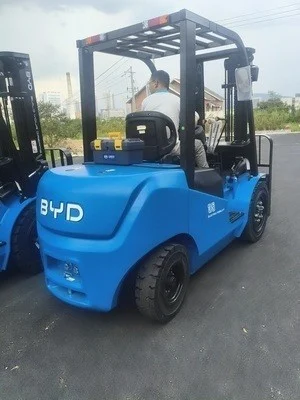
Counterweight Integration
The battery pack itself serves as part of the counterweight on most BYD counterbalance forklift models. This integration reduces the number of separate components, eliminates extra mounting brackets that can loosen over years of vibration from daily operation, and lowers overall center of gravity for more stable operation. Fewer components mean fewer potential points of failure across the chassis assembly.
Powertrain and Drive System Design
Unlike internal combustion counterbalance forklifts, BYD models use fully electric drive motors, with design choices that impact long-term reliability.
Enclosed Motor Construction
All drive and lift motors use fully IP-rated enclosures that keep dust, moisture, and debris out of internal windings and bearings. This design makes the forklift suited to outdoor operation where equipment faces exposure to rain, dust, and debris. Open motor designs common in lower-cost electric forklifts develop electrical faults or bearing damage much faster in harsh environments.
Reduced Moving Components
Electric powertrains have far fewer moving components than internal combustion systems, eliminating requirements related to oil changes, filter replacements, and tune-ups common with gas or diesel models. BYD further reduces part count by integrating motor controllers directly into the drive assembly, rather than mounting them in separate locations with long wiring runs. Fewer moving parts and wiring connections reduce the risk of unplanned failures over decades of use.
Application Scenarios and Selection Guidance
Not all operations gain the same reliability benefits from BYD counterbalance forklift design. The following guidance helps teams match this equipment to their specific needs:
High-Volume Daily Operation
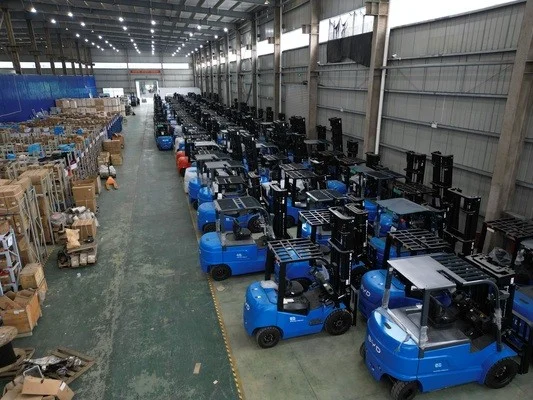
Operations running 2-3 shifts per day, such as distribution centers and port yards, see the greatest reliability benefits from BYD’s LFP battery design and reduced maintenance requirements. The thermal management system prevents rapid cell degradation even with frequent opportunity charging, keeping the forklift in service for more years of heavy use.
Harsh Environment Operation
Refrigerated warehouses, outdoor storage yards, and food processing facilities benefit from the enclosed motor design and corrosion protection on BYD frames. Cold temperatures reduce performance of many battery types, but BYD’s thermal management maintains stable cell output and slows degradation in sub-zero operating conditions.
Known Limitations
BYD counterbalance forklifts have higher upfront purchase costs than many comparable internal combustion or entry-level electric models. Operations with low usage (fewer than 20 hours per week) may not recover the extra upfront cost through reduced maintenance over the equipment service life. In addition, replacement parts on newer BYD models may have longer lead times in regions with limited authorized dealer networks, leading to longer downtime when rare failures occur.
Frequently Asked Questions
What design feature contributes most to BYD counterbalance forklift long-term reliability?
The in-house lithium iron phosphate battery pack with integrated thermal management is the top contributing design feature. This component directly impacts service life, as battery failure ranks top among causes of unplanned downtime across electric lift trucks.
Are BYD counterbalance forklifts reliable enough for outdoor use?
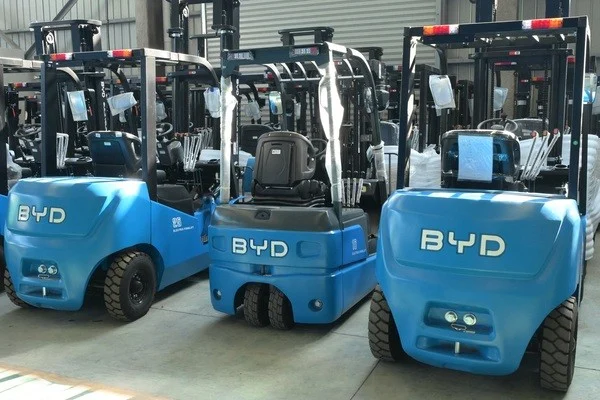
Yes, when the model includes fully enclosed motors and the standard corrosion protection package. These design features protect internal components from outdoor exposure, supporting consistent long-term operation in most outdoor material handling applications.
Can modular battery design reduce long-term repair costs?
Yes, modular cell design allows technicians to replace single faulty cells instead of the entire battery pack. This cuts repair costs significantly and reduces time the forklift spends out of service waiting for full battery replacements.
What operating conditions reduce BYD counterbalance forklift reliability?
Operation in areas with constant exposure to highly corrosive chemicals without additional specialized coating will accelerate frame corrosion. In regions with limited dealer support, even minor issues can lead to extended downtime due to long lead times on replacement parts.
Actionable Conclusion
BYD counterbalance forklift design includes multiple features that support long-term operational reliability, most notably its in-house LFP battery architecture, integrated chassis design, and enclosed electric powertrain. These benefits make the equipment ideal for high-volume, multi-shift operations and harsh environments where downtime creates significant productivity losses. Teams evaluating this equipment should account for higher upfront costs and regional parts availability before making purchasing decisions, to ensure the design aligns with their specific operational requirements.