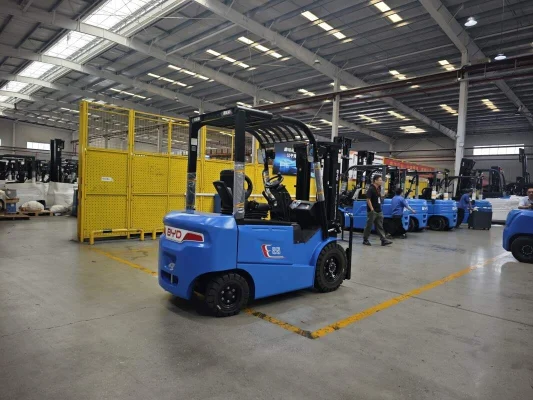
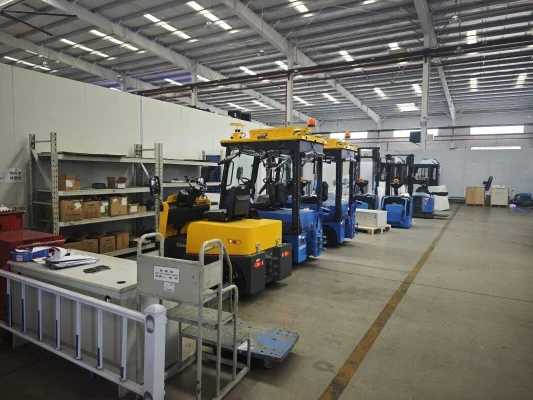
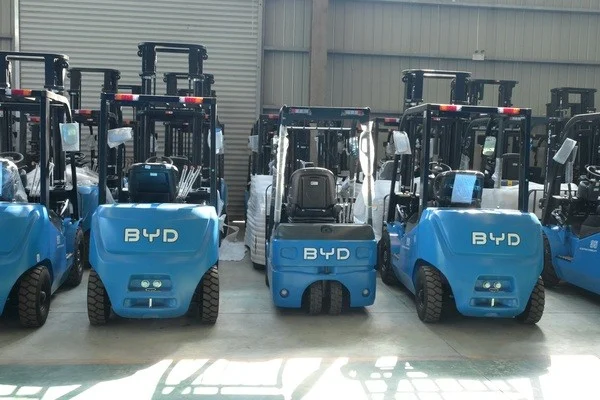
BYD ECB35 Four-Wheel Counterbalance Electric Forklift: Load Capacity and Lift Height Verification Before Purchase
News 09/11/2026
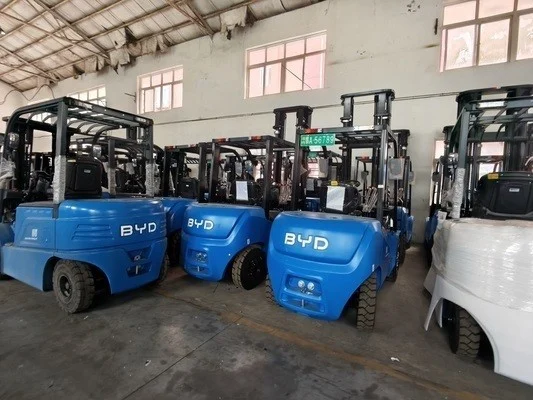
Buying a BYD ECB35 four-wheel counterbalance electric forklift starts with two numbers that decide almost everything else: rated load capacity and lift height. Neither number means much on its own. Capacity depends on the load center and the mast fitted, and lift height affects residual capacity, overhead clearance, and how the truck behaves at the top of a lift. Before you request a quotation, confirm these values against your actual loads and racking rather than relying on a headline figure. This guide covers the data to collect, the questions to put to the supplier, and the points to check at acceptance.
Why the Rated Capacity Figure Needs a Second Look
A counterbalance forklift is rated at a specific load center, usually 500 mm or 600 mm from the front face of the forks. Move the load further out and the safe capacity drops. The ECB35 is a 3.5-tonne class truck by model designation, but the usable capacity on your floor depends on the mast, carriage, and attachment fitted, plus the load center of the goods you actually handle.
Three practical checks help before purchase:
- Measure the real load center. A pallet whose weight sits close to the fork face behaves differently from a long load that overhangs. Note the distance from fork face to the load’s center of gravity.
- Ask which mast the capacity applies to. A truck with a taller mast or a different carriage may carry less at height. Request the capacity chart or data plate values that match the configuration you will buy.
- Check attachments. Any side-shift, clamp, or other attachment adds weight and moves the load center forward, reducing net capacity. Confirm the derating with the supplier.
Where the manufacturer’s technical data is not yet in hand, treat the capacity figure as provisional and ask the supplier to state the load center and mast configuration that the rating assumes.
Lift Height, Mast Choice, and Residual Capacity
Lift height is not simply the highest shelf you can reach. It is the combination of the mast’s rated lift, the free lift you need to enter low doorways or containers, and the capacity available at the height you will work. A triplex mast with full free lift is common in warehousing because it lets the forks rise within the mast before the mast extends, which matters when entering trailers or buildings with low openings.
Use these questions to pin down the requirement:
- What is the highest shelf level, and what clearance do you need above the load to lift and place it?
- Is there an overhead obstruction, such as a doorway, sprinkler line, or mezzanine, that limits the collapsed mast height?
- Do you need to work inside containers or trailers, where free lift and overall lowered height matter?
- What capacity is available at your maximum lift height, not just at floor level?
Ask the supplier to confirm the mast type, rated lift height, free lift, and the capacity at the working height you specify. If any of those values are unavailable, mark them as open items rather than assuming the headline capacity applies all the way up.
Data to Collect Before You Request a Quotation
A clear specification shortens the quotation cycle and reduces the risk of a truck that does not fit the job. The table below lists the information a supplier needs and why it matters. It is a general procurement checklist, not a set of confirmed ECB35 specifications.
| Item | What to Provide | Why It Matters |
|---|---|---|
| Loads | Typical and maximum weight, load center, pallet or load dimensions | Sets the real capacity requirement and attachment derating |
| Lift height | Highest shelf, required clearance, free lift needs | Determines mast type and capacity at height |
| Aisle and door widths | Narrowest aisle, doorway and container openings | Confirms the truck and mast fit the site |
| Floor and slope | Surface condition, ramps, gradients | Affects traction, braking, and safe operation |
| Shift pattern | Hours per shift, shifts per day, break charging windows | Informs battery capacity and charging arrangements |
| Charging | Available power, charging location, opportunity charging plans | Shapes charger selection and battery strategy |
Also note the environment: cold storage, dusty yards, or wash-down areas can change the specification. State these conditions plainly so the supplier can confirm suitability rather than guess.
Questions to Put to the Supplier
- Which mast and carriage does the quoted capacity refer to, and at what load center?
- What is the capacity at my maximum lift height?
- What battery and charger configuration suits my shift pattern, and what charging time should I plan around?
- Which documents will be supplied: data plate, capacity chart, operator manual, and maintenance schedule?
- What is the delivery configuration, and which items are optional?
Keep written answers with the quotation. Verbal figures are hard to check later if a question arises at acceptance.
Acceptance Checks on Delivery
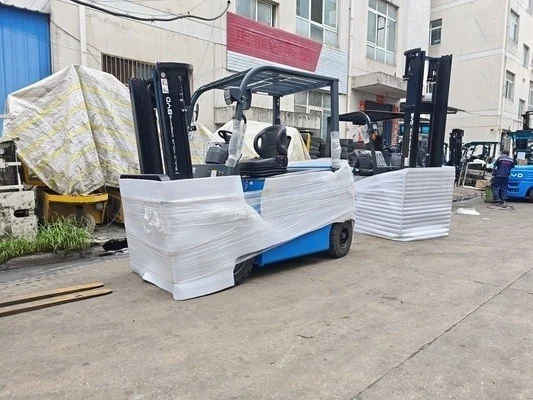
When the truck arrives, compare the delivered machine against the agreed specification:
- Confirm the data plate matches the quoted model, mast, and capacity values.
- Check the mast type, rated lift, and free lift against the order.
- Verify the battery and charger match the agreed configuration.
- Confirm the operator manual and capacity chart are present and legible.
- Record any deviation in writing before signing acceptance.
These checks are basic procurement hygiene. They do not replace any inspection or commissioning steps the supplier specifies.
Frequently Asked Questions
Does the ECB35 always lift its full rated load to full height?
Not necessarily. Capacity ratings are tied to a load center and a mast configuration, and capacity can fall as lift height increases or when an attachment is fitted. Ask the supplier to confirm capacity at your working height and load center.
How do I choose between mast types?
Base the choice on your highest shelf, the clearance you need above the load, and whether you must work inside containers or low doorways. Free lift and collapsed height are the deciding factors in tight spaces. Confirm the capacity available at height before deciding.
What charging information should I gather before purchase?
Note your shift pattern, the hours the truck will run, the power available at the charging location, and whether you plan opportunity charging during breaks. These details let the supplier propose a battery and charger configuration rather than a generic one.
Can I verify capacity myself before delivery?
You can compare the quoted figures against your load data and the supplied capacity chart. Physical load testing should follow the supplier’s instructions and any applicable site safety rules. Do not assume a truck will handle a load just because the headline rating is higher than the weight.
If you are planning a purchase, gather your load weights, load centers, lift heights, aisle dimensions, and charging conditions, then ask this site to confirm the matching BYD four-wheel counterbalance electric forklift configuration. Clear inputs lead to a quotation you can check line by line.