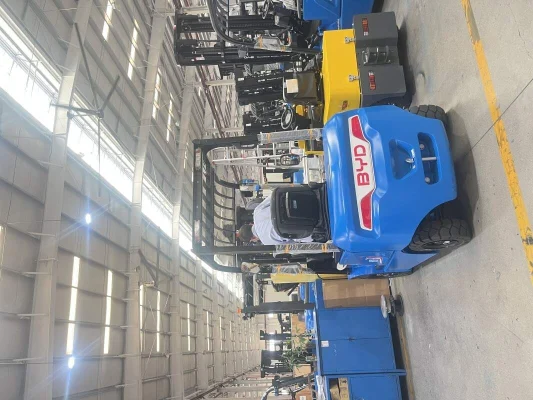
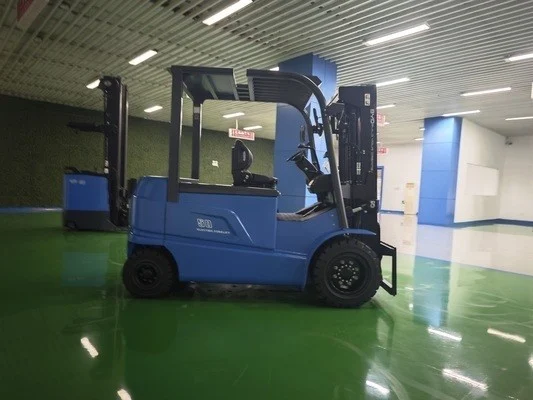
BYD ECB35 Four-Wheel Counterbalance Electric Forklift: Attachment and Load Center Questions to Settle Before Purchase
News 02/11/2026
The BYD ECB35 is a four-wheel counterbalance electric forklift, and attachments change the way it carries a load. Before you request a quotation, settle two linked questions: which attachment you need and where the combined center of gravity will sit. Attachment weight and a forward-shifted load center reduce the capacity available at the forks. The figures that matter are the rated capacity, the rated load center and the attachment data on the manufacturer’s specification sheet. Confirm all three before you commit to a configuration.
Why an Attachment Changes the Capacity Conversation
A counterbalance forklift stays stable because the load and the counterweight balance around the front axle. A bare carriage carries the load close to the mast. An attachment adds its own weight ahead of the carriage and often moves the load further forward. Both effects increase the load moment, so the truck can lift less than its nominal rating at the same height.
Two numbers drive the discussion:
- Rated load center — the distance from the fork face to the load’s center of gravity at which the rated capacity applies.
- Attachment load center — the additional distance the attachment adds to that figure.
The combined load center is the value to compare against the capacity chart. A load that is fine at the standard load center may exceed the limit once an attachment is fitted. Ask the attachment supplier to state its weight and load center, and ask the forklift supplier to confirm the derated capacity at your actual lift height.
Match the Attachment to the Task Before the Truck
Start with the handling job, not the model. The attachment should solve a specific handling problem, and each type has its own load-center penalty and capacity effect.
| Attachment type | Typical task | What to confirm |
|---|---|---|
| Side shifter | Aligning loads in racking or on a truck bed | Added weight, lateral offset, whether a fork positioner is also fitted |
| Fork positioner | Handling mixed pallet widths | Carriage class, added load center, hydraulic supply requirements |
| Clamp | Handling bales, cartons or drums | Clamp force, opening range, whether the load can be gripped safely |
| Rotator | Emptying containers or bins | Rotation range, added load center, hydraulic flow |
Combining attachments compounds the penalty. A side shifter plus a fork positioner adds weight and forward offset that a single attachment does not. List every function you need, then ask the supplier to confirm the resulting capacity at your lift height.
Data to Collect Before You Request a Quotation
A supplier cannot confirm a configuration without your real duty. Gather the following before you approach a dealer:
- Maximum load weight, including pallet or attachment-held product.
- Load dimensions and the position of the load’s center of gravity.
- Maximum lift height and whether loads are handled at height.
- Aisle width and any confined areas.
- Floor condition and ramp gradients on the route.
- Shift length and charging or battery-swap arrangements.
- Attachment type, weight and load center from the attachment supplier.
- Hydraulic flow and pressure the attachment requires.
Also state the environment: indoor, outdoor, cold-store or dusty. These conditions affect battery choice and component protection, and they belong in the quotation request rather than in a later conversation.
Questions the Dealer Should Answer in Writing
Ask the dealer to confirm the rated capacity at your lift height with the proposed attachment fitted. Ask whether the mast, carriage and hydraulic system are rated for that attachment. Ask what the delivered configuration includes: attachment, hydraulic lines, mounting, and any capacity plate change. If a figure is not available, ask what test condition would produce it rather than accepting an estimate.
Acceptance Checks and Common Mistakes
When the truck arrives, verify the configuration against the paperwork before putting it into service. The capacity plate should reflect the fitted attachment, not the bare-truck rating. Check that the attachment is mounted correctly and that hydraulic connections are secure. Confirm the attachment’s own data plate matches what was ordered.
Common mistakes to avoid:
- Comparing bare-truck capacity with the capacity you need while an attachment is fitted.
- Assuming the rated load center applies unchanged after an attachment is added.
- Ordering an attachment without confirming hydraulic supply and carriage compatibility.
- Ignoring lift height, which can reduce capacity further on some configurations.
- Leaving the capacity plate unchanged after fitting an attachment.
A short trial with your heaviest typical load, at your highest lift point, is a reasonable acceptance step. Record what was tested and under what conditions so the result is traceable.
Frequently Asked Questions
Does fitting an attachment always reduce capacity?
Usually yes, because the attachment adds weight ahead of the carriage and often moves the load center forward. The exact reduction depends on the attachment and must come from the manufacturer’s capacity data at your lift height.
Can I use the rated load center printed on the truck?
That figure applies to the bare truck. With an attachment fitted, the effective load center is larger, so compare your load against the derated capacity the supplier confirms.
What if the attachment supplier has no load-center data?
Ask for the attachment weight and the distance from the carriage face to the load’s center of gravity. Without these, capacity cannot be confirmed reliably, and the configuration should not be approved.
Should the capacity plate be updated after fitting an attachment?
Yes. The plate should reflect the configuration in service so operators see the correct limits. Confirm with the dealer who is responsible for updating it.