Zero Emission Forklift Lift Height and Mast Configuration: Matching Four-Wheel Counterbalance Electric Models to Rack and Clearance Limits
News 30/10/2026
A zero emission forklift only fits a racking layout when its mast, carriage and load stack clear every fixed obstruction along the travel path and at the pick face. Lift height alone does not decide that fit. The real answer comes from combining rated lift height, mast type, free lift, collapsed height, load center and the residual capacity left after derating. This article explains how to match a four-wheel counterbalance electric forklift to rack and clearance limits, which specifications to verify in writing, and where the limits of this truck class begin.
Reading Rack and Clearance Limits Before You Compare Masts
Start with the building and the racking, not the truck catalog. Every number below should come from drawings, a site survey or the rack supplier, and each should be recorded with the measurement conditions.
- Clear height under sprinklers, lights, beams and door headers: measured at the lowest point along the whole route, including turns.
- Top beam height and the highest pick level: the height at which the fork carriage must place a pallet, not the height of the top shelf.
- Pallet and load height: the tallest load plus pallet, since the carriage must clear the beam while carrying it.
- Aisle width and right-angle stacking aisle: the turning space needed to enter and leave a rack bay, which depends on truck dimensions and load length.
- Overhead services and rack-protection structures: fire piping, cable trays, column guards and guide rails that reduce usable clearance.
- Floor condition and ramps: surface type, joints, drains and slope, because these affect stability and safe travel with a raised load.
A common error is to order a mast that reaches the top beam exactly. Operators then need extra height to lift a pallet off the beam and to tilt the carriage back before lowering. The practical requirement is usually a margin above the highest pick, and the size of that margin should be agreed with the rack supplier and the truck supplier rather than assumed.
Mast Configurations and the Specifications That Decide Fit
Four-wheel counterbalance electric forklifts are commonly offered with simplex, duplex and triplex mast families, and within those families with different free-lift arrangements. The names and available combinations vary by manufacturer, so the datasheet matters more than the label.
Lift height and collapsed height
Rated lift height describes how high the forks can raise a load under defined conditions. Collapsed height describes how tall the mast is when fully lowered. A mast that reaches a high top beam often has a taller collapsed mast, which can conflict with door openings, mezzanine edges or low ceiling zones elsewhere in the building. Check both figures against the lowest and highest points on the route.
Free lift
Free lift is the amount the carriage can rise before the mast sections begin to extend. It matters where the truck must enter a rack bay or pass under an obstruction while lifting. A full free-lift arrangement is often requested in double-deep or low-clearance racking, but it adds mast complexity and should be confirmed against the actual rack geometry.
Load center and residual capacity
Rated capacity is tied to a stated load center, typically the distance from the fork face to the load’s center of gravity. Long loads, non-standard pallets, attachments and off-center loads reduce the safe capacity at height. Ask the supplier to state the residual capacity at the load center and lift height you actually use, not just the headline rating.
Attachments and carriage changes
Push-pull, clamp or rotating attachments change the load center and add weight ahead of the carriage. They can also increase the effective mast height. Any attachment should be quoted with its own capacity derating and its effect on overall dimensions.
| Parameter or configuration | Why it matters in racking | What to confirm with the supplier |
|---|---|---|
| Rated lift height | Must cover the highest pick plus a working margin | Rated height, the load center it applies to, and the margin recommended above the top beam |
| Collapsed mast height | Limits travel through doors and under low structures | Collapsed height with the specified carriage and attachment |
| Free lift | Needed to lift inside a bay or under an obstruction | Free-lift value and whether it is standard or optional on the quoted mast |
| Residual capacity at height | Prevents overload when lifting long or heavy loads | Capacity chart covering your load center, lift height and attachment |
| Aisle and turning dimensions | Determines whether the truck can work the rack layout | Drawbar length, overall width, turning radius and recommended aisle width |
| Overhead guard and mast profile | Affects clearance under beams and sprinklers | Overall height with mast lowered and the guard height |
Treat the table as a checklist, not a specification. Standard and optional features differ between models and markets, and only the manufacturer’s technical documentation confirms what a quoted truck includes.
Applying the Numbers to a Realistic Warehouse Scenario
The following is a hypothetical application scenario, used to show the method rather than to report a measured result. A distribution warehouse stores palletized goods in selective racking with a top beam at a height the site must measure, a loading dock with a door header, and aisles that include one right-angle turn into a cross aisle.
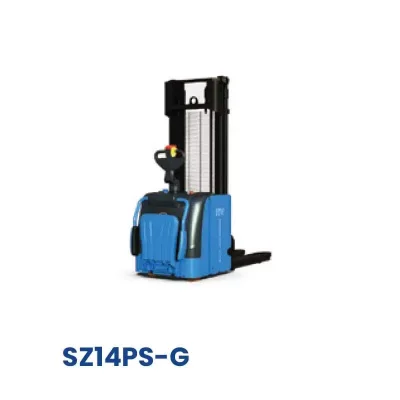
First, the site records the highest pick level, the tallest load, the lowest overhead obstruction and the narrowest aisle. Second, the buyer asks the supplier whether a four-wheel counterbalance electric model, with the mast family under consideration, can reach the top pick with the agreed margin while keeping a collapsed height below the door header. Third, the buyer requests the capacity chart at the actual load center and the recommended aisle width the rack layout requires.
If the rack is very high, the aisle is narrow, or the truck must lift inside the rack structure, the four-wheel counterbalance layout may not be the best fit. In those cases the honest answer is that the layout and the truck class need to be reviewed together, possibly with a different rack design or a different handling approach. A zero emission forklift is a description of the drivetrain, not a guarantee that every rack geometry suits it.
Where this truck class fits well
- Dock-to-rack transfer and general warehouse movement with moderate lift heights.
- Selective and block stacking where the aisle and turning space suit a counterbalance truck.
- Indoor operations where battery-electric operation supports air-quality and noise goals.
- Sites with a defined charging area and shift pattern that the battery and charger plan can support.
Where to pause and re-check
- Very narrow aisles that leave no safe turning space.
- Lift heights or load centers beyond the quoted capacity chart.
- Door headers or overhead services lower than the collapsed mast height.
- Floors or ramps where traction and braking need specific review.
Frequently Asked Questions
Does a higher rated lift height always mean a better match?
No. A taller mast usually increases collapsed height and can reduce residual capacity at the load center you use. Match the rated height to the highest pick plus an agreed margin, and check the collapsed height against every low point on the route.
Can one mast configuration serve two buildings with different clear heights?
Sometimes, but only if the tallest required lift and the lowest required collapsed height can both be met by the same mast, and the capacity chart still covers the heaviest load at height. Otherwise the limitation should be stated clearly rather than worked around informally.
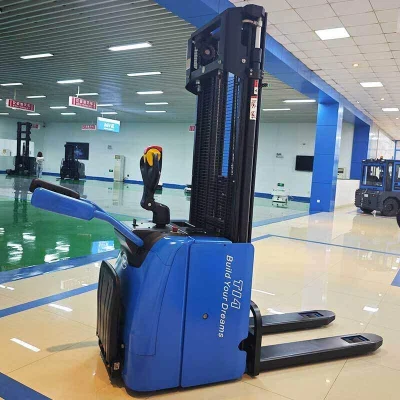
How do I confirm capacity when using a clamp or other attachment?
Ask the supplier to provide the capacity chart that includes the attachment, since the attachment changes the load center and adds weight ahead of the carriage. Do not rely on the base truck rating.
What should I send when requesting a configuration review?
Send the rack drawing with beam heights, the tallest load and pallet dimensions, the narrowest aisle and turning path, the lowest overhead obstruction, floor and ramp details, shift pattern and charging arrangements. With those inputs, a supplier can confirm which four-wheel counterbalance electric configurations are worth quoting and which limits need further discussion.
Before ordering, complete the data list above, ask the supplier to confirm every dimension and capacity figure in writing against the quoted mast and attachment, and check the final configuration against the rack and building drawings. That sequence turns a zero emission forklift decision into a verifiable fit rather than a guess.