How to Specify Lift Height and Load Center on a BYD Forklift China Four-Wheel Counterbalance Electric Truck
News 08/11/2026
Specifying lift height and load center on a BYD forklift china four-wheel counterbalance electric truck comes down to two linked decisions: the highest shelf or rack beam you must reach, and where the center of gravity of your load actually sits relative to the fork face. Get either wrong and the truck may be rated lower than you expect, may not clear the door frame, or may not fit the aisle. This guide walks through the specification sequence, the parameters that change the answer, and the questions to put to a supplier before ordering.
Start with the Real Duty, Not a Catalog Number
Lift height and load center are not free choices. They are outputs of the task. Before comparing any specification sheet, record the following at the actual site:
- Highest and lowest pick and place heights, measured to the fork surface, not to the pallet top.
- Pallet or skid footprint, overall load length, width, and height.
- Load weight, plus any attachment weight if one is used.
- Whether loads are uniform or vary between shifts.
- Clearance under overhead obstructions, door openings, and rack beams.
- Aisle width, turning space, floor condition, and ramp or slope locations.
- Shift pattern and available charging windows.
These figures define the envelope. A specification that ignores them is only a guess.
Lift Height: What the Number Really Means
Lift height is usually stated as the maximum fork height the mast can reach. That figure is not the same as the usable working height, and it is not the same as the truck’s overall height when the mast is lowered or raised.
Maximum fork height versus free lift
Maximum fork height describes the top of the lift range. Free lift describes how far the forks can rise before the mast sections begin to extend. Free lift matters where a low doorway or mezzanine sits between the truck and the racking, because a mast that must extend early may not clear the obstruction. Ask the supplier to confirm both values and the overall raised height of the mast, since raised height can exceed the building clearance even when the fork height looks acceptable.
Height, capacity, and stability travel together
On a counterbalance truck, raising the load raises the center of gravity of the whole machine-and-load combination. Manufacturers therefore publish a capacity rating at a stated load center and often a reduced capacity at a higher lift. A truck rated at a given load on the ground may carry less at full height. Do not assume the ground-level rating applies at the top rack beam. Request the capacity chart that covers the lift heights you actually use.
Mast choice and the building
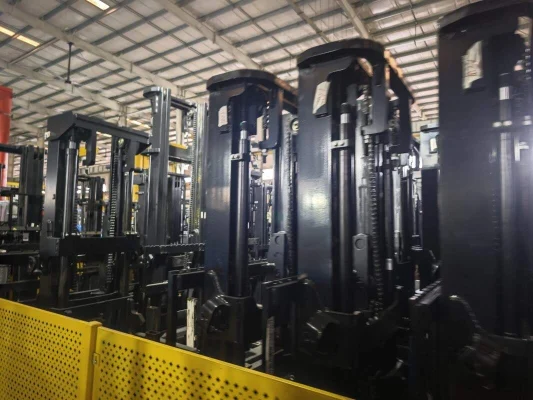
Mast type and stage count affect both lift height and collapsed height. A taller lift generally means a taller collapsed mast, which affects doorway clearance and overhead guard height. Confirm collapsed height, raised height, and the overhead guard height against the building, not just the maximum fork height against the racking.
Load Center: The Variable Buyers Underestimate
Load center is the horizontal distance from the vertical face of the forks to the center of gravity of the load. A standard rating is often quoted at a nominal load center, but real loads rarely match it.
How load center shifts
- Longer or deeper loads move the center of gravity forward, reducing safe capacity.
- Off-center or irregular loads create a combined effect that a single load-center figure does not capture.
- Attachments such as clamps, rotators, or extenders add weight and move the effective load center forward.
- Double-stacked or overhanging pallets change the geometry even when the weight is unchanged.
When the actual load center is greater than the rated load center, the safe capacity falls. The correct response is to specify the truck against the worst realistic load, not the average one, and to confirm the derated capacity with the supplier.
Measure, do not estimate
Take a representative loaded pallet, mark the vertical fork face position, and measure to the estimated center of gravity. If loads vary, measure the worst case. Record the result alongside the weight. These two numbers, plus the lift height, are the core of the specification.
Matching Specifications to the Four-Wheel Counterbalance Platform
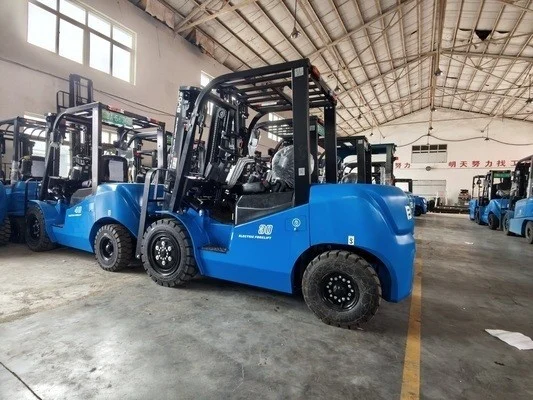
A four-wheel counterbalance electric forklift is a common general-purpose choice in factories, loading docks, and warehouse transfer work because it can handle a wide range of loads and surfaces. Whether it suits a specific task still depends on the numbers above, plus aisle width, floor strength, and charging arrangements. Where the aisle is very narrow or the lift requirement is extreme, the platform may not be the best fit, and that should be stated honestly rather than worked around.
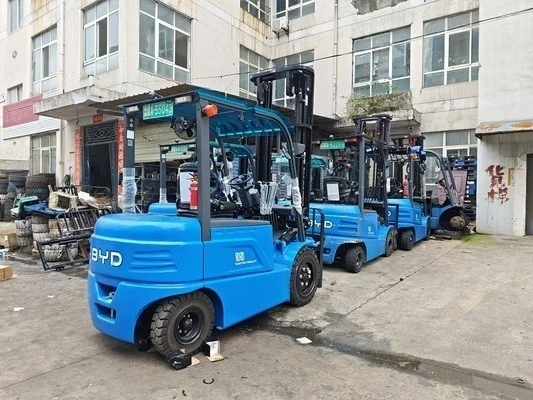
The table below summarizes the specification points that most often decide whether a proposed truck works. It separates what is usually standard, what is typically optional, and what must be confirmed with the manufacturer. It does not assign values, because those come from the supplier’s technical documentation.
| Parameter | Why it matters | What to confirm | Typical status |
|---|---|---|---|
| Maximum fork height | Reaches the top rack beam | Rated capacity at that height | Model-dependent |
| Free lift | Clears low doorways and mezzanines | Value at the chosen mast | Model-dependent |
| Collapsed and raised mast height | Building and doorway clearance | Both figures with the selected mast | Confirm with supplier |
| Rated load center | Sets the capacity basis | Actual load center of your worst load | Published rating |
| Derated capacity at height | Prevents overloading at the top beam | Capacity chart covering your heights | Confirm with supplier |
| Attachment effect | Adds weight and shifts load center | Capacity with the attachment fitted | Optional, needs confirmation |
| Aisle and turning clearance | Determines whether the truck can work the rack | Required aisle width at your load length | Site-specific |
| Charging and shift pattern | Affects uptime planning | Charging windows and battery configuration | Confirm with supplier |
Treat every cell in the last column as a question, not an assumption. A configuration offered on one model is not automatically available on another.
A short specification sequence
- List the highest and lowest working heights and the worst-case load weight and load center.
- Measure doorway, mezzanine, and overhead clearance along the travel path.
- Confirm aisle width and turning space at the rack face.
- Ask the supplier to match a mast and capacity rating to those figures, including derated capacity at height.
- Check collapsed height, raised height, and overhead guard height against the building.
- Review charging windows and shift pattern before finalizing the battery and charger arrangement.
- Verify the final configuration in writing, including any attachment and its effect on capacity.
Common Specification Mistakes and How to Avoid Them
- Using the ground-level capacity at full height. Always check the capacity chart at the lift height you will use.
- Assuming the nominal load center matches your pallet. Measure the worst case and ask what capacity remains.
- Forgetting the attachment. An attachment changes both weight and load center; confirm the derated rating.
- Checking fork height but not raised mast height. The mast can exceed building clearance even when the forks do not.
- Ignoring the collapsed mast. A tall lift may need a taller collapsed mast that will not pass a doorway.
- Specifying to the average load. The truck must handle the heaviest and most off-center load it will actually see.
Frequently Asked Questions
Can I increase lift height after purchase?
Mast changes are a major modification and are not a routine field upgrade. The practical approach is to specify the lift height correctly at the outset. If requirements change later, ask the supplier whether a different mast or truck is the appropriate route, and confirm the capacity implications.
Does a higher lift always mean lower capacity?
Not automatically, but capacity is normally rated at a stated load center and height, and many trucks carry less at greater height. The only reliable answer is the manufacturer’s capacity chart for the specific model and mast. Do not infer a derating percentage from another truck.
How do I know my actual load center?
Measure from the vertical fork face to the estimated center of gravity of a representative loaded pallet, and repeat the measurement for the most awkward load you handle. If the result exceeds the rated load center, ask the supplier what capacity remains at that value.
What if my aisle is too narrow for a four-wheel counterbalance truck?
That is a real constraint, and it should be identified before ordering. Provide the aisle width, load length, and rack configuration to the supplier so the required turning clearance can be checked. If the platform does not fit the aisle, say so and reconsider the layout or the handling method rather than forcing a truck into a space it cannot work safely.
Which documents should I request before approving a configuration?
Ask for the capacity chart covering your lift heights and load center, mast dimensions including collapsed and raised height, the rated load center basis, confirmation of any attachment effect, and the battery and charging arrangement. Keep these documents with the purchase record so future changes can be checked against the original basis.
Before You Order: A Data Checklist
Bring the following to any supplier discussion: worst-case load weight; measured load center; highest and lowest working heights; doorway, mezzanine, and overhead clearances; aisle width and turning space; floor and ramp conditions; shift pattern and charging windows; and any attachment planned. Then ask the supplier to confirm rated capacity at your actual lift height and load center, mast dimensions, attachment derating, and the charging configuration. If you would like help matching these figures to a BYD four-wheel counterbalance electric forklift, share your duty details and the team can review the specification against the available technical documentation.