What Site Conditions and Duty Cycles Should You Confirm Before Ordering a BYD Forklift China Four-Wheel Counterbalance Electric Truck?
News 13/11/2026
Ordering a BYD forklift from China starts with a clear picture of your site and how hard the truck will work. Before you discuss models or options, gather facts about your building, loads, and operating schedule. This guide explains which site conditions and duty-cycle details matter most when you are considering a four-wheel counterbalance electric forklift, and how to use that information in conversations with a supplier.
Key Site Conditions to Document
Site conditions determine whether a standard four-wheel counterbalance electric forklift can work safely and efficiently, or whether you need specific configuration changes. Walk your facility and record the following. Use measurements and observations, not guesses.
Floor and Ground Conditions
Check floor flatness, surface material, and condition. Cracks, expansion joints, drains, and transitions between indoor and outdoor areas affect travel comfort and load stability. Note any ramps or slopes and their gradient. Confirm whether the truck will operate on smooth concrete, asphalt, or uneven ground. Also record housekeeping practices: debris, oil, or water on the floor can reduce traction. These details help your supplier recommend tyre type and discuss braking performance, but final suitability depends on the specific truck configuration and site rules.
Load Details and Handling Equipment
List the loads you will move: typical weight, maximum weight, dimensions, and centre of gravity. State whether loads are on pallets, in bins, or handled with attachments such as clamps or push-pull units. Attachments change the truck’s remaining capacity, so share this early. Also describe load stability—whether loads are uniform or can shift. Provide the load centre distance you actually use, not just the rated capacity on a label. A four-wheel counterbalance electric forklift has a rated capacity at a specified load centre; exceeding that combination reduces safe working load.
Racking, Lift Height, and Overhead Obstructions
Measure the highest lift you need and the overhead clearance at that height. Include rack beam heights, door openings, and any low beams, sprinklers, or lighting. Confirm the free lift required if you enter racking with low clearance. Note the type of racking and whether loads are double-stacked. These measurements determine mast type and collapsed height, which are critical space and safety factors. Do not assume a standard mast will fit; verify with your supplier using your actual dimensions.
Aisle Width and Turning Space
Measure the narrowest aisle, the width of doorways, and the space available at aisle ends. Include the turning radius needed at intersections and loading docks. A four-wheel counterbalance electric forklift typically needs more aisle width than some other truck types, so confirm whether your aisles allow safe right-angle stacking or require a different handling approach. If aisle width is tight, discuss it openly; a different truck type may be more suitable, and your supplier should tell you if a counterbalance model is not the best fit.
Floor Loading and Surface Capacity
Confirm that the floor and any mezzanines or ramps can support the truck plus its load. The truck’s weight, including the battery, is part of the total load on the floor. Check with your facility engineer if you are unsure. This is especially important in older buildings or upper levels.
Charging Location and Power Supply
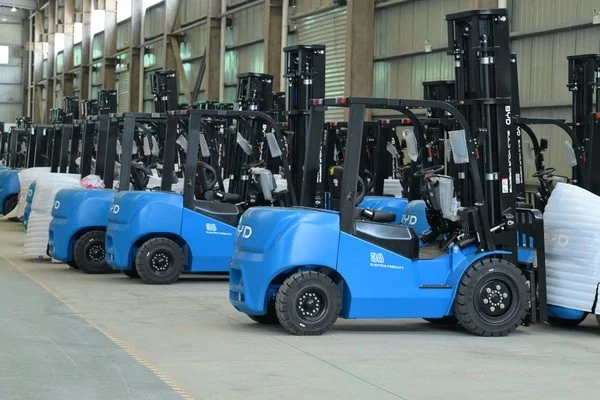
Identify where you will park and charge the truck. Confirm the available voltage and current, and whether charging will occur in a dedicated area or near work zones. Check ventilation and any local rules about battery charging. For lithium-ion models, ask your supplier about charging temperature limits and any site requirements. Provide the distance from the charging area to the work area, as this affects how you plan opportunity charging.
Environmental Factors
Note temperature ranges, humidity, dust, corrosive substances, and whether the truck will work outdoors. If you operate in cold storage or wet conditions, state this clearly. These factors influence options such as cabin enclosures, heaters, special seals, and battery thermal management. Do not assume a standard truck will perform the same in extreme conditions; ask your supplier to confirm the operating limits for the specific model and battery.
Duty Cycle Details That Affect Configuration
Duty cycle describes how intensively the truck will be used. It affects battery size, charging strategy, and component selection. Record the following based on your actual schedule, not an ideal day.
Operating Hours and Shift Pattern
State the number of hours per shift and shifts per day, and whether the truck runs continuously or with breaks. Include peak periods, such as seasonal surges. This information helps determine whether a single battery and charging window are sufficient, or whether multiple batteries or opportunity charging are needed. Be honest about overtime and weekend work.
Travel Distance and Speed
Estimate the average and maximum travel distance per hour, and the typical travel speed. Long runs between pick-up and drop-off points consume more energy. Note whether the truck will frequently travel ramps or through doors. These details help your supplier discuss battery capacity and motor configuration, but actual energy use depends on many factors, so treat estimates as planning inputs, not guarantees.
Lift Frequency and Load Weight Distribution
Count the number of lifts per hour and the average load weight. State the percentage of lifts at maximum load. Frequent lifting of heavy loads places more demand on the hydraulic system and battery. Share whether loads are lifted to full height often or mostly low lifts. This helps in selecting the right capacity and cooling provisions.
Idle Time and Accessories
Note how much time the truck spends idling with accessories running, such as lights, fans, or heaters. These draw power and affect energy planning. Also list any special attachments and their power requirements.
Charging Windows and Battery Strategy
Describe when the truck can be charged: during breaks, between shifts, or only overnight. Confirm the available charging time and whether you can install fast charging. For lithium-ion batteries, opportunity charging may be possible, but you must confirm the battery management system limits and charging equipment with your supplier. Do not assume any lithium-ion battery can be charged at any time without restrictions.
Matching Conditions to a BYD Four-Wheel Counterbalance Electric Forklift
With your site and duty-cycle data ready, you can discuss configuration with a supplier. The table below summarises key parameters, why they matter, what to confirm, and typical configuration choices. Treat the options column as a discussion guide; availability depends on the specific model and supplier confirmation.
| Parameter | Why It Matters | What to Confirm | Possible Configuration Choices |
|---|---|---|---|
| Rated capacity and load centre | Safe handling of your heaviest loads | Actual load weight, load centre distance, and attachment effect | Standard or heavy-duty capacity; attachment-ready carriage |
| Lift height and mast type | Reaching rack levels and fitting through doors | Highest lift, overhead clearance, free lift needed | Two-stage, three-stage, or full-free lift mast |
| Aisle width and turning radius | Safe manoeuvring in tight spaces | Narrowest aisle, doorway width, right-angle stacking | Tyre type and chassis options; alternative truck type if needed |
| Battery and charging | Runtime and charging logistics | Shift hours, charging window, power supply, temperature limits | Battery capacity, charger type, opportunity charging capability |
| Environment and operator comfort | Productivity and safety in your conditions | Temperature range, dust, humidity, outdoor use | Cabin, heater, seals, special displays, lighting |
When you contact a supplier about a BYD forklift from China, share your completed site and duty-cycle notes. Ask specific questions: Which model’s rated capacity applies at my load centre? What are the battery operating temperature limits? What charging equipment do you recommend my power supply? Can you provide a dimension drawing to check aisle and door clearances? Confirm what is standard, what is optional, and what requires factory confirmation. Avoid assuming that any option is available on all models.
If your aisle is very narrow or your lift height is extreme, a four-wheel counterbalance electric forklift may not be the most suitable choice. A reputable supplier should tell you when a different truck type fits better. This article focuses on four-wheel counterbalance models because that is our sales scope; we do not recommend other types as substitutes without a clear discussion of their trade-offs.
Frequently Asked Questions
How do I measure aisle width correctly?
Measure the clear distance between the widest fixed obstacles at the narrowest point, including rack uprights, walls, and door frames. Also measure the space at aisle ends and any turning areas. Provide these measurements along with the load length and width. Your supplier can then check whether a specific truck model can safely stack and turn, but final confirmation requires the truck’s dimension drawing.
What if my duty cycle varies a lot between seasons?
Document both typical and peak periods. Share the highest expected hours and loads. This helps your supplier discuss battery capacity and charging strategy that can handle peaks without compromising daily work. If peaks are short, you might consider opportunity charging, but confirm battery limits and charger availability.
Can I use a standard four-wheel counterbalance electric forklift in cold storage?
Cold storage requires careful review. Standard trucks may have temperature limits for components, battery, and hydraulic oil. You must confirm the minimum operating temperature and any cold-storage configuration with your supplier. Do not assume a standard model is suitable. Also consider condensation when moving between temperature zones and how that affects electrical components.
What information should I have ready when requesting a quote?
Prepare a summary of load weights and dimensions, lift heights, aisle widths, floor conditions, shift pattern, charging location and power supply, and any environmental extremes. Include photos or drawings if possible. This helps your supplier recommend a configuration and identify any points that need factory confirmation.
Gathering site and duty-cycle facts before you order saves time and reduces the risk of a truck that does not fit your operation. Use the checklists above, ask detailed questions, and insist on written confirmation of specifications that matter to your safety and productivity.