Cold Storage Electric Forklift Tender Review: Four-Wheel Counterbalance Questions Buyers Should Raise Before Award
News 02/11/2026
A cold storage electric forklift tender is easy to write and hard to write well. The document usually looks complete: a load rating, a lift height, a voltage, a delivery date. Then the bids arrive with different battery chemistry, different cab sealing, different derating assumptions, and a price spread that seems to have no relationship to the specifications on the page. The gap is almost always in what the tender did not ask. This review lists the questions buyers should settle before awarding a contract, written around four-wheel counterbalance electric forklifts operating inside freezers, chillers, and cold-dock transitions.
The aim is not a longer specification. It is a specification that forces bidders to state their assumptions, so that offers can be compared on the same basis and the awarded machine can be accepted without argument later.
Start With the Duty Cycle, Not the Nameplate Capacity
Nameplate capacity is a reference point measured under defined conditions, and those conditions rarely match a freezer aisle. Before comparing offers, describe the work the truck will actually do and require each bidder to confirm the machine suits it.
- Loads: typical and maximum weight, load dimensions, and whether loads are stable pallets or awkward goods.
- Load centre: the distance from the fork face to the load centre. A capacity rating is tied to a stated load centre, and a longer load shifts the safe limit downward.
- Lift height and mast type: the highest shelf or rack beam the forks must reach, plus any low-clearance doorways or mezzanine restrictions along the route.
- Shift pattern: hours per shift, shifts per day, and how the truck is shared between freezer work and ambient work.
- Attachments: any clamp, push-pull, or special fork that changes the load centre and the rated capacity.
Ask bidders to state the residual capacity at the required lift height and load centre, not only the headline figure. If a bidder cannot supply that, the offer is not yet comparable.
Cold-Room Conditions That Change the Machine
Temperature is the obvious variable and the one most often reduced to a single number. A truck that spends its day at −25 °C has different requirements from one that works mostly at +2 °C and occasionally enters a freezer. The tender should define the operating envelope precisely.
Temperature zones and transitions
State the coldest sustained temperature, the warmest working temperature, and how often the truck crosses between them. Repeated transitions through a cold dock create condensation and ice, which affect both the machine and the floor. Ask how the proposed truck handles frosting on the mast, the overhead guard, and the operator compartment.
Humidity, washdown, and ice
Cold stores vary widely: some are dry, some see regular washdown, and some have ice buildup at doorways. Each bidder should confirm the enclosure rating and sealing approach that suits the stated conditions, and should say which parts are protected and which are not.
Floor, ramps, and aisle width
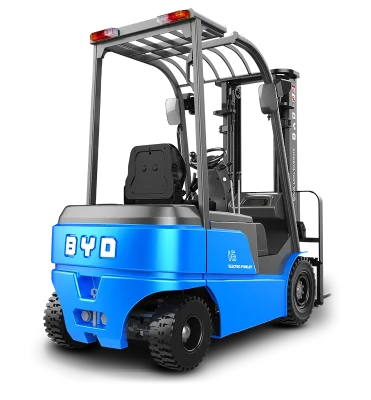
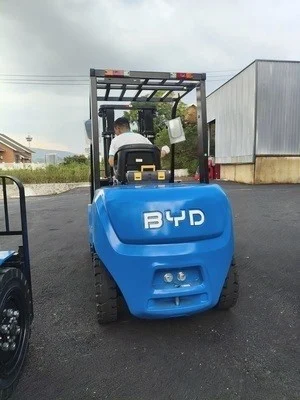
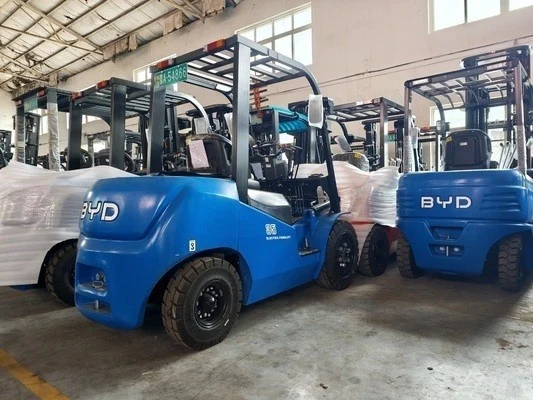
Cold-store floors can be smooth, worn, or coated, and ramps or dock levellers may be present. Provide aisle widths, turning areas, and any gradients. A four-wheel counterbalance electric forklift is a common general-purpose choice in cold storage, but its suitability still depends on these details, so ask bidders to confirm the machine fits the measured layout rather than a nominal one.
Battery, Charging, and Cold-Weather Derating
Battery behaviour in cold conditions is where many tenders lose precision. Rather than asking which chemistry is best, ask each bidder to describe how the proposed battery and charger will be managed across the shift pattern.
- Charging location: is the charger inside the cold room, in a conditioned area, or at a cold dock? The answer affects charging strategy and battery care.
- Opportunity charging: will the truck charge during breaks, and does the proposed configuration support that routine without harming battery life?
- Runtime assumptions: ask bidders to state the assumptions behind any runtime claim, including temperature, load, and lift height.
- Spare batteries or a second truck: if the operation cannot tolerate charging downtime, this should be a tender decision, not a post-award surprise.
- Cold-weather capacity effects: require bidders to explain how available capacity changes at the lowest stated temperature and what that means for the duty cycle.
Where the site is considering lithium-ion models, ask what the supplier recommends concerning charging temperature limits, storage, and any cold-weather operating guidance. Specific figures should come from the manufacturer’s technical documentation supplied with the bid, not from general statements.
Operator Safety, Uptime, and Acceptance
Cold storage work is uncomfortable and sometimes rushed, so the operator environment and the support arrangements deserve explicit tender clauses.
Cab and controls
Ask how the cab is heated, how windows are kept clear, and how controls remain usable when an operator wears thick gloves. Request details on lighting, mirrors, and visibility through frosted glass.
Service and spare parts
Require bidders to state response times, the location of service support, the availability of common spare parts, and what maintenance the site must perform itself. Cold-room access rules affect how quickly a technician can attend, so ask how the bidder plans around them.
Acceptance testing
Define what must be demonstrated before final payment: the stated residual capacity at the required height, the lift and travel speeds under load, the charging routine, and the safety devices. Agree who provides the test load and where the test takes place. If the site cannot test at the coldest temperature, say so and agree an alternative verification method.
Frequently Asked Questions
Should the tender specify a battery chemistry?
It can, but the more useful approach is to specify the duty cycle, the temperature envelope, the charging location, and the required uptime, then ask bidders to justify their proposed chemistry against those conditions. This keeps offers comparable without excluding workable options.
How should capacity be compared between bids?
Compare residual capacity at the stated load centre and lift height, not the headline rating. Ask each bidder to show the figure and the conditions behind it, and treat an unexplained number as incomplete.
What if bidders cannot confirm cold-room performance?
Ask them to state what testing or documentation would be needed and who would provide it. A bidder who cannot support a claim in writing leaves the buyer carrying the risk after award.
Is a four-wheel counterbalance electric forklift always the right choice?
No. It is a common general-purpose option in cold storage, but aisle width, floor conditions, lift height, and duty cycle still determine whether it fits. Other truck types exist and may suit specific layouts, so confirm the match to your measured site before awarding.
Before the tender closes, ask each bidder to supply the measured site data, the residual capacity figures, the battery and charging plan, and the acceptance test procedure in writing. Buyers who want to discuss a four-wheel counterbalance electric forklift configuration against their own cold-store conditions can share the load, lift height, aisle dimensions, and temperature range with our team.