Common Operational Mispractices That Compromise Industrial Forklift Structural Integrity and Site Safety
News 14/10/2026
Overloading Beyond Rated Capacity
Many operators and site managers push industrial forklift limits to move more material in fewer trips. This practice places unapproved stress on every major structural component, including the mast, frame, lift chains and axles. Repeated overloading causes fatigue cracking in metal components, where small cracks grow larger with every load cycle. Eventually, sudden structural failure can occur without warning, leading to catastrophic equipment damage or serious workplace injuries.
Unbalanced overloading also increases side tip risk, as the forklift’s center of gravity shifts outside safe design parameters. Even if an overloaded lift completes a task successfully, hidden structural damage accumulates over time and shortens equipment lifespan dramatically. Rated capacity listings on your forklift’s identification plate reflect safe load limits matching your unit’s specific configuration. Never adjust these limits to accommodate larger loads.
Improper Load Handling and Placement
Unsafe load placement creates uneven stress distribution across an industrial forklift’s frame and mast, even when total weight stays under rated capacity. Common mispractices include placing loads on only one fork, positioning loads too far forward on the forks, or traveling with loads held at full lifting height. Each of these actions shifts the center of gravity and places extra stress on one side of the structural frame.
Unsafe Maneuvering With Loads
Hard braking, sharp turns and sudden direction changes while carrying full loads also damage structural components. These actions create dynamic force that far exceeds the static stress of a stationary load. Over months of repeated mispractices, welds can crack, mast rails can bend and fork mounting brackets can shift out of alignment. Correct operation requires centered load placement, reduced travel speed with elevated loads and gradual changes in speed or direction.
Neglecting Environmental Exposure and Parking Habits
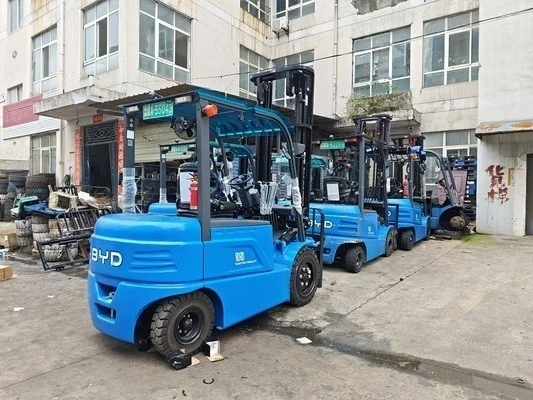
Many operations overlook how long-term parking and storage habits affect structural integrity. Parking an industrial forklift on uneven or sloped ground for extended periods creates constant uneven stress on the frame, leading to gradual warping over time. Leaving loaded forks parked overnight also keeps constant tension on lift chains and mast components, accelerating wear and deformation.
Outdoor parking without protection exposes structural metal to moisture, temperature swings and corrosive materials. Corrosion weakens weld joints and thin metal sections, even when surface damage remains invisible to the naked eye. Units used in coastal or chemical processing sites face even higher corrosion risk, requiring more frequent structural checks.
Skipping Regular Structural Inspections
Most maintenance programs focus on engine performance, brake function and tire condition, but often skip detailed checks of core structural components. Small, visible cracks or minor bends often get ignored because they do not affect immediate operation. These small defects grow rapidly under repeated stress, leading to unexpected failure before the next scheduled maintenance.
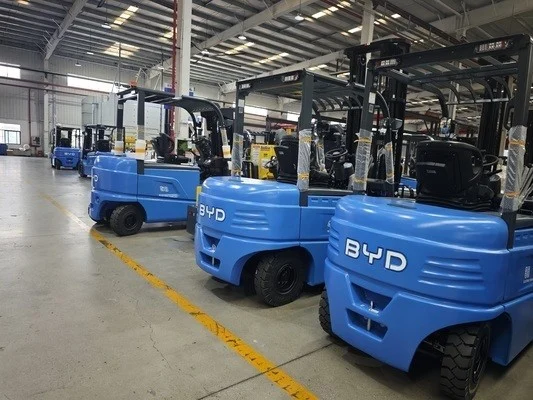
Effective inspection programs include daily pre-shift visual checks for visible damage to forks, masts and frames. Annual or semi-annual professional inspections include non-destructive testing to find hidden cracks or corrosion in high-stress areas. Any identified damage requires prompt repair or component replacement before the unit returns to service. Delaying repairs increases risk of catastrophic failure and higher long-term repair costs.
Frequently Asked Questions
Can minor frame damage impact an industrial forklift’s safe operation?
Yes. Even small cracks or minor bends weaken overall structural integrity over time. Repeated stress causes small defects to expand, which can lead to sudden failure during normal operation. All identified structural damage requires prompt assessment by qualified technicians, and damaged units stay out of service until repairs complete.
What simple step reduces overloading risk?
Keep your industrial forklift’s rated capacity clearly visible near the operator’s station. Train all operators to confirm any load weight before lifting. Never rely on visual estimation to determine if a load falls within safe limits. Use available site scales to confirm unknown load weights before lift off.
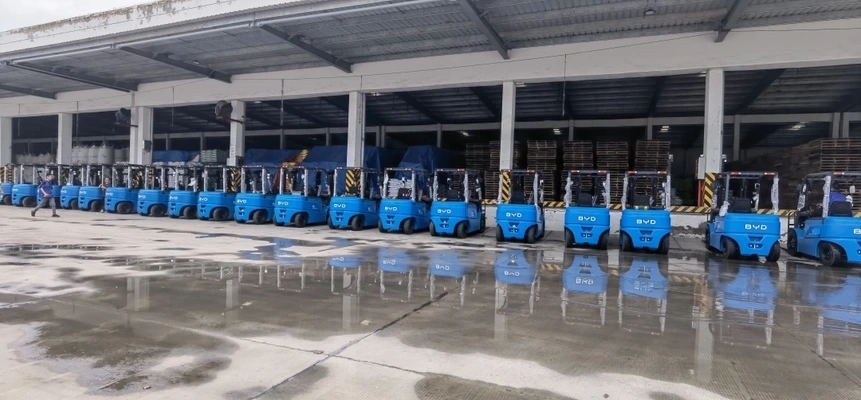
Do outdoor operating industrial forklifts need extra structural inspections?
Yes. Outdoor units face constant exposure to moisture, de-icing materials, and extreme temperature shifts that speed corrosion and metal fatigue. Add monthly focused inspections of welds, undercarriage components and painted structural surfaces to catch corrosion and early cracking before it progresses.
Who can complete required structural inspections for industrial forklifts?
Qualified technicians with training in material handling equipment structural assessment complete formal inspections. Operators can complete daily pre-shift visual checks, but formal annual inspections require trained personnel familiar with common failure points and relevant safety standards.