Critical Considerations When Retrofitting Lead Acid Forklifts With A Lithium Ion Forklift Battery
News 20/10/2026
Retrofitting an existing lead acid forklift to use a lithium ion forklift battery can unlock operational improvements, but poor planning leads to costly mistakes, compatibility issues, or safety risks. Below we cover core critical considerations every operation must review before starting this type of conversion project.
Verify Physical and Electrical Compatibility
Battery Dimensions and Compartment Fit
Lead acid batteries and lithium ion forklift battery units often have different dimensions even when they deliver similar power output. Many retrofitting projects fail because teams assume same power rating equals same physical size. You must measure your existing battery compartment length, width, height, and clearance needed to accommodate any attached cables or locking mechanisms before placing an order. Some lithium ion designs integrate built-in battery management systems (BMS) that add small amounts of extra bulk, so include that extra bulk in your measurements when taking your final numbers. Also check how your forklift secures the battery. Many lead acid units use specific hold-down clamps or tray designs that may need modification to fit a new lithium ion unit.
Voltage and Charging System Matching
Your forklift’s existing electrical system must align with the output voltage of your new lithium ion forklift battery. Mismatched voltage will damage your forklift’s motor, controller, or the battery’s own BMS. Double check your forklift’s original voltage specification against the new battery’s rated output. Many retrofit projects require replacing the original lead acid charger, since lithium ion chemistry uses different charging profiles and voltage levels. Some modern chargers support multiple chemistries, but you must confirm the charger is programmed correctly to work with your specific lithium ion unit before you connect it. Also check if your forklift’s controller needs any software updates or calibration to handle the different discharge characteristics of lithium ion chemistry. Unlike lead acid, lithium ion maintains consistent voltage through almost its entire discharge cycle, which can change how your forklift performs if the controller is not adjusted correctly.
Assess Safety and Infrastructure Requirements
Ventilation and Temperature Control Needs
Lead acid batteries release hydrogen gas during charging, so many older charging areas include mandated ventilation systems. Lithium ion forklift batteries do not release gas during normal operation or charging, so you do not need the same level of ventilation. However, lithium ion chemistry is more sensitive to extreme temperatures. If your charging area stays consistently below freezing or above 35 degrees Celsius, you may need to add temperature control measures to protect your new battery and preserve its expected service life. Uncontrolled extreme temperatures reduce lithium ion battery capacity and can increase risk of thermal runaway in rare cases.
Weight Distribution and Forklift Load Capacity
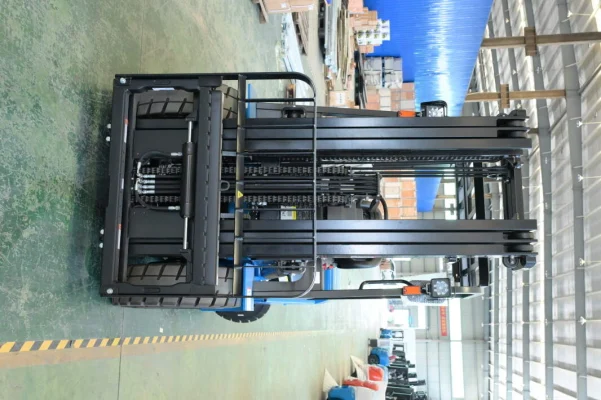
Lithium ion batteries deliver higher energy density than lead acid alternatives. This means a lithium ion battery with the same power capacity as your original lead acid unit will weigh significantly less. Weight acts as a counterbalance on most forklifts, so changing battery weight changes your forklift’s maximum safe load capacity. You must recalculate your forklift’s rated load capacity after installing a lighter lithium ion battery, and update any load capacity decals on the unit to reflect this change. Failing to adjust load ratings can lead to tip-over accidents and serious injuries. If you need to maintain your original load capacity, you can source a larger capacity lithium ion battery that matches the original lead acid unit’s weight, but this will require checking compartment clearance again to ensure proper fit.
Upfront Cost and Long Term Value Alignment
Retrofitting to a lithium ion forklift battery requires a larger upfront investment than replacing an old lead acid unit with a new lead acid model. You must map your expected usage patterns to see if the long term benefits align with your initial investment. Lithium ion batteries support opportunity charging during break periods, which can eliminate the need to swap batteries during multi-shift operations. This reduces labor needs associated with battery swapping and can free up storage space previously used by spare lead acid batteries. However, if you operate your forklift only one shift per week or less, the long term savings may not offset the higher upfront cost. Also check if your facility’s electrical service can support the new charging system. Higher capacity lithium ion chargers may require upgrades to your facility’s electrical panel or wiring, which adds additional upfront cost your project budget must include.
Frequently Asked Questions
Can I use my existing lead acid charger with my new lithium ion forklift battery?
Most lead acid chargers use charging profiles designed specifically to match lead acid chemistry. These profiles use different voltage stages and current levels that do not match lithium ion battery requirements. Using a lead acid charger can undercharge your new lithium ion battery, reduce its capacity over time, or create safety risks. Almost all retrofit projects require a new charger matched to your specific lithium ion forklift battery.
Do I need any special training to operate a retrofitted lithium ion forklift?
Basic operational procedures governing your forklift itself remain the same. However, all staff involved in charging and maintaining the battery need training on lithium ion specific safety protocols. This includes recognizing early warning signs of battery damage, understanding proper charging procedures, and knowing how to respond to rare thermal runaway events.
Is retrofitting always cheaper than buying a new lithium ion powered forklift?
Not always. If your existing forklift is already near the end of its service life, or requires major repairs to work with a new lithium ion battery, purchasing a new lithium ion-ready forklift may deliver better long term value. You must evaluate the remaining service life of your current forklift and any required modification costs before you decide between retrofitting and replacement.
What warranty coverage applies to retrofitted lithium ion forklift batteries?
Warranty terms vary between manufacturers. Many lithium ion battery manufacturers offer warranties covering their own products, but most will not cover damage caused by improper installation, incompatible electrical systems, or unapproved modifications to your forklift. You must review all warranty terms clearly before you start your retrofit project, and confirm what installation requirements you must meet to keep your warranty valid.
Before you finalize your retrofit plan, confirm all details with your lithium ion battery supplier and a qualified forklift technician. This final check catches small issues that can turn into major problems after installation.