Electric Counterbalance Forklift Selection: Assess Key Site-Specific Requirements Before Purchase
News 04/10/2026
Electric counterbalance forklifts are common equipment across warehouses, manufacturing facilities and distribution centers. They offer lower operating costs and fewer emissions compared to internal combustion models, but wrong selection leads to costly downtime, safety risks and unnecessary expenses. Assessing your site’s unique requirements before purchase ensures you pick a unit that matches your operational needs long term.
Core Site Factors Impact Selection
Floor Capacity and Surface Condition
Your facility’s floor characteristics directly impact safe forklift operation. Smooth indoor concrete surfaces work best with cushion tires, which deliver tighter maneuvering and lower rolling resistance. Outdoor uneven ground or packed gravel needs pneumatic tires, which provide better traction and absorb impact from uneven surfaces. If your facility’s floor rating falls below the fully loaded unit’s total weight, you cannot safely operate a higher-capacity model. Always confirm your building’s floor load rating before finalizing your selection.
Aisle Width and Turning Radius
Aisle clearance is one of the most overlooked site-specific requirements. Different electric counterbalance forklift models have different turning radii, and a unit that fits your load capacity needs may not fit through your narrowest aisles. Case in point: if your aisles are 11 feet wide, a standard 5000 lb counterbalance cannot maneuver effectively, so you need a compact model built specifically to work within tighter space constraints. Always measure your narrowest working aisle and your required turning clearance before comparing models.
Maximum Lift Height Requirements
Your racking system’s maximum height sets your required lift height. A unit that reaches your desired height with sufficient load capacity is critical to full use of your facility’s vertical storage space. Remember: lift capacity decreases as lift height increases. If you need to move 2000 lb loads to 18 feet, you will likely need a unit with 3000 lb base capacity to maintain safe operation at full height. Always check the manufacturer’s load chart, which lists capacity at different lift heights, to confirm alignment with your site needs.
Operating Environment Temperature and Humidity
Your facility’s typical operating conditions dictate component specifications. High humidity or washdown environments common within food processing facilities need corrosion-resistant components to prevent premature wear. Standard electric counterbalance models do not carry ratings that support sub-zero temperature operation common in cold storage warehouses. These facilities require specialized units with cold-tolerant battery chemistry, sealed components, and temperature-appropriate hydraulic fluid to avoid breakdowns.
Align Power and Capacity With Site Infrastructure
Battery Type and Charging Access
Your site’s available power and space shape battery selection. Lead acid batteries are lower cost upfront, but require longer charging periods, regular maintenance, and a dedicated ventilated charging space. If you lack extra space dedicated to charging, lithium ion batteries are a better fit. Lithium ion supports opportunity charging during breaks, which eliminates need for separate charging rooms and battery swapping infrastructure. Always confirm your site’s electrical service can handle the charger requirements of your selected model before purchase.
Frequently Asked Questions
Are electric counterbalance forklifts suitable to use outdoors?
Many modern electric counterbalance models work well in light to moderate outdoor operation, as long you select models with pneumatic tires and weather-sealed components. They perform best on paved or packed gravel surfaces, not rough uneven terrain. Extreme wet or muddy conditions may require extra protection covering electrical systems.
What size electric counterbalance forklift fits my warehouse?
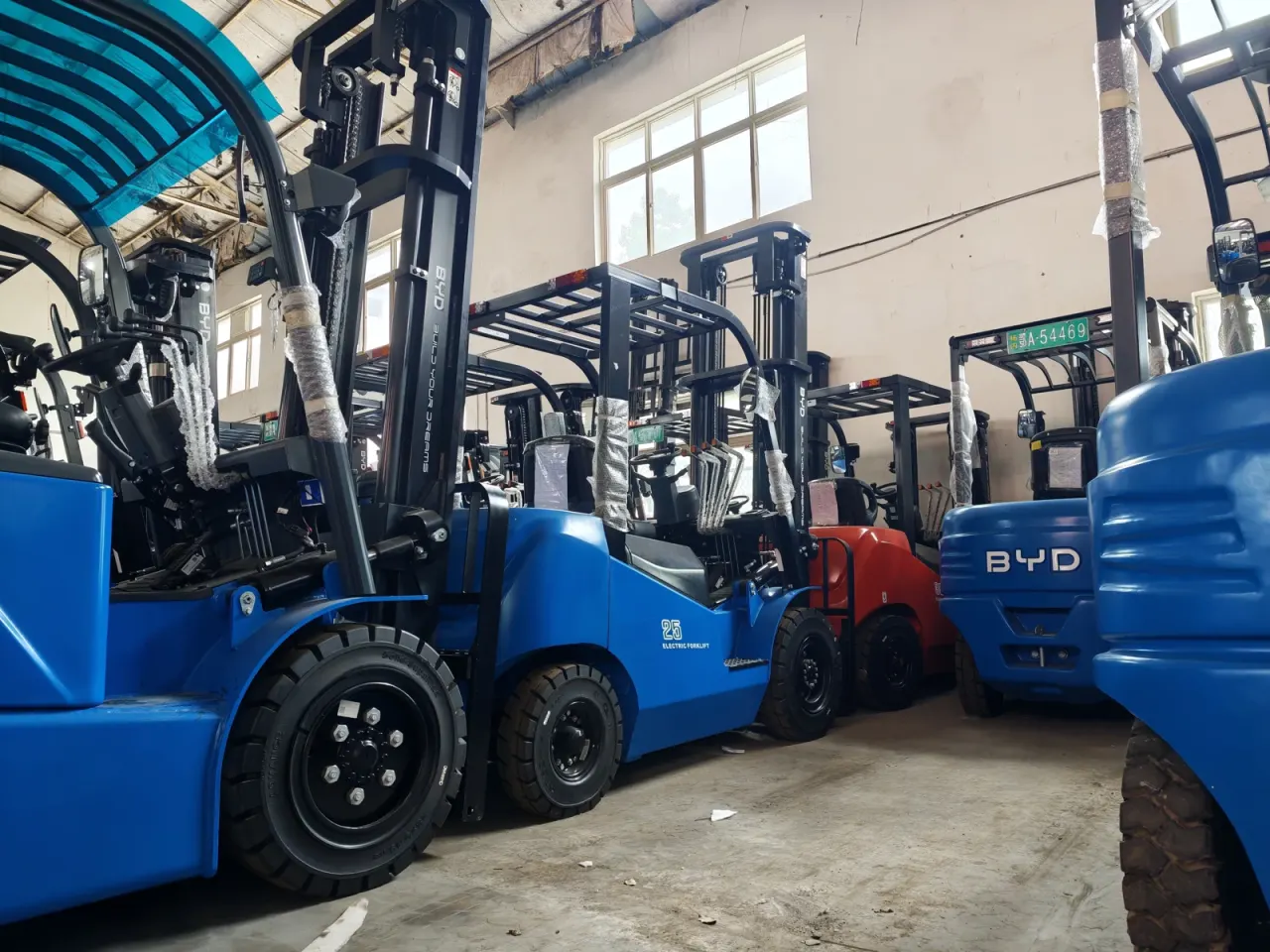
Your required size depends on two key site-specific factors: the heaviest load you move regularly, and the narrowest aisle within your facility. Start by measuring your maximum load weight and your aisle clearance, then cross-reference these numbers with turning radius and capacity ratings of potential models. Always add 10% extra capacity to cover unexpected load variations.
Do I need special electrical infrastructure supporting an electric counterbalance forklift?
Infrastructure needs vary by battery type. Lead acid batteries typically require a dedicated, ventilated charging room and 240V or higher power service. Lithium ion models support opportunity charging and often work with standard facility power in most cases, though high-capacity fast chargers still need dedicated electrical circuits. Always consult a licensed electrician to confirm your site meets requirements before purchase.
Can electric counterbalance forklifts operate inside cold storage facilities?
Only models specifically rated to operate within cold storage environments work in sub-zero temperatures. Standard electric models have battery chemistry that performs poorly in freezing conditions, and hydraulic fluid can thicken leading to component failure. Cold storage rated units include specialized batteries, seals, and fluid designed to deliver consistent operation at temperatures below freezing.
Actionable Pre-Purchase Checklist
Before you finalize your electric counterbalance forklift purchase, complete these site-specific steps:
- Measure all critical dimensions: narrowest aisle, maximum lift height, entry door clearance, and overhead obstacle clearance.
- Confirm your facility’s floor load rating matches the total weight of your selected unit plus your maximum expected load.
- Work with a licensed electrician to verify your site’s electrical infrastructure meets charger specifications.
- When possible, test operate the unit inside your actual facility to confirm maneuverability and fit.
- Document all environment characteristics (temperature range, humidity, exposure to outdoor elements) to ensure component specifications match your needs.
Taking time to assess these requirements upfront avoids costly post-purchase modifications or replacements that hurt operational efficiency.