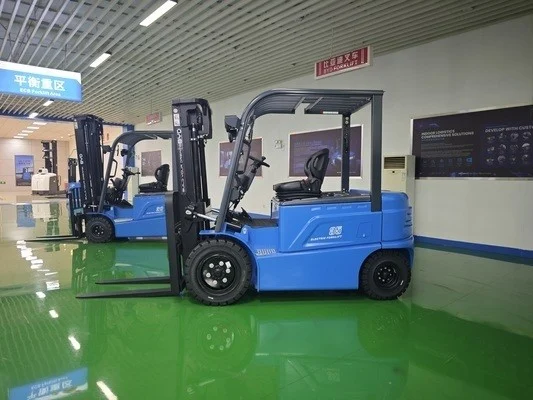
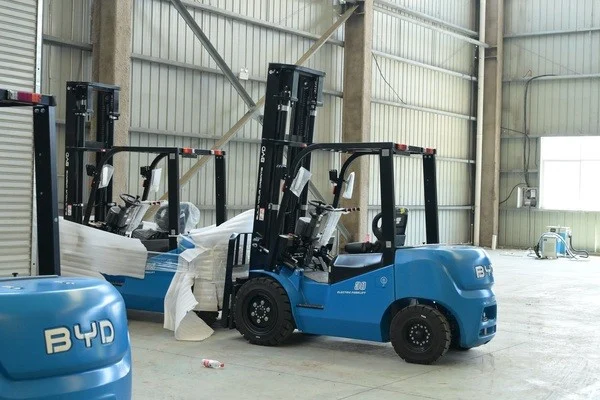
Load Center Offset Impacts Electric Counterbalance Forklift Operational Stability And Load Handling Capacity
News 12/10/2026
What Is Load Center Offset?
Load center offset refers to any deviation between a forklift’s rated load center and the actual center of gravity of the load you carry. Most electric counterbalance forklifts use a standard 20 or 24 inch rated load center, measured from the fork heel to the load’s center point. When loads are longer, wider, or stacked unevenly, their actual center of gravity shifts away from this standard position, creating offset. This shift changes weight distribution across the forklift, which directly affects core performance metrics that matter safe operation and productivity.
How Load Center Offset Changes Operational Stability
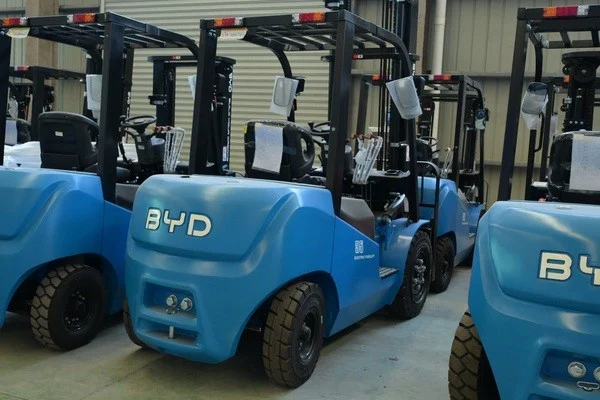
All electric counterbalance forklifts rely on a rear mounted counterweight to balance load weight placed on front forks. The unit’s overall stability depends on keeping combined center of gravity within an imaginary stability triangle spanning the two front wheels and the pivot point of the rear axle. Any shift in load center position moves this combined center of gravity, changing the unit’s stability reserve.
Forward Offset Effects
Forward load center offset pushes the combined center of gravity toward the front edge of the stability triangle. As the offset increases, stability reserve drops. Large enough forward offset can move the combined center of gravity outside the triangle, which creates high risk of forward tipping. This risk grows when you lift loads to greater heights, because center of gravity shifts upward as well, further reducing stability margin.
Backward Offset Effects
Backward offset, where the actual load center sits closer to the fork heel than the rated position, shifts combined center of gravity rearward. This reduces forward tipping risk, but can create imbalance during sudden stops or sharp turns. Rearward shift can also increase stress on rear axles and counterweight mountings, leading to premature wear over time if it becomes a regular operating condition.
Impact On Load Handling Capacity And Actionable Guidance
An electric counterbalance forklift’s published maximum load capacity ties directly to its standard rated load center. Any forward load center offset reduces the unit’s effective safe load capacity. Even a 4 inch forward offset can cut effective capacity by 10 to 20 percent, depending on the unit’s base design and size.
When selecting an electric counterbalance forklift your operations, account for the most common load center offset you will encounter. If you regularly handle oversized or extended loads that create consistent forward offset, you need a unit with a higher base capacity to compensate the shift. As an example, a warehouse that regularly handles 48 inch long lumber pallets will see a larger forward offset than one handling standard 40 inch grocery pallets. The operation needs a forklift rated for 5000 pounds at 24 inch load center instead of a 5000 pound unit at 20 inch load center to maintain safe usable capacity.
Always confirm capacity adjustments with the manufacturer’s documentation before you commit to a unit. Extreme offsets beyond the manufacturer’s specified range create unacceptable safety risks, no matter how high the base capacity. In these cases, you need alternative equipment, such as a sideloader or reach truck built to handle extended load dimensions. Small occasional offsets do not require new equipment, but you must adjust your operating practices to account for… no, adjust your operating practices to account reduced stability. Slow travel speed and avoid sharp turns when you carry loads with non standard offset to reduce tipping risk.
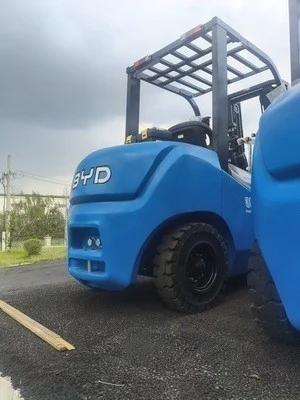
Load center offset is an often overlooked factor that directly impacts electric counterbalance forklift safety and productivity. Understanding its effects helps you select correct equipment, adjust operating practices, and avoid preventable safety incidents.
Frequently Asked Questions
Does load center offset affect all electric counterbalance forklifts equally?
No. Three wheel electric counterbalance models typically have smaller stability triangles, so they face greater stability changes from offset than four wheel units. Counterweight size also plays a role; units with heavier rear counterweights can absorb small offsets more easily than lighter models.
How do I find my unit’s adjusted capacity with non standard load center offset?
Most forklift manufacturers publish capacity charts listing adjusted capacity across different load center distances. Check your unit’s operating manual or nameplate data first. If you cannot locate your unit’s capacity information, contact the original equipment manufacturer to get correct, up to date data.
What safety steps address load center offset risks?
First, always measure your load’s center distance before you pick up unfamiliar loads. Second, reduce travel speed when you carry loads with non standard offset. Third, complete daily pre operation inspections to confirm no mast or counterweight damage alters existing stability dynamics. Never exceed the adjusted capacity published by your equipment manufacturer.