Electric Forklift Battery Enclosure Ratings: What Buyers Should Specify Before a Four-Wheel Counterbalance Truck Order
News 31/10/2026
An electric forklift battery enclosure rating is a set of declared properties describing how well the battery compartment and its cover resist water, dust, impact and heat. Buyers ordering a four-wheel counterbalance electric forklift should pin down these declarations before signing, because the enclosure affects washdown routines, charging area layout, inspection access, and how the truck behaves in dusty or damp facilities. The practical starting point: ask the supplier which enclosure protection rating applies to the battery compartment as configured, which standard it follows, and whether the rating holds with the battery installed and the cover closed. Without those three answers, a rating on a brochure is hard to compare across offers.
What an Enclosure Rating Actually Tells You
Enclosure ratings usually come from ingress protection conventions, commonly written as IP followed by two digits. The first digit describes protection against solid objects such as dust; the second describes protection against water. A higher digit indicates a stricter test condition, but a rating does not by itself prove suitability for a given workplace. It describes a tested condition, not a guarantee of long-term performance under chemicals, steam, salt, or repeated high-pressure cleaning.
Three limits deserve attention during procurement:
- Configuration matters. A rating declared on a bare component may not apply once cables, connectors, vents or the battery itself are fitted. Ask whether the declared rating covers the assembled compartment.
- Test conditions matter. Water ratings differ by pressure, duration and nozzle position. A rating that satisfies a light spray may not match a daily washdown routine.
- Chemicals fall outside most ingress ratings. Corrosive or solvent exposure needs separate confirmation from the supplier, not an inference from an IP number.
Where the input material does not state a specific rating, this article does not assign one. Treat any number as something to verify in the supplier’s technical documentation and, where possible, in the order confirmation.
Specification Checklist Before You Place the Order
1. Operating environment and cleaning routine
Describe the actual conditions: indoor or outdoor, ambient temperature range, humidity, airborne dust, food or chemical spills, and how the truck and battery area are cleaned. State the cleaning method plainly, including pressure, distance, and whether detergents are used. A supplier can then confirm whether the proposed enclosure suits that routine or whether the cleaning practice should change.
2. Battery chemistry and compartment fit
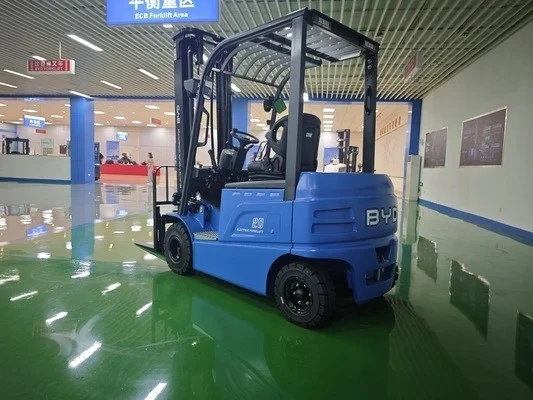
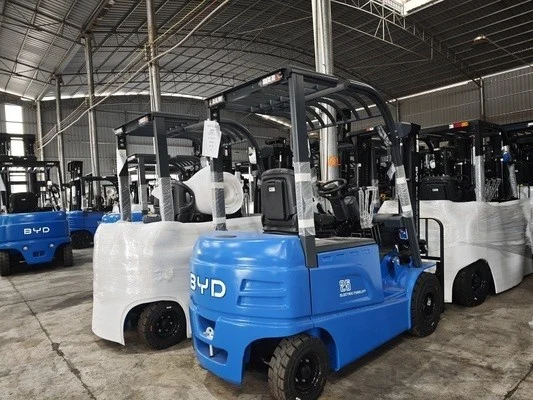
Because this site supplies four-wheel counterbalance electric forklifts with lithium battery options, the enclosure discussion should be tied to the battery actually ordered. Ask how the lithium battery pack is secured, how ventilation and heat dissipation are handled, and what clearance exists around terminals and connectors. Confirm that the compartment dimensions, restraint system and cable routing match the delivered pack rather than a generic illustration.
3. Charging and battery exchange arrangements
Charging location shapes enclosure requirements. Specify whether charging happens in a dedicated room, near washdown areas, or in a shared aisle. Confirm the connector type, cable entry points, and whether the cover must remain open or closed during charging. If battery exchange is planned, ask how the enclosure opens and what lifting or sliding equipment is needed. These are layout questions, not just hardware questions, and they influence the final configuration.
4. Inspection, service access and documentation
A sealed compartment still needs routine inspection. Ask what the operator or technician must remove to check terminals, look at the battery management system indicators, or inspect for moisture. Request the maintenance instructions and a parts diagram with the quotation. Clarify which gaskets, latches and fasteners are wear items and how they are replaced.
5. Declared ratings and test references
Request the enclosure rating in writing, together with the standard or test method the supplier cites. If the supplier cannot provide a test reference, record the rating as unverified and decide whether the application tolerates that uncertainty. Do not accept a rating copied from a different model or a different battery configuration.
6. Load, lift height and site geometry
Enclosure choices interact with the rest of the truck specification. Provide rated load, load center, lift height, aisle width, floor condition and ramp gradients so the supplier can check that the battery and enclosure arrangement fits the intended duty. A heavier or differently shaped battery pack may affect counterweight balance and compartment layout, so these details belong in the same inquiry.
Acceptance Checks and Common Mistakes
At delivery, compare the truck against the agreed specification rather than the sales brochure. Useful checks include:
- Confirm the battery model and capacity match the order.
- Inspect gaskets, latches and cable entries visually, and confirm the cover closes and locks as described.
- Verify that the declared enclosure rating appears in the delivered documentation with its test reference.
- Review the charging instructions and confirm connector compatibility with your charger.
- Walk through the inspection procedure with the person who will perform it.
Common procurement errors are easy to list. Buyers compare IP numbers without checking the tested configuration. They assume a rating covers chemical cleaning. They omit the cleaning method from the inquiry, leaving the supplier to guess. They accept a rating without a test reference. They also postpone battery exchange planning until after the truck arrives, when compartment access and charging layout are already fixed.
As a hypothetical example, a warehouse that washes trucks weekly near a loading dock might specify a water-resistant compartment and a cleaning procedure agreed with the supplier; a dry indoor operation with fine dust might place more emphasis on dust protection and inspection frequency. These are illustrative scenarios, not verified cases, and the correct specification depends on the supplier’s documented product data.
Frequently Asked Questions
Does a higher enclosure rating always mean a better battery compartment?
No. A higher rating indicates stricter test conditions, but suitability depends on the actual environment, cleaning method, chemical exposure and service access. A rating that is not tied to the assembled configuration is also difficult to apply in practice.
Can I wash a four-wheel counterbalance electric forklift with a pressure washer?
Only if the supplier confirms that the battery compartment and electrical components tolerate that method. Pressure, distance, nozzle type and detergent all affect the outcome. Ask the supplier to state approved cleaning practices in writing rather than assuming a rating permits any washdown.
Which documents should I request with the quotation?
Request the enclosure rating with its test reference, the battery specification, compartment dimensions and restraint details, charging and connector instructions, maintenance guidance, and a parts diagram. Also ask the supplier to confirm any assumptions made about your site conditions.
What should I include in the initial inquiry?
Share the operating environment, cleaning routine, required load and lift height, aisle and floor conditions, shift pattern, charging arrangements, and any battery exchange plans. These details let the supplier propose a four-wheel counterbalance electric forklift configuration grounded in your actual duty rather than a generic package.