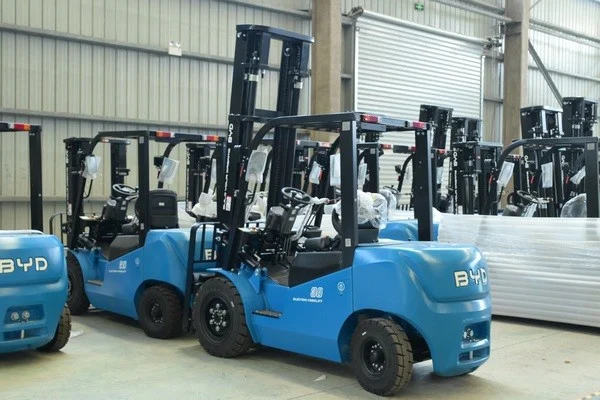
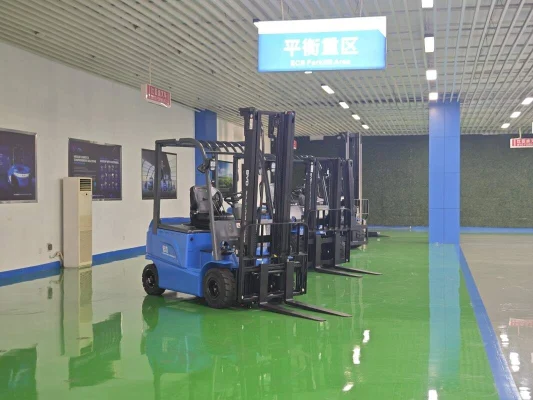
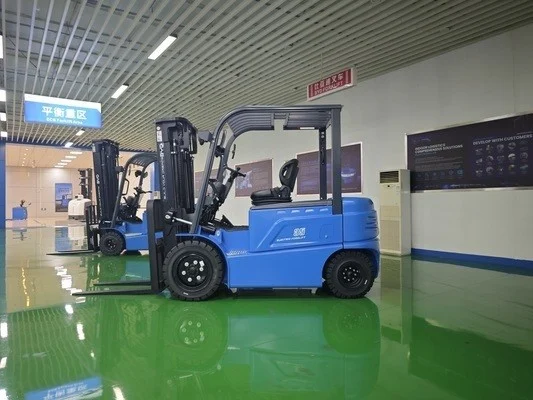
Electric Forklift Battery Inspection Points During Pre-Delivery Acceptance on Four-Wheel Counterbalance Trucks
News 03/11/2026
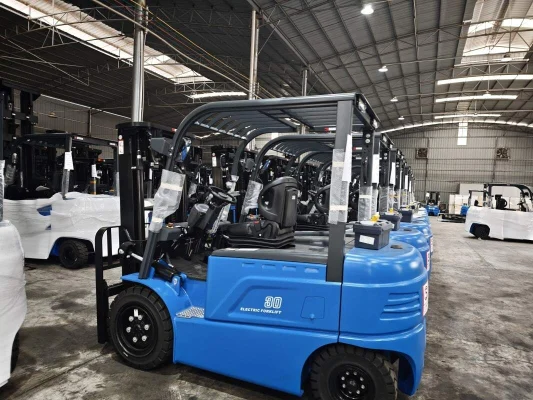
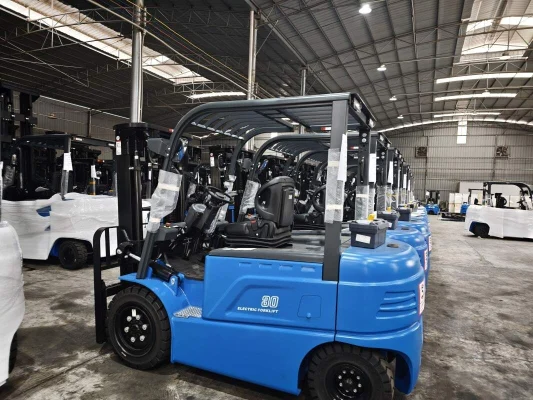
When a four-wheel counterbalance electric forklift arrives, the electric forklift battery deserves more attention than any other single assembly. It is the most expensive wear component, its condition determines whether the truck can complete a full shift, and problems that are easy to correct during acceptance become warranty disputes once the truck enters service. This acceptance checklist focuses on what an inspector can actually see, measure, and record before signing the delivery documents.
One caution applies throughout: the manufacturer’s technical documentation governs every value you compare against. Do not accept generic thresholds from a checklist, including this one. Record what the documents state, then record what you observe, and note any gap.
Documents and Identification to Confirm First
Inspection begins with paperwork, because a battery that cannot be traced to its specification is difficult to support later. Ask the supplier to provide the battery data sheet, the charger data sheet, and the truck’s electrical configuration sheet, then confirm that the three agree.
- Battery nameplate: confirm rated voltage, rated capacity, chemistry, cell count, and manufacturing date all match the order and the truck’s specification.
- Serial number: photograph the plate and record the number; it should appear on the delivery documents and the warranty registration.
- Charger match: verify the charger’s output voltage and charge profile correspond to the battery chemistry and capacity stated on the data sheet.
- Connector type: check that the battery connector and the truck’s receptacle mate correctly and are rated consistently with the system voltage and current.
If any document is missing, list it as an open item rather than assuming the specification. A missing data sheet is a legitimate reason to hold final acceptance.
Physical Inspection of the Battery, Compartment, and Restraint
A visual pass takes only a few minutes and catches handling damage that may have occurred in transit. Work in good light and look at the battery from all accessible sides.
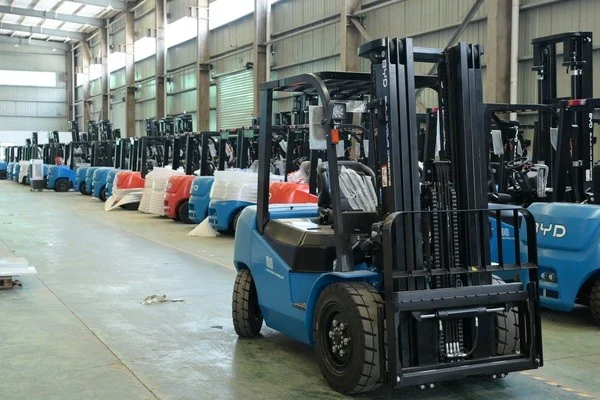
Battery condition
- Look for cracks, deformation, electrolyte residue, or stains on the casing and around terminals.
- Check terminal posts and cable lugs: they should be clean, dry, and free of corrosion or looseness.
- Confirm that vent caps or pressure-relief features, if the design includes them, are present and undamaged.
- Verify that the battery’s stated weight and dimensions are consistent with the truck’s counterweight and compartment design; an undersized or oversized battery changes stability and is not a minor detail.
Compartment and restraint
- Confirm the compartment floor and side walls are free of sharp edges, debris, and pooled liquid.
- Check that the restraint or locking arrangement holds the battery securely and that the release operates smoothly.
- Inspect the battery cover or hood latch, and confirm the cover opens and closes without contacting cables.
- Trace the battery cables along their route and look for abrasion points, pinched sections, or missing grommets.
An insecure battery is a safety issue, not a cosmetic one. Do not accept a truck where the restraint does not hold the block firmly.
Electrical Checks and a Documented Charge Test
Electrical verification should follow the supplier’s acceptance procedure. Where the procedure is silent, ask what the supplier recommends and record the answer.
Static checks
- Measure open-circuit voltage and compare it with the value the battery data sheet expects at the reported state of charge.
- Confirm the state-of-charge indicator or battery management display powers up and reports a plausible value.
- Check that the emergency disconnect or main contactor operates as described, and that the truck cannot be driven when it is open.
- Inspect the charger connection and confirm the charger starts, follows the expected profile, and stops correctly.
Functional checks under load
Run the truck through its normal functions with the battery installed: travel, lift, lower, tilt, and steering. Watch the state-of-charge display and any warning indicators. Listen for unusual noise from the electrical system and check that no fault codes appear. If the truck’s display logs faults, record the log rather than clearing it.
| Check | What to record | Source to compare against |
|---|---|---|
| Open-circuit voltage | Measured value and reported state of charge | Battery data sheet |
| Charger behavior | Start, profile, and stop observations | Charger data sheet |
| Display and warnings | Values shown; any fault codes | Truck electrical documentation |
| Function test | Any abnormal response during travel and lift | Supplier acceptance procedure |
Do not invent pass or fail numbers. If the documentation gives no reference value, write “not specified” and request clarification. A short charge and discharge observation is useful, but only interpret it against the supplier’s stated expectations.
Charging Infrastructure, Records, and Open Items
The battery is only half the system. Acceptance should also confirm that the charging arrangement on site matches the delivered equipment.
- Charger siting: confirm ventilation, clearance, and cable routing are adequate, and that the charger is positioned where the truck can reach it without strain on the cable.
- Power supply: verify the site supply matches the charger’s stated input requirements; this is a common source of early problems.
- Operating instructions: obtain the charging and battery-handling instructions, including any restrictions on opportunity charging or partial charging that the documentation specifies.
- Warranty terms: confirm what the battery warranty covers, what conditions void it, and how claims are submitted.
Close the acceptance with a written record: photographs of the nameplate and terminals, measured values, the function test result, and a list of open items with responsible parties and dates. Items that cannot be resolved on the day should be documented as conditions of acceptance rather than verbal promises.
If you are still defining requirements, share your load weight, lift height, shift pattern, floor conditions, and available charging time with the supplier so the battery and charger configuration can be checked against your actual duty cycle. That conversation is more useful before delivery than after.
Frequently Asked Questions
Can acceptance be completed without a load test?
A function test with the battery installed is a reasonable minimum, but it does not demonstrate capacity. If the supplier’s procedure includes a discharge or capacity verification, follow it. Otherwise, ask what evidence supports the rated capacity and record the answer as an open item.
What should I do if the battery nameplate does not match the order?
Do not sign final acceptance. Photograph the nameplate, compare it with the order and the truck specification sheet, and request a written correction or replacement. A mismatch affects warranty and may affect truck stability.
How much charge should the battery have on delivery?
This varies by supplier and shipping method. Check the delivery documents and the battery instructions rather than assuming a figure, and record the state of charge you observe at handover.
Is a visual inspection enough to detect a damaged battery?
No. Visual inspection catches casing damage, corrosion, and loose connections, but it cannot confirm capacity or internal condition. Pair it with the electrical checks and any capacity verification the supplier specifies.