Electric Forklift Acquisition Checklist: Confirming Four-Wheel Counterbalance Chassis Dimensions and Turning Radius Against Factory Aisle Geometry
News 05/11/2026
An electric forklift purchase that fits the load but not the aisle is an expensive mistake. When you buy a four-wheel counterbalance electric forklift to serve a factory, the decisive numbers are not only rated capacity and lift height. The chassis footprint, the turning radius, the right-angle stacking aisle, and the actual clear width between racks or machines determine whether the truck can work at production speed or constantly reverse, shunt, and block traffic. This checklist walks through the measurements and documents to collect before you sign, and it shows how to compare them against the geometry you already have on the floor.
Start with the Real Aisle, Not the Drawing
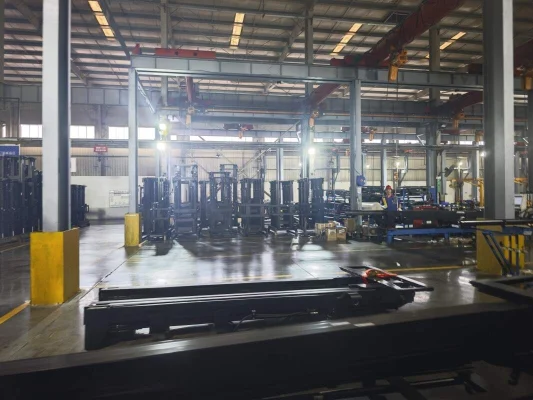
Warehouse and factory layouts are drawn to nominal dimensions. Racks get pushed out of line, columns gain protective guards, conveyors are added, and pallets overhang. Aisle width measured on a CAD plan can differ from what a lift truck operator actually sees. Before evaluating any chassis, measure the route the truck will travel, not just the storage block.
Measurements to take on site
- Clear width between rack uprights, machine guards, and wall protection at the narrowest point of each route.
- Door, gate, and curtain openings, including the height and width of any frame that reduces clearance.
- Right-angle stacking aisle: the clear distance from the face of the racking to the opposite obstruction where the truck must turn into a bay.
- Overhead obstructions along the route: pipework, cable trays, lighting, sprinkler heads, and mezzanine edges.
- Floor condition and slope at dock ramps, floor joints, and drainage channels.
- Traffic lanes, pedestrian crossings, and blind corners where the truck must slow or stop.
Record each measurement with the tape position and note whether it is a hard obstruction or a soft one such as a pallet overhang. This distinction matters because a hard column cannot be moved, while a pallet position can sometimes be adjusted. Take photographs with a scale reference so that later discussions with a supplier rely on evidence rather than memory.
Chassis and Turning Radius Data to Request
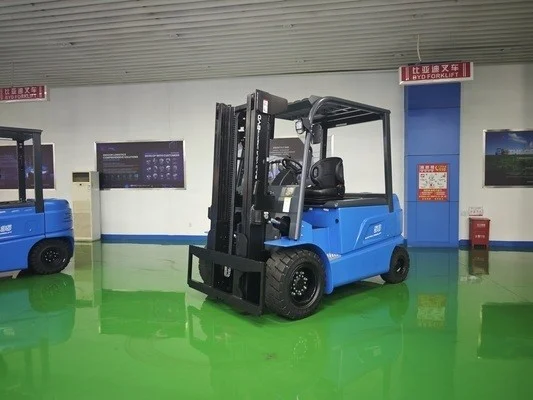
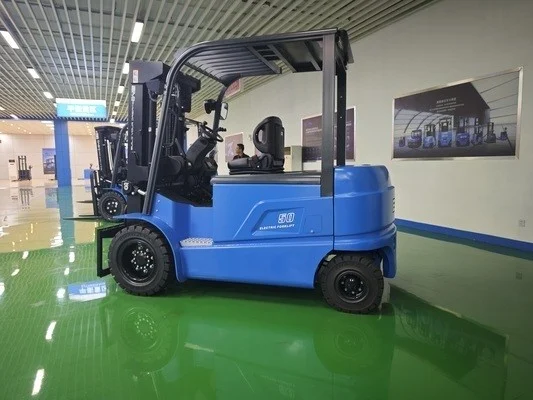
Every four-wheel counterbalance electric forklift has a dimensional envelope defined by the manufacturer. Ask the supplier to provide the current technical datasheet and confirm that the figures apply to the exact configuration quoted, including mast, fork carriage, battery, and any attachment.
Dimensions that change aisle performance
Overall length is usually quoted without forks, and overall width depends on the tyre type and chassis. The turning radius is measured to the outside of the truck body, but the practical swept path also depends on the counterweight overhang and the fork carriage. The right-angle stacking aisle figure published by a manufacturer is normally derived from a defined pallet size and a defined turn, so it must be checked against your pallet and your rack beam height. If the supplier cannot state the assumptions behind the aisle figure, treat it as indicative and plan a physical trial.
Mast dimensions also matter. A triplex or full-free-lift mast changes the lowered height and the overall height when raised, which affects door openings and overhead clearance. Attachments such as side shifters or fork positioners add carriage depth and reduce the remaining rated capacity at a given load centre. None of these effects should be estimated from a brochure alone; ask the supplier to confirm them in writing against the quoted configuration.
Load, load centre, and derating
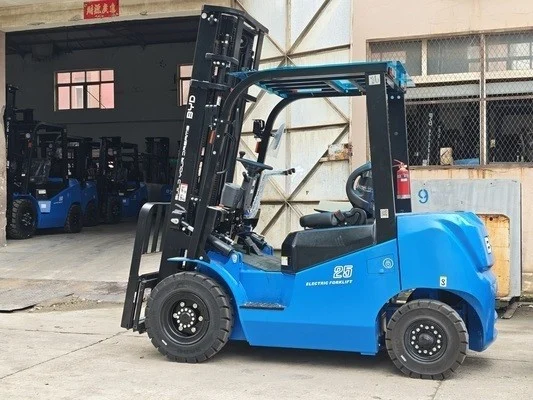
Rated capacity is stated at a specific load centre, commonly 500 mm or 600 mm. If your pallets are deeper, or an attachment moves the load forward, the safe capacity drops. The manufacturer’s load chart shows how much capacity remains at each load centre and lift height. Request that chart and compare it with the heaviest pallet you actually handle, not the average. For a factory, the heaviest inbound material often sets the requirement, even if it appears only a few times per shift.
Matching Truck Geometry to Factory Workflows
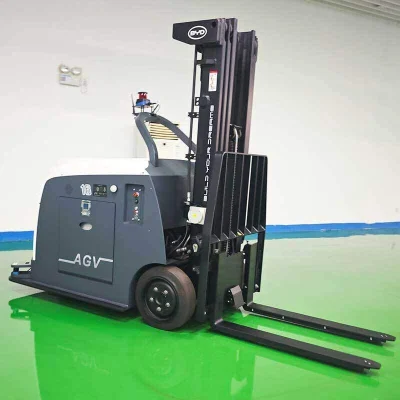
Aisles are only one part of the fit. A four-wheel counterbalance electric forklift is a common general-purpose choice in manufacturing because it can lift pallets from floor level, load and unload trailers, and feed production lines. Whether it suits a specific factory depends on the combination of load, lift height, aisle width, floor surface, ramp gradient, shift pattern, and charging arrangements.
Production line and trailer work
Line-side delivery often involves tight turns between machines and frequent stops. Measure the turning envelope at the tightest corner and add a margin for operator judgement and pedestrian traffic. Trailer loading requires the mast to clear the trailer roof and the forks to reach the far end of the bed, so check the trailer internal height and the mast collapsed height together. If the truck must climb a dock ramp, confirm the gradient and the manufacturer’s approved slope limit rather than relying on operator experience.
Storage and racking
For selective racking, the right-angle stacking aisle and the beam height determine whether a counterbalance truck can place pallets without repeated shunting. Wide-aisle layouts generally suit four-wheel counterbalance trucks; very narrow aisles may call for a different truck type entirely, and that should be stated honestly rather than forced into a counterbalance recommendation. If your aisle is too narrow, the correct answer may be to redesign the rack layout or accept a slower operating cycle.
Battery, charging, and shift patterns
Lithium battery models change the charging routine because opportunity charging during breaks can be practical, but the actual capability depends on the charger, the battery specification, and the manufacturer’s instructions. Ask the supplier to confirm the charging profile, the time needed to reach a usable state of charge, and the space and ventilation required at the charging point. Do not assume a full shift on one charge without written confirmation for your duty cycle.
Verification Table and Supplier Questions
The table below summarises the parameters that most often decide whether a truck fits a factory, why each matters, what to ask the supplier, and where configuration choices affect the result. It separates information normally found on a datasheet from items that require a written confirmation or a site trial.
| Parameter | Why it matters in a factory | What to confirm with the supplier | Configuration note |
|---|---|---|---|
| Overall width and length | Determines whether the truck passes doors, gates, and narrow routes | Dimensions with the quoted mast, battery, and tyres | Attachments and tyre type can change the envelope |
| Turning radius and swept path | Controls the space needed at corners and rack faces | Measurement basis and the assumed pallet size | Counterweight overhang affects the practical path |
| Right-angle stacking aisle | Decides whether pallets can be placed without shunting | The assumptions behind the published figure | Beam height and pallet depth change the result |
| Rated capacity and load chart | Prevents overload at the real load centre | Capacity at your load centre and lift height | Attachments derate capacity |
| Mast lowered and raised height | Affects door clearance and overhead obstructions | Figures the exact mast specified | Free-lift options change the profile |
| Floor loading and slope limits | Affects stability, braking, and surface wear | Approved gradient and floor pressure data | Wet or uneven floors need review |
| Charging arrangement | Determines shift coverage and charging space | Charger specification and charging instructions | Opportunity charging depends on battery and BMS limits |
Questions worth putting in writing before purchase include: Which exact model and configuration does the quoted dimensional data describe? What pallet size and turn were assumed when the aisle figure was calculated? What is the remaining capacity with the attachment and at our maximum lift height? What floor and slope conditions are approved? What charging routine does the manufacturer recommend our shift pattern? Can a demonstration be arranged on our site, or at a site with comparable aisle dimensions, so the operator can confirm the turning envelope?
If you are evaluating a four-wheel counterbalance electric forklift to serve a factory, share your aisle measurements, heaviest pallet, required lift height, floor conditions, and shift pattern with the supplier so that the configuration discussion starts from your actual constraints rather than a generic specification. The right truck is the one whose verified dimensions and load chart match the geometry and duty cycle you can demonstrate.
Frequently Asked Questions
Is a published turning radius enough to judge aisle fit?
No. The turning radius describes one part of the truck’s movement, but the space needed to turn into a rack bay also depends on the counterweight, the fork carriage, the pallet size, and the operator’s line of approach. Use the published figure as a starting filter, then confirm the right-angle stacking aisle against your rack layout and consider a trial on site or at a comparable facility.
How do I know whether my aisle is too narrow for a four-wheel counterbalance truck?
Compare the clear aisle width and the right-angle stacking aisle with the manufacturer’s figures the exact configuration, allowing a working margin. If the measured clearances are consistently below the published requirement, the layout or the truck type needs review. A supplier should be willing to say when a counterbalance truck is not the right fit rather than push a sale.
Can an attachment solve a tight-aisle problem?
Attachments such as side shifters can reduce small positioning corrections, but they add carriage depth and reduce remaining capacity at a given load centre. They do not change the fundamental turning envelope. Confirm the derated capacity and the new dimensions with the supplier before assuming an attachment resolves an aisle constraint.
What should a factory measure before requesting a quote?
Measure the narrowest clear route, door and gate openings, the right-angle stacking aisle, overhead obstructions, floor slopes, and the heaviest pallet dimensions. Record the required lift height and the number of shifts per day. These figures let the supplier match a chassis and mast configuration to your building rather than to a catalogue.