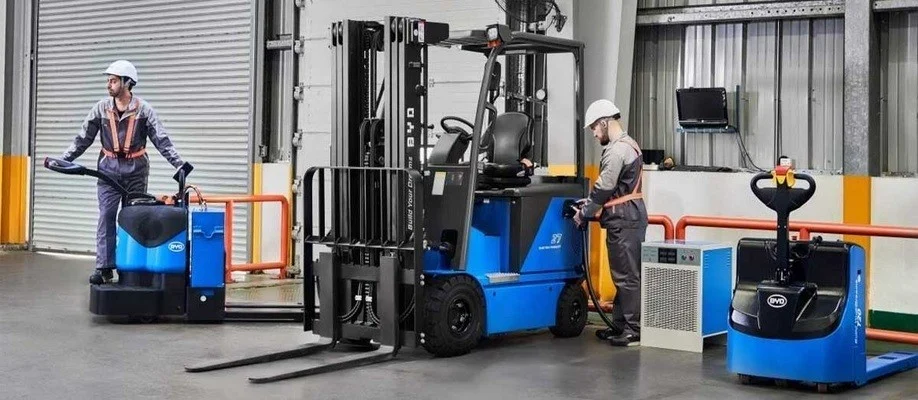
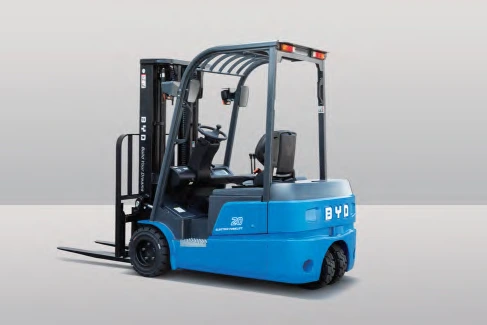
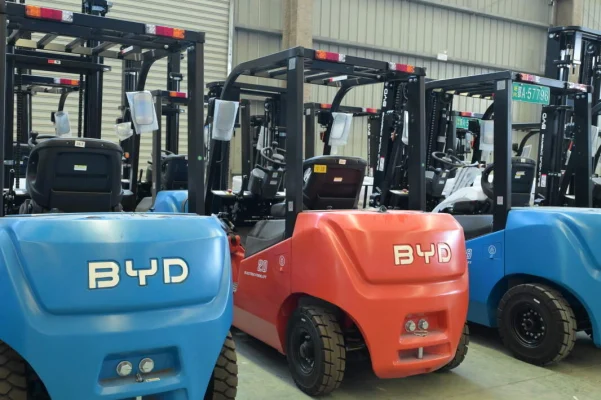
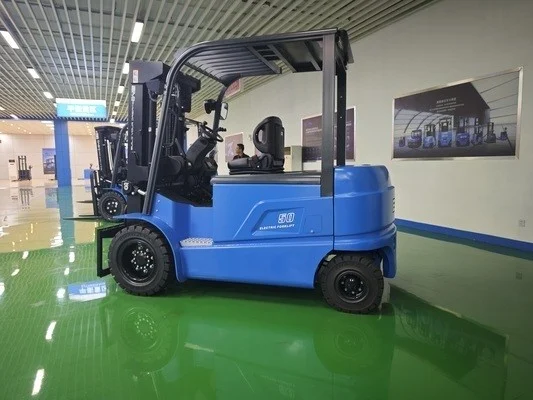
Electric Forklift for Sale Near Me: How to Compare Mast Free-Lift and Overall Height Data Across Four-Wheel Counterbalance Quotes
News 07/11/2026
When you search an electric forklift near you, the hardest part of comparing quotes is often not the price line. It is the mast data. Two suppliers can quote the same load capacity and lift height, yet describe free-lift and overall height differently, which makes the numbers look incompatible. This guide explains what those figures mean on a four-wheel counterbalance electric forklift, how to read them across competing quotes, and which questions to send back before you sign.
Why Mast Height Numbers Rarely Line Up Between Quotes
Mast dimensions are measured against a stated reference point, and suppliers do not always state that point. A quote may list “lowered height” without saying whether it refers to the mast collapsed with forks on the floor or to the carriage position. It may list “overall height” without specifying whether that is the raised, lowered, or extended figure. Until the reference is fixed, the numbers cannot be compared fairly.
Three related figures usually appear on a specification sheet:
- Overall lowered height: the tallest point of the forklift with the mast fully collapsed, which governs doorways, container openings, and low-clearance aisles.
- Free-lift height: how far the forks can rise before the mast channels begin to extend. This matters when you must lift a load inside a trailer, mezzanine, or rack level with limited overhead room.
- Extended or raised height: the maximum height with the mast fully extended, which affects overhead obstructions and building clearances.
A mast with generous free lift can place a pallet at a low rack beam without raising the mast itself, so the forklift stays under a low ceiling. A mast with little or no free lift must extend the channels earlier, which raises the overall height during the lift. That difference is a working-condition issue, not a cosmetic one.
Reading Free-Lift and Overall Height Across Quotes
Build a simple comparison table before you rank any quote. Use the same rows every time, and mark any cell the supplier has not confirmed. A blank cell is information: it tells you what to ask next.
| Data point | What to record | Why it matters |
|---|---|---|
| Mast type and stages | Two-stage, three-stage, or other, as stated by the supplier | Stage count changes how free lift and extension behave |
| Overall lowered height | Figure plus the reference condition | Determines whether the truck passes doorways and low openings |
| Free-lift height | Figure plus whether it is measured to fork surface or carriage | Determines whether you can lift inside a trailer or under a low beam |
| Maximum lift height | Rated height and the load it applies to | Capacity usually falls as height rises; confirm the derating curve |
| Load center | Distance used in the rating | A rating at one load center does not transfer to a longer load |
| Overhead guard height | Figure with the mast collapsed | Affects clearance in low buildings and transport |
When you compare, do not mix a free-lift figure measured to the fork surface with one measured to the carriage. The difference between those reference points can make one quote look better than it is. Ask each supplier to state the measurement basis in writing, and keep the original quote attached to your table so the source stays traceable.
A Hypothetical Scenario: Low-Clearance Loading
Suppose a reader needs to lift pallets onto a low mezzanine edge inside a building with limited headroom. The useful comparison is not maximum lift height but the height at which the mast begins to extend. A quote that lists only maximum lift height does not answer the question. The reader should request the free-lift figure, the overall lowered height, and the overhead guard height, then check all three against the actual opening. This is a general illustration, not a measured case.
Capacity and Height Are Linked
Rated capacity on a four-wheel counterbalance electric forklift is normally stated at a specific load center and lift height. As lift height increases, remaining capacity typically decreases, and the manufacturer’s data sheet should show that relationship. If a quote lists one capacity figure with no height or load-center reference, treat it as incomplete. Ask for the capacity at your actual lift height and load center, and confirm the attachment or fork extension does not change the rating.
Questions to Send Before You Accept a Quote
These questions turn a vague quote into a checkable document. Send them to every supplier so the answers line up.
- What is the overall lowered height, and what reference point did you use?
- What is the free-lift height, and is it measured to the fork surface or the carriage?
- What is the rated capacity at my required lift height and load center?
- Which mast stages does the quoted configuration use, and how does that change free lift?
- What are the aisle width and turning radius figures, and do they match my layout?
- What battery, charger, and charging-time information applies to the quoted model?
- Which figures come from the manufacturer’s technical data, and which are estimates?
Also confirm the operating conditions that affect the answer: floor surface and slope, doorway and rack clearances, shift length, and available charging time. A four-wheel counterbalance electric forklift is a common general-purpose choice in factories, loading areas, and warehouse transfer work, but suitability still depends on those conditions. No single configuration fits every site, and a quote that does not ask about them is worth questioning.
If you are comparing options from this site, share your load weight, required lift height, load center, aisle width, and building clearances. That lets the selection discussion focus on the right four-wheel counterbalance electric forklift configuration rather than on generic brochure figures. Only specifications supported by the available technical data should be treated as confirmed.
Frequently Asked Questions
Does a higher free-lift figure always mean a better mast?
No. Free lift is useful when overhead clearance is tight, but the right amount depends on your building, rack heights, and loading method. A mast with more free lift may also have different collapsed dimensions or cost. Compare free lift against your actual clearance, not against another quote alone.
Can I compare overall height figures from two suppliers directly?
Only after both suppliers state the same reference condition. Ask whether the figure is measured with the mast collapsed, forks on the floor, or another position. If the references differ, convert or re-request the data before ranking the quotes.
Why does capacity drop at higher lift heights?
The load’s leverage increases as the carriage rises, so the stability limit changes. Manufacturers publish capacity at stated heights and load centers. Use the figure that matches your real lift height and load center rather than the headline capacity on the quote.
What should I check if my doorway is the limiting factor?
Check overall lowered height and overhead guard height against the doorway, and confirm the measurement basis. Also confirm the mast type, since stage count can change the collapsed height. If the figures are close, request the manufacturer’s data sheet and verify on delivery.