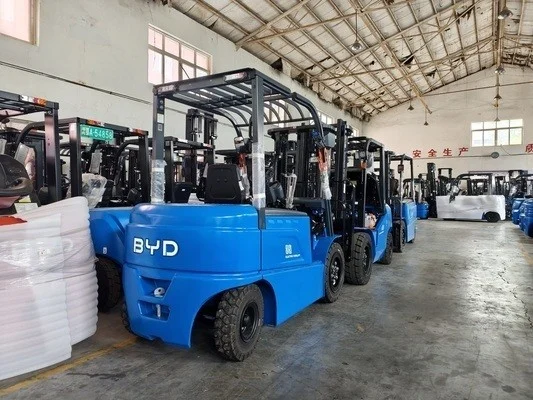
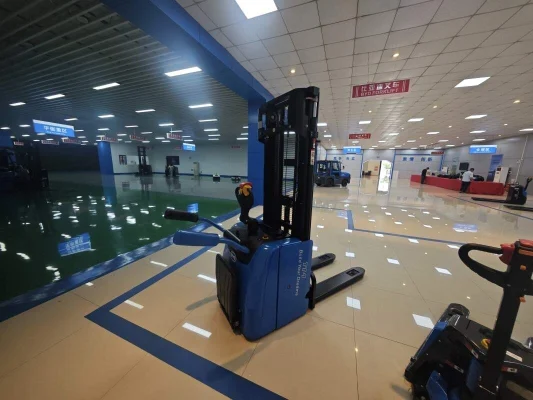
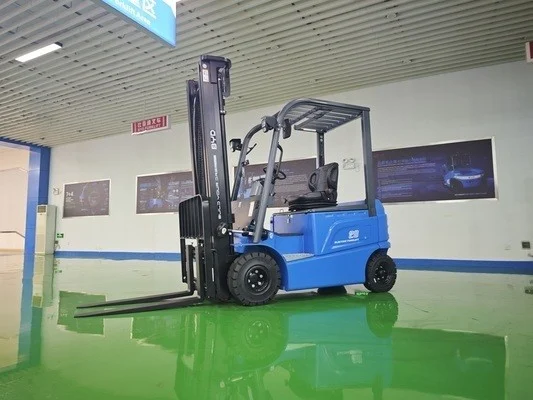
Electric Forklift for Sale Near Me: Verifying Mast, Overhead Guard and Attachment Clearances Before You Commit
News 01/11/2026
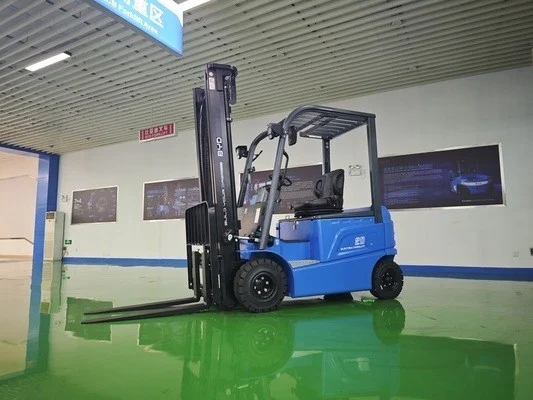
Searching an electric forklift near me usually means you have a site, a load, and a deadline. Before you commit, verify three physical interfaces that no spec sheet alone can confirm: the mast envelope, the overhead guard height, and the attachment clearance. These dimensions decide whether a four-wheel counterbalance electric forklift can enter your building, stack at your rack, and handle your attachments safely. This guide explains what to measure, what to ask suppliers, and where the limits lie.
Why Clearance Checks Matter More Than Catalog Numbers
A four-wheel counterbalance electric forklift is a common general-purpose choice in factories, warehouses, and loading docks. Its suitability, however, depends on the actual site. Catalog numbers describe the truck, not your doorway, rack beam, or trailer. A truck that fits one aisle may not fit another. A mast that clears one door may strike a sprinkler pipe. An attachment that carries the load may reduce rated capacity below what the pallet weighs. These are selection conditions, not defects.
Clearance verification is a pre-purchase step, not a post-delivery adjustment. Once the truck arrives, structural changes to the building or the mast are costly and may affect warranty or load ratings. Measure first, then confirm with the supplier using your site data.
Mast, Overhead Guard, and Attachment Measurements That Decide Fit
Each interface has its own measurement method and its own set of trade-offs. Use the following subsections to organize your site survey.
Mast Envelope: Height, Free Lift, and Tilt
The mast envelope includes the lowered mast height, the extended height at your maximum lift, and the free lift if you need to stack inside a trailer or low-clearance area. Measure the lowest overhead obstruction along the entire travel path: door headers, rack beams, lights, sprinkler deflectors, and conveyor crossings. Record the lowest point, not an average.
Also measure the tilt range you need. Forward tilt helps pick up and deposit loads; backward tilt stabilizes the load during travel. Confirm the tilt angle available on the candidate truck and whether it changes the mast envelope at your rack face. If the truck must tilt inside a trailer, check the clearance at full forward tilt.
Ask the supplier to confirm the mast dimensions at the actual lift height you require, not just the maximum catalog height. If your rack requires a lift height above what a standard mast provides, a different mast may be needed. Do not assume every mast fits every building.
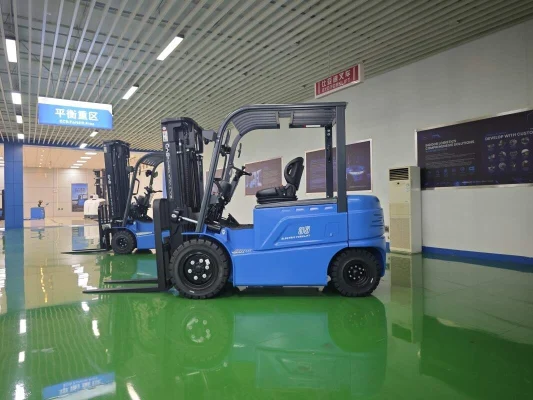
Overhead Guard Height and Operator Compartment
The overhead guard protects the operator from falling objects. Its height affects both operator comfort and clearance under low structures. Measure the clear height of any doorway, trailer, or mezzanine the truck will pass under. Compare that clear height to the overhead guard height of the candidate truck. Account for any antenna, light, or beacon mounted on top.
Operator entry and exit also matter. Check that the step height and handhold suit your operators, especially if they wear bulky clothing or safety gear. The overhead guard should not force a crouch during normal operation. These are ergonomic conditions, not performance claims.
Attachment Clearance and Residual Capacity
Attachments change the load center and the effective thickness of the carriage. A side shifter, fork positioner, or clamp adds weight and moves the load forward. That reduces the truck’s remaining capacity at a given load center. The rated capacity on the data plate applies to a standard fork carriage at a specified load center; an attachment may require a different rating.
Measure the attachment’s overall width and thickness when mounted. Confirm that the attachment fits the carriage and that the combined assembly clears your rack uprights and trailer walls. Ask the supplier to state the residual capacity with your intended attachment at your actual load center. If that figure is not available, request it in writing before you commit.
Site Survey, Supplier Questions, and Configuration Trade-offs
Use a simple survey checklist and a short supplier conversation to close the gap between catalog data and site reality.
| Checkpoint | What to measure or confirm | Why it matters | Ask the supplier |
|---|---|---|---|
| Mast envelope | Lowest overhead obstruction; required lift height; free lift; tilt range | Prevents strikes and confirms stacking ability | Mast dimensions at your lift height; tilt clearance |
| Overhead guard | Clear height of doors, trailers, mezzanines; guard height | Operator protection and passage | Guard height with any mounted lights or beacons |
| Attachment | Attachment width, thickness, weight; load center | Residual capacity and rack clearance | Residual capacity with your attachment at your load center |
| Site conditions | Aisle width, floor surface, slope, door thresholds | Stability and maneuverability | Turning radius and recommended aisle width |
| Power and charging | Charging location, available time, battery type | Uptime and infrastructure | Charging profile and battery options |
This table is a starting point, not a substitute for your own measurements. The supplier should confirm which items are standard, which are optional, and which require factory confirmation. Do not assume all configurations are available on every model.
Trade-offs are normal. A taller mast may reduce capacity or increase the overhead envelope. A larger attachment may improve handling but reduce residual capacity. A higher overhead guard may improve operator comfort but limit passage under low doors. Decide which constraints are fixed and which can be changed before you compare options.
If your aisle is narrow or your lift height is high, a four-wheel counterbalance electric forklift may still work, but the required aisle width and mast envelope must be checked against the truck’s turning radius and dimensions. If the site cannot accommodate these, be honest about the limit rather than forcing a fit. The same applies to floor conditions and slopes: confirm the truck’s rated slope and floor capacity with the supplier.
When you request a quote, provide your actual load weight, load center, lift height, aisle width, door clearances, and attachment details. That information lets the supplier recommend a configuration within the four-wheel counterbalance electric forklift range and avoid assumptions. It also gives you a written record to compare offers.
Frequently Asked Questions
Can I use the catalog mast height as the clearance height?
No. The catalog height is a reference point. Your clearance is the lowest obstruction along the travel path, measured at the actual lift height and tilt you need. Confirm the mast dimensions at that height with the supplier.
Does an attachment always reduce capacity?
Not always, but often. Attachments add weight and move the load center forward, which can reduce residual capacity. The amount depends on the attachment and the load center. Ask the supplier to state the residual capacity with your specific attachment.
What if my door is lower than the overhead guard?
Then the truck cannot pass under that door safely. Do not modify the guard without supplier approval, as it is a protective structure. Consider an alternative route or a different configuration. If neither works, the site may not suit this truck type.
How do I verify aisle width before purchase?
Measure the narrowest aisle and the turning radius required at each end. Compare those figures to the truck’s published turning radius and recommended aisle width. Confirm with the supplier using your rack layout and load size.
Can I add an attachment after delivery?
Sometimes, but it may change the capacity rating and clearance. Check with the supplier before adding any attachment. The data plate rating applies to the original configuration; a later change may require a new capacity assessment.