Electric Forklift UK Procurement: Choosing Mast Lift Height And Free Lift When Site Headroom Varies
News 01/11/2026
Mast lift height and free lift are two separate numbers, and UK sites with low doorways, mezzanine openings or racking beams often need both settled before an electric forklift quote makes sense. Lift height is the maximum fork elevation; free lift is how far the forks can rise before the mast stages begin to extend. A four-wheel counterbalance electric forklift can usually be specified with either a standard mast or a low-profile free-lift variant, but the right choice depends on measured site clearances, not on a catalogue headline figure.
Measure The Site Before You Compare Mast Options
Procurement goes wrong when the mast is chosen from the load weight alone. Start with a clearance survey, because the same truck may need to pass under a low doorway and then place a pallet at height inside the building.
- Record the lowest overhead obstruction on every route: doorway lintels, roller shutter housings, mezzanine soffits, pipework and lighting.
- Measure the highest fork position required at the racking or stacking point, including the pallet and any load overhang.
- Note the floor-to-first-beam distance where the truck must travel with the mast lowered.
- Confirm aisle width, floor condition and any ramp gradients, since these affect the truck model before mast choice begins.
These measurements should be taken as clear dimensions and shared with the supplier as a drawing or marked-up plan. Written descriptions such as “low doorway” are not enough to specify a mast safely.
How Lift Height And Free Lift Interact
Lift height sets the top of the working range. Free lift sets how much of that range is available before the mast grows taller. On a standard two- or three-stage mast, the overall collapsed height increases as the inner stages rise, so the truck needs headroom above the load. A free-lift mast adds an inner section that raises the forks while the outer stages stay low, which suits low-clearance entry and short lifts inside a building.
The trade-off is mechanical. Free lift usually reduces the maximum lift height available from a given mast profile, adds weight and cost, and may reduce residual capacity at height. The supplier’s technical data sheet should give the collapsed height, extended height and rated capacity at the required load centre. Where those figures are missing, ask the supplier to confirm them rather than estimating from a similar model.
A simple comparison framework
| Site condition | Mast characteristic to check | Question to put to the supplier |
|---|---|---|
| Low doorway on the travel route | Collapsed height with forks lowered | What is the overall height with the mast fully down? |
| Low mezzanine soffit above the stacking point | Free lift and extended height at the working level | How much lift is available before the mast stages extend? |
| High racking with a normal doorway | Maximum lift height and capacity at height | What load can be handled at the top beam with the stated load centre? |
| Mixed routes and changing headroom | Mast type and stage count | Which mast profile covers both the lowest and highest points? |
This table is a general selection aid, not a specification. Final figures must come from the manufacturer’s data for the exact model and mast.
Documents And Confirmations To Request Before Ordering
An electric forklift UK procurement file should contain enough detail to check the truck against the site survey before the order is placed. Ask for the model data sheet, the mast drawing with collapsed and extended heights, the capacity chart at the relevant load centre, and the battery and charger details. Confirm the tyre type and floor loading, since these influence whether a four-wheel counterbalance electric forklift suits the building.
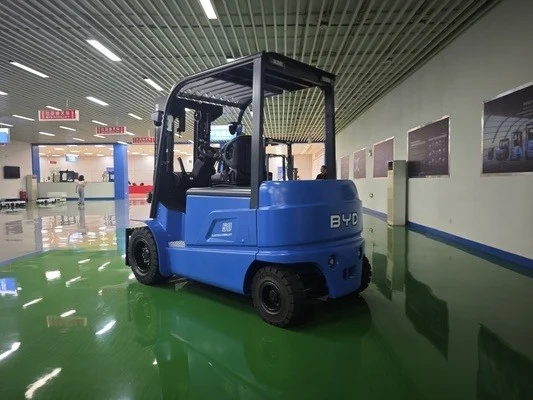
Also settle the acceptance checks: measure the delivered truck’s collapsed height against the survey, verify the free-lift figure on the data plate, and test the highest and lowest working positions with a representative load. If the site has changed since the survey, re-measure before delivery. For a quotation, provide the load weight and centre, required lift height, lowest overhead clearance, aisle width, floor surface, shift pattern and charging arrangements so the configuration can be matched to the actual duty.
Frequently Asked Questions
Can free lift replace the need to measure headroom?
No. Free lift helps where the forks must rise under a low obstruction, but the collapsed height and the extended height still have to be checked against the route and the stacking point. Measurement remains the starting point.
Does a higher lift height always mean a larger mast?
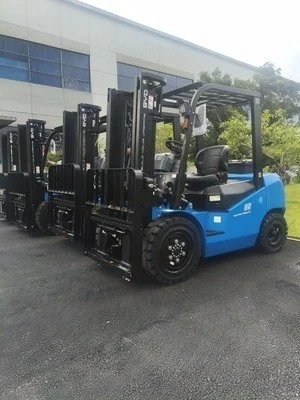
Not necessarily, but the stage count and profile change with lift height, and the collapsed height usually increases. The supplier’s mast drawing is the reliable source, because two masts with the same maximum lift can differ in collapsed height.
What should I send with an enquiry?
Send the site clearance measurements, the load weight and load centre, the required lift height, aisle width, floor and ramp details, shift pattern and charging conditions. These let the supplier propose a four-wheel counterbalance electric forklift configuration and confirm which figures still need verification.