Electric Forklift UK Sourcing: Verifying Rated Capacity Against Actual Load Centre And Attachment Weight
News 03/11/2026
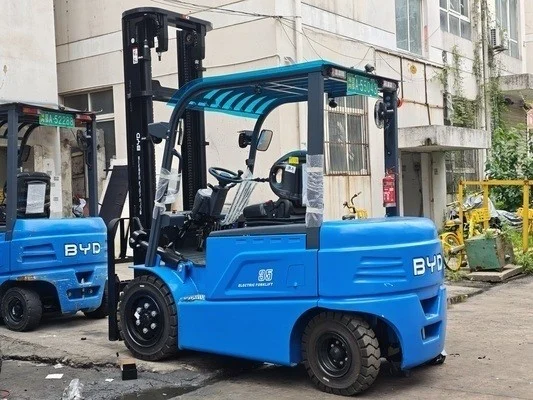
Sourcing an electric forklift in the UK often starts with one number: the rated capacity on the data plate. That figure is a starting point, not a purchase decision. It describes a specific test condition — usually a stated load centre with a standard fork carriage and no attachment. Once you add a heavier attachment, lift a non-standard load, or work at full mast height, the safe capacity can be substantially lower. This article explains how UK buyers can check rated capacity against their real load centre and attachment weight, and how to document the result before placing an order. The focus is the four-wheel counterbalance electric forklift, the general-purpose format most often specified for yard, dock and warehouse transfer work.
Why the Data Plate Number Is a Conditional Figure
A capacity plate is a statement about one configuration. Manufacturers normally rate a truck at a defined load centre — commonly 500 mm or 600 mm — measured from the vertical face of the fork to the centre of gravity of the load. The rating also assumes a standard carriage, standard forks and a specified lift height. Change any of those and the rating no longer describes what the truck can safely handle.
Three variables matter most in practice:
- Load centre. A pallet whose weight sits further from the fork face increases the turning moment on the mast and chassis. Capacity falls as load centre grows.
- Attachment weight and offset. A clamp, rotator, push-pull or side-shift attachment adds weight in front of the carriage and moves the load further forward. Both effects reduce residual capacity.
- Lift height. Many trucks are derated above a stated height. If your racking requires full free lift or a tall mast, the capacity available at that height is the number that matters.
None of these derating relationships should be guessed. The only reliable source is the manufacturer’s capacity chart or residual capacity data for the exact truck, mast and attachment combination you intend to buy. Ask the supplier to provide it in writing.
Working Out Your Real Load Centre Before You Shortlist Trucks
Start with the loads you actually move, not with a catalogue. A practical method:
- Measure the load. Record pallet length, width and height, and the weight distribution across the pallet. A pallet that is front-heavy behaves differently from an evenly loaded one.
- Find the centre of gravity. For a uniform load, the horizontal centre of gravity sits at half the load depth. For uneven loads, it must be established from the actual goods, not assumed.
- Add the fork face to load centre distance. Measure from the vertical face of the fork to the load’s centre of gravity. That distance is your actual load centre.
- Add attachment offset. If an attachment is fitted, measure how far it moves the load forward and add that distance.
- Check the highest lift point. Note the lift height at which the load must be handled, not just the maximum mast height.
For a UK buyer, a useful discipline is to write these measurements into the enquiry itself. A supplier who receives actual load centre, attachment type and lift height can quote against a real duty rather than a generic rating.
An Illustrative Scenario
Consider a hypothetical distribution site handling palletised goods at a 600 mm load centre with a standard carriage. If the same site later adds a rotating attachment to handle specialised loads, the attachment’s own weight and its forward offset both reduce the capacity available at the fork. The correct question is not “what is the truck rated at?” but “what residual capacity does this truck have with this attachment at this load centre and this lift height?” Only the manufacturer’s configuration data can answer that. Treat any verbal assurance without a capacity chart as unverified.
Attachments, Derating and the Questions to Put to a Supplier
Attachments are where most capacity errors enter a UK procurement process. The attachment is usually supplied by a third party, and the truck manufacturer may not have rated the combination. That gap is a procurement risk, not a detail.
When an attachment is part of the specification, ask the supplier to confirm:
- The attachment’s weight and its horizontal load offset from the fork face.
- Whether the truck manufacturer has published residual capacity data covering that attachment, mast and lift height.
- Whether the hydraulic system, carriage and mast are approved to carry the attachment.
- Whether the data plate will be updated to reflect the derated capacity, and by whom.
- What documentation will be handed over at delivery to support the stated capacity.
If the answer to any of these is unclear, the safe assumption is that the combination has not been verified. Do not accept a capacity figure that applies only to the bare truck.
| Item to verify | Why it matters in UK sourcing | Documentation to request |
|---|---|---|
| Rated capacity and stated load centre | Defines the condition under which the plate figure applies | Manufacturer capacity plate and data sheet |
| Actual load centre of your loads | Determines whether the plate rating is relevant to your duty | Your own load measurements, recorded in the enquiry |
| Attachment weight and offset | Reduces residual capacity and changes the load moment | Attachment specification and residual capacity chart |
| Lift height and any height derating | Capacity may fall above a stated height | Mast-specific capacity chart |
| Updated data plate after attachment fitment | Operators rely on the plate; it must reflect the real configuration | Confirmation of who updates and re-marks the plate |
Matching the Truck to the Site: Dimensions, Ground and Charging
Capacity verification sits alongside the physical fit of the truck. A four-wheel counterbalance electric forklift is a common general-purpose choice for dock and warehouse transfer, but suitability depends on the site. Before shortlisting, confirm:
- Aisle and turning space. Compare the truck’s dimensions and turning radius with the narrowest aisle and the tightest turn on your route. If space is very restricted, a counterbalance truck may not be the right format, and that should be stated honestly rather than worked around.
- Ground conditions and slopes. Check floor condition, dock levellers and any ramps. Confirm with the supplier what gradients the truck is rated to negotiate under load.
- Shift pattern and charging. Establish the hours per shift, the number of shifts and the charging arrangements available. Battery and charger specification should follow from that duty, using the manufacturer’s published data rather than assumed runtimes.
- Lift height and overhead clearance. Confirm mast closed height against doorways and racking, and confirm the capacity available at your working height.
These checks are not optional extras. A truck that fits the load but not the aisle, or the aisle but not the charging regime, is a poor purchase regardless of its plate rating.
Where This Site’s Range Applies
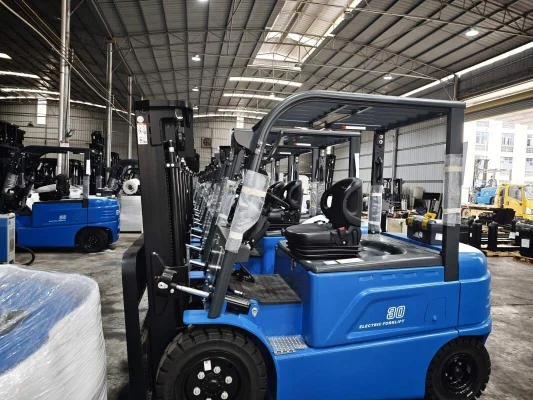
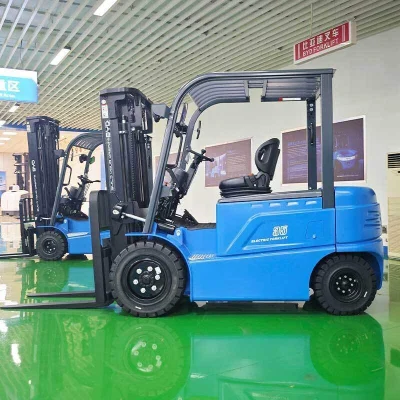
This site supplies BYD four-wheel counterbalance electric forklifts, including lithium-battery models. When you enquire, provide actual load weight, load centre, attachment details, required lift height, aisle dimensions, ground and slope conditions, shift pattern and charging arrangements. That information allows the selection and configuration discussion to be grounded in documented data rather than a headline capacity figure. Where a requirement falls outside what a counterbalance truck can safely do, that should be identified early.
Frequently Asked Questions
Is the rated capacity on the data plate the weight I can always lift?
No. The plate rating applies to the load centre, attachment configuration and lift height stated by the manufacturer. A load whose centre of gravity sits further forward, or an attachment that adds weight and offset, can reduce the safe capacity. Always check the residual capacity data for your actual configuration.
How do I calculate load centre if my pallets are not evenly loaded?
For uneven loads, the centre of gravity cannot be assumed from pallet dimensions alone. It must be established from the actual goods and how they sit on the pallet. If you cannot determine it reliably, describe the load to the supplier and ask what information they need to assess it.
Can I add an attachment after delivery?
Only with the manufacturer’s or supplier’s confirmation that the truck, mast and carriage are approved to carry it, and that the residual capacity has been established. The data plate should then be updated to reflect the new configuration. Fitting an attachment without that verification leaves operators relying on a rating that no longer applies.
What should I send with an enquiry to get an accurate capacity assessment?
Send actual load weight and dimensions, the measured load centre, attachment type and weight if applicable, required lift height, aisle and turning dimensions, ground and slope conditions, and shift and charging arrangements. With those details, a supplier can quote against your real duty rather than a generic figure.
Pre-Purchase Checklist
Before confirming an order, assemble the following: measured load weights and dimensions; actual load centre; attachment weight and offset; required lift height and any height derating; aisle, doorway and turning dimensions; ground and slope conditions; shift pattern and charging arrangements. Then put these questions to the supplier: which capacity chart applies to my configuration; who updates the data plate after attachment fitment; what documentation is provided at handover; and what the truck is rated to do on my site’s gradients. If any answer is missing, treat the capacity as unverified and resolve it before purchase.