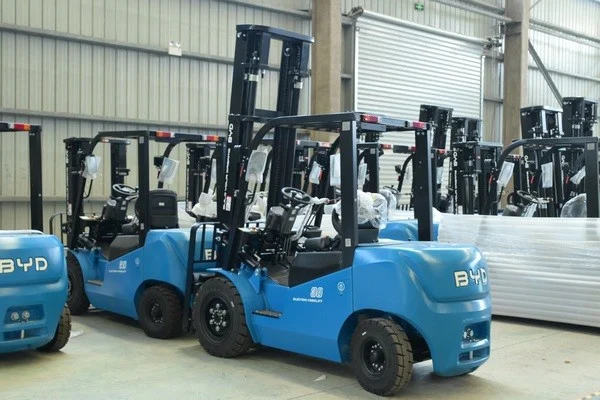
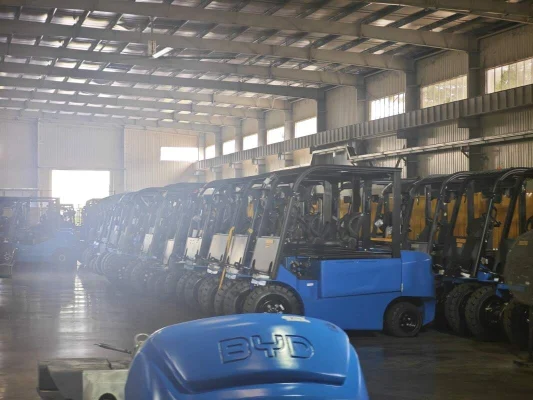
Electric Forklift UK Specification: Confirming Floor Loading And Wheel Pressure Before Installing Four-Wheel Counterbalance Units
News 06/11/2026
Before you order a four-wheel counterbalance electric forklift, verify that your floor and racking can handle the loads. This guide explains how to check floor loading and wheel pressure using UK practice, what data you need from your building and supplier, and how to avoid common mistakes. It focuses on the information required to confirm suitability and does not replace a structural engineer’s assessment.
Why Floor Loading and Wheel Pressure Matter
A four-wheel counterbalance electric forklift concentrates its weight on four wheels, but the load distribution changes with lift height, load centre, and attachment. The floor must support both the static weight and the dynamic forces during travel and lifting. In the UK, floor slabs in industrial buildings are often designed to a specific uniformly distributed load (UDL) and point load, but these figures may not match your forklift’s actual wheel loads. Without verification, you risk cracking, settlement, or unsafe operation.
Wheel pressure is the force per wheel divided by the contact area. It is not the same as tyre pressure. High wheel pressure can damage floors, especially in older buildings or upper floors. The goal is to compare the forklift’s maximum wheel loads with the floor’s capacity, considering the worst-case load centre and lift height.
Key Data to Collect Before Installation
You need two sets of information: from the building and from the forklift supplier. Do not guess values. If data is missing, obtain it from the manufacturer or a qualified person.
Building and Floor Information
- Floor slab thickness, reinforcement, and concrete strength (if known).
- Design loads: UDL, point load, and any restrictions from the original structural design.
- Joint locations, cracks, or previous repairs.
- If the forklift will operate on upper floors or mezzanines, obtain a structural engineer’s assessment.
Forklift and Load Data
- Unladen weight and wheelbase.
- Rated capacity and load centre.
- Maximum lift height and any derating that applies.
- Attachment weight and its effect on load centre.
- Wheel type and size (solid pneumatic, cushion, or non-marking).
- Battery weight and its location.
- Maximum wheel loads as stated by the manufacturer, including dynamic factors.
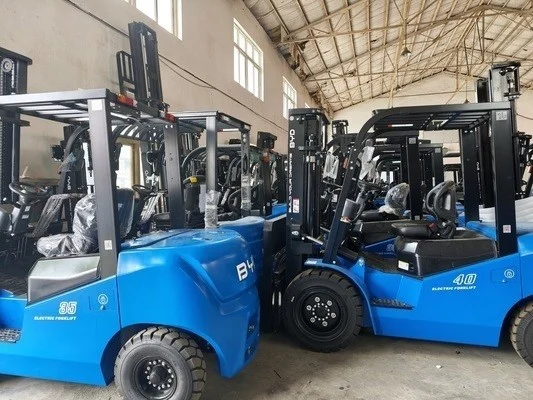
For a比亚迪 four-wheel counterbalance electric forklift, request the wheel load chart from the supplier. This chart should show front and rear wheel loads at various load centres and lift heights. Without it, you cannot confirm floor suitability.
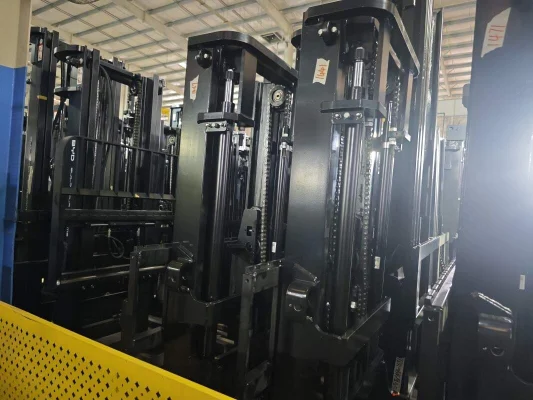
How to Confirm Floor Loading: A Step-by-Step Approach
Follow these steps to compare forklift wheel loads with floor capacity. This is a simplified method; always involve a structural engineer if the floor is suspended or if data is uncertain.
- Calculate the worst-case wheel load. Use the supplier’s wheel load chart. Consider the heaviest load at the maximum load centre and lift height you will use. Add the attachment weight if applicable. The chart should give front and rear wheel loads.
- Determine the contact area. For pneumatic tyres, the contact area depends on inflation pressure and load. For cushion tyres, it is the tyre width times the contact length. Your supplier can provide typical contact areas, but actual values vary with load.
- Compute wheel pressure. Divide the wheel load by the contact area. Use consistent units (e.g., kN and m² to get kPa). Compare this with the floor’s point load capacity. Note that the floor’s point load capacity may be given as a concentrated load over a small area, not as a pressure.
- Check the UDL. Sum the total weight of the forklift and load, and divide by the area over which it operates. Compare with the floor’s UDL capacity. This is a rough check; point loads are often more critical.
- Review dynamic effects. Forklifts generate dynamic forces during braking, turning, and lifting. The supplier’s wheel load chart may include dynamic factors. If not, ask.
- Document and verify. Record all inputs and calculations. Have a structural engineer review if the floor is not on grade or if you are unsure.
Specification Checklist and Supplier Questions
Use this table to organise the information you need. The “Typical UK Practice” column gives general guidance; actual values must come from your building and supplier.
| Parameter | Why It Matters | What to Confirm with Supplier | Typical UK Practice |
|---|---|---|---|
| Rated capacity and load centre | Determines maximum load and wheel loads | Wheel load chart at your required load centre and lift height | Capacity is usually rated at 500 mm load centre; higher load centres reduce capacity |
| Maximum lift height | Affects stability and wheel loads | Derating factors above certain heights | Check if derating applies above 3–4 m, depending on model |
| Attachment weight and type | Reduces net capacity and shifts load centre | Net capacity with attachment; revised wheel loads | Attachments often require capacity reduction; confirm with supplier |
| Wheel type and size | Affects contact area and floor pressure | Contact area data or recommended floor pressure limits | Pneumatic tyres have larger contact area than cushion tyres; cushion tyres suit smooth indoor floors |
| Battery weight | Contributes to unladen weight and rear wheel load | Battery weight and its effect on wheel load distribution | Lithium-ion batteries may differ in weight from lead-acid; confirm with supplier |
| Floor slab capacity | Determines if floor can support wheel loads | Not applicable; obtain from building owner or engineer | Design loads vary widely; do not assume a value |
Ask your supplier these questions:
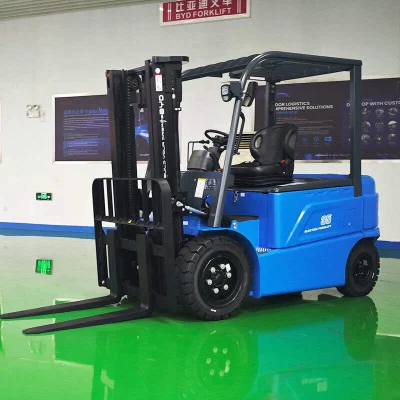
- Can you provide a wheel load chart for the exact model and configuration, including the attachment?
- What is the maximum wheel load at the load centre and lift height I need?
- What contact area should I use for wheel pressure calculations?
- Are there any restrictions on floor type or condition?
- What maintenance checks help ensure wheel loads remain within limits?
Frequently Asked Questions
Can I install a four-wheel counterbalance electric forklift on an upper floor?
Only after a structural engineer confirms the floor can support the wheel loads. Upper floors often have lower load capacities, and dynamic forces may be significant. Do not rely on the building’s UDL alone; point loads from wheels are usually the limiting factor.
What if I don’t have the floor’s design load data?
Obtain it from the building owner, original construction drawings, or a structural engineer. Without this data, you cannot confirm suitability. Do not assume a standard value.
Does wheel pressure change with load centre?
Yes. As load centre increases, the front wheel loads increase and rear wheel loads decrease. Always use the wheel load chart at your actual load centre and lift height.
Are solid pneumatic tyres better than cushion tyres for floor protection?
Solid pneumatic tyres typically have a larger contact area and may reduce wheel pressure, but the actual pressure depends on load and tyre size. Cushion tyres are common indoors but may exert higher pressure. Confirm with your supplier and consider your floor’s capacity.
What maintenance affects wheel loads?
Tyre wear, incorrect inflation (for pneumatic tyres), and damaged wheels can alter contact area and load distribution. Regular inspection helps maintain expected performance. Follow the manufacturer’s maintenance schedule.
Before finalising your purchase, gather the building data and forklift wheel load information, complete the calculations, and consult a structural engineer if needed. This due diligence helps ensure safe and compliant installation of your four-wheel counterbalance electric forklift.