Four-Wheel Counterbalance Electric Forklift Configurations: Matching Battery, Charger, and Mast Options to Your Handling Task
News 06/11/2026
Choosing among the different forklift types starts with the work itself, not a spec sheet. When the task calls a four-wheel counterbalance electric forklift, the configuration decisions that matter most are the battery, the charger, and the mast. These three choices determine whether the truck fits your shift pattern, your building, and your loads, or whether it becomes an expensive compromise. This guide explains how each option interacts with real handling conditions and which details to confirm before ordering.
Start With the Task, Not the Truck
A counterbalance truck carries the load ahead of the front wheels, so stability depends on the combined load weight and its distance from the carriage. That single relationship drives most configuration choices. Before comparing options, write down the following:
- Peak load weight, including pallets, packaging, and any attachment.
- Load center: the horizontal distance from the vertical face of the forks to the load’s center of gravity. Standard ratings assume a stated load center; a longer or offset load reduces usable capacity.
- Lift height and free lift needed at the highest racking level, plus the overhead clearance of doors and sprinklers.
- Aisle width and turn radius, measured at the tightest point on the route.
- Floor condition and ramp gradients along the travel path.
- Shift length, breaks, and whether opportunity charging is possible.
- Environment: indoor only, or exposure to rain, dust, cold, or washdown.
These figures let a dealer match a truck to the duty rather than oversizing it. Undersizing risks unstable handling and short component life; oversizing adds cost, weight, and footprint without benefit.
Battery Choices and Duty Cycle Fit
Battery configuration is usually the first constraint to resolve because it affects charging infrastructure, truck weight, and uptime planning. Lithium-ion packs and lead-acid batteries behave differently in daily use, and neither is universally better.
Lithium-Ion Packs
Lithium packs accept opportunity charging during breaks and typically need no battery changes, which suits multi-shift operations with accessible charging points. They are sealed, so there is no watering routine. Their usable capacity and charge acceptance depend on the manufacturer’s specification and the battery management system, so confirm the rated capacity, voltage, and recommended charging window with the supplier rather than assuming figures.
Lead-Acid Batteries
Lead-acid batteries usually cost less upfront and remain common where a spare battery and a change station are practical. They require watering, ventilation, and a dedicated charging area, and they generally need a full charge cycle rather than short top-ups. If your operation runs long shifts without room for a charging station, a battery exchange routine may be needed.
Questions to Settle Before Choosing
- How many hours does the truck actually run per shift, and how much of that is loaded travel?
- Can the truck reach a charging point during breaks, or must it stay on the floor?
- Is there space and ventilation a battery change or charging area requires?
- Does the truck work in a cold store or a hot process area where battery behavior changes?
Ask the supplier to state the battery’s rated capacity, voltage, and expected charge time under your conditions. Treat any runtime figure as conditional on load, route, and temperature until the manufacturer confirms it.
Charger Selection and Charging Infrastructure
The charger must match the battery chemistry, voltage, and connector, and the building’s electrical supply must support it. A mismatch is a common and avoidable error.
What to Confirm
- Chemistry compatibility: lithium and lead-acid chargers are not interchangeable without manufacturer approval.
- Voltage and connector: confirm against the battery datasheet, not a general catalog listing.
- Electrical capacity: check available supply, breaker ratings, and whether the charge point needs a dedicated circuit.
- Placement: charging areas need ventilation, fire precautions, and clearance from traffic routes; local rules govern the details.
- Charging strategy: opportunity charging, overnight charging, or a mix changes the number of chargers needed relative to trucks.
A practical check is to map where trucks park during breaks and shift changes. If those points are far from the electrical supply, the cost of cabling and protection may outweigh the apparent savings of a cheaper charger.
Mast Options, Attachments, and Capacity Ratings
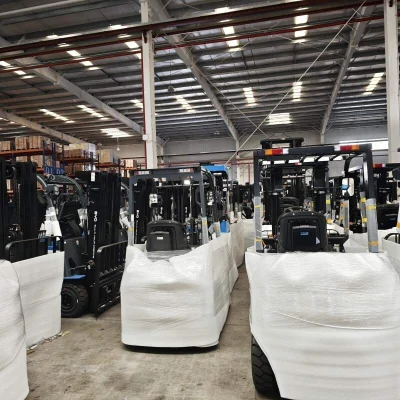
The mast converts lift height into visibility, capacity, and overhead clearance trade-offs. Standard duplex and triplex masts differ in free lift and collapsed height; full free lift matters where the truck must enter a trailer or pass under low obstructions with the forks raised.
Matching Mast and Load
Every rating assumes a load center, often 500 mm or 600 mm depending on the model. A load whose center sits farther out reduces the safe capacity at height. The same applies to attachments such as sideshifters, clamps, or fork positioners, which add weight and shift the load forward. Ask the supplier to confirm the derated capacity at your required lift height with the exact attachment fitted.
Visibility and Aisle Width
Taller masts and wider carriages can obscure the load and narrow effective clearances. In tight aisles, confirm the truck’s turn radius and the actual aisle width with the mast and attachment installed, not the base model alone.
Common Configuration Mistakes
- Choosing lift height from the top rack only, ignoring overhead doors and sprinkler clearance.
- Ordering an attachment without checking the reduced capacity at height.
- Assuming a rated capacity applies at every load center and lift height.
- Ignoring floor and ramp conditions that affect traction and braking.
Frequently Asked Questions
Can one four-wheel counterbalance electric forklift handle both indoor and outdoor work?
It can work in both settings when the model is specified accordingly, but outdoor use raises questions about weather protection, floor surface, and ramp gradients. Confirm the manufacturer’s stated limits rather than assuming indoor ratings carry over.
Is a lithium battery always the better choice?
No. Lithium suits operations that can opportunity-charge and want to avoid battery changes. Lead-acid can be practical where a spare battery and change station already exist. The right answer depends on shift length, charging access, and site rules.
Why does capacity drop when I add an attachment?
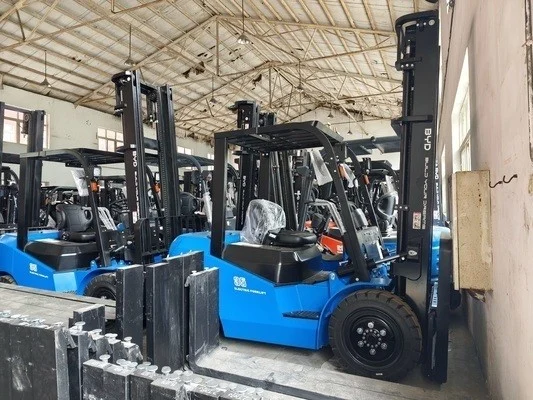
Attachments add weight ahead of the carriage and move the load center forward. Both effects reduce the load the truck can safely carry at a given height, so the supplier should confirm the derated figure.
How do I know which charger to order?
Match the charger to the battery chemistry, voltage, and connector specified on the battery datasheet, then confirm the building’s electrical supply supports it. Do not substitute a charger without written manufacturer approval.
What should I send a dealer to get an accurate quote?
Provide peak load weight and dimensions, load center, required lift height, aisle width, floor and ramp details, shift pattern, charging access, and any attachment needs. These details let the dealer propose a configuration that matches the task instead of a generic truck.