Battery and Charging Configuration Checklist When Comparing Different Forklifts Type Options in Four-Wheel Counterbalance Electric Fleets
News 21/10/2026
When evaluating different forklift type options within your four-wheel counterbalance electric fleet, battery and charging configurations directly impact daily operation, uptime, and long-term costs. This checklist walks through key comparison dimensions to help you make informed decisions aligned with your operational needs.
Core Battery Configuration Checkpoints
Start comparison with core battery attributes that directly affect forklift performance and service life. All four-wheel counterbalance electric forklifts rely on battery weight as part of the counterbalance system, so this factor tops your list.
- Nominal capacity: Align with the heaviest load your operation handles, plus extra headroom supporting extended multi-shift operation
- Chemistry: Confirm low-temperature performance if your facility operates in unheated outdoor or semi-outdoor spaces
- Weight distribution: Verify battery weight matches the forklift’s original counterbalance design, this preserves factory-rated load capacity
- BMS integration: Check built-in battery management system features that protect cells from overcharge, over-discharge, and thermal irregularities
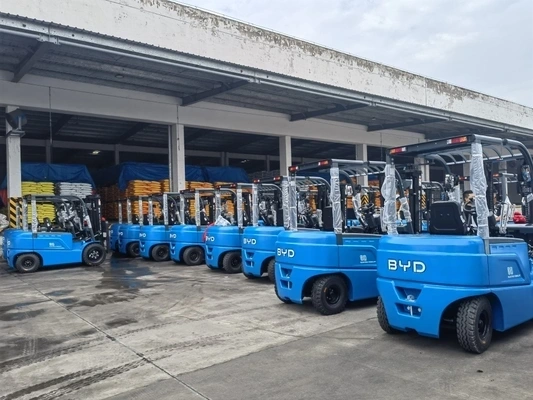
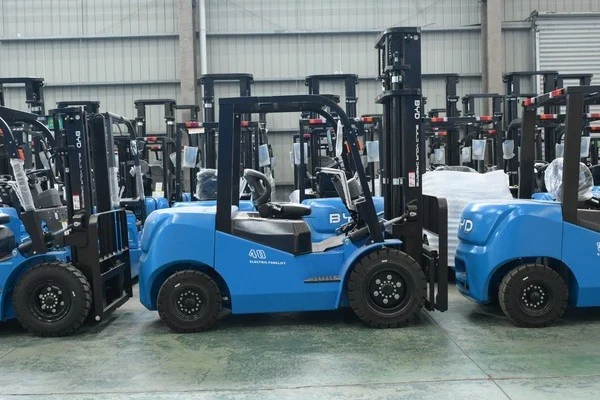
Most modern BYD four-wheel counterbalance electric forklifts come standard with lithium iron phosphate battery packs, which integrate robust BMS technology to support consistent operation across common industrial scenarios.
Charging Infrastructure Requirements
Different charging configurations fit different facility setups and work schedules. Compare options based on your existing electrical supply and available downtime.
- Input power rating: Confirm charger voltage matches your facility’s existing electrical supply
- Charging speed: Match charging speed to your available downtime between shifts
- Space allocation: Measure available floor space dedicated to charging stations
- Safety features: Look for overcurrent protection, emergency stop functions, and thermal cutoffs
Opportunity charging fits operations with 15-30 minute idle breaks throughout the workday. This approach does not require extra battery swap equipment. Most lithium-powered four-wheel counterbalance models support this charging method, which keeps fleet operation running without long mid-shift stops.
Fleet Operation-Specific Constraints
Your daily operational demands shape which configuration delivers the most reliable performance. Consider these constraints before finalizing your selection.
Multiple shift operations require configurations that support fast charging or enough battery capacity to cover all consecutive shifts. Single shift operations often work well with smaller capacity batteries and slower, lower-cost chargers.
Facility layout also affects your choice: four-wheel counterbalance electric forklifts need stable, level ground to operate safely, this requirement holds true regardless of your chosen battery or charging setup. Outdoor operation requires battery enclosures that protect cells from moisture and dust, confirm this rating matches your working environment. Narrower operating aisles still fit properly sized four-wheel counterbalance models, but battery size can affect turning radius, check this dimension against your facility minimum aisle width.
Configuration Cost Alignment
Upfront investment differs across common configuration options. Lithium battery setups typically carry higher initial purchase cost than traditional lead acid alternatives, but eliminate extra maintenance needs and battery swap equipment that offset long-term expenses in many use cases.
Align your configuration choice with your capital budget and expected utilization rate. Avoid overbuying excess capacity your operation never uses, this unnecessarily raises upfront costs without adding operational value. Lithium configurations typically deliver better value in high-utilization, multi-shift operations. Lead acid configurations may fit lower-utilization operations with tighter initial capital budgets.
Always review warranty terms covering both battery and charger, this protects your investment through the full expected service life of the equipment.
Frequently Asked Questions
Can I replace an original lead acid battery with a lithium option my existing four-wheel counterbalance forklift?
This conversion depends on your forklift original design, electrical system compatibility, and counterbalance weight requirements. You must consult the original equipment manufacturer to confirm fit and safety before completing any conversion work.
What safety checks apply to forklift charging setups?
All charging stations require clear unobstructed access, proper ventilation, and code-compliant electrical wiring. Regular scheduled inspections check for frayed cables, damaged connectors, and abnormal heat buildup during charging. Follow all manufacturer guidelines matching your specific setup.
Do all four-wheel counterbalance electric forklifts support opportunity charging?
No, this feature depends on battery chemistry and built-in BMS design. Most modern lithium-powered four-wheel counterbalance models support opportunity charging, but older lead acid setups do not. Always confirm this capability before purchasing new or used equipment.
If you need help selecting the correct battery and charging configuration your BYD four-wheel counterbalance electric forklift fleet, share your operation details and request custom guidance from our team.