How Load Center Placement Impacts 5 Ton Electric Forklift Load Handling Safety and Capacity Retention
News 11/10/2026
Many material handling operators overlook load center placement when operating 5 ton electric forklifts. Small shifts in load center position can create unexpected safety hazards and reduce usable load capacity, even when total load weight matches the machine’s nameplate rating. This guide breaks down core relationships between load center placement, safety and capacity retention to help operators maintain consistent safe operation.
What Is a Forklift Load Center?
A load center marks the horizontal distance from the forklift fork’s vertical backrest to the center of gravity of the carried load. Most standard 5 ton electric forklift nameplates list rated capacity based on a 24 inch standard load center. This standard applies to evenly distributed square or rectangular loads common in most warehouses and industrial yards.
Any load that extends further forward from the fork’s backrest shifts the combined center of gravity forward. This shift changes how the forklift handles weight, even when the total load weight falls at or below the 5 ton nameplate rating.
How Load Center Shifts Affect 5 Ton Electric Forklift Capacity Retention
Rated load capacity always links directly to load center distance. When the load center moves forward beyond the standard 24 inch rating, the forklift’s usable capacity drops. This drop occurs because the forward shift creates more leverage on the front axle and counterweight system that keeps the machine stable.
Capacity Adjustment Basics
As a general rule, every additional 2 inches of forward load center distance reduces usable capacity by roughly 10 percent. A 5 ton electric forklift with a 28 inch load center effectively supports around 4 tons of safe working weight. Operators who ignore this relationship often overload the machine without realizing it.
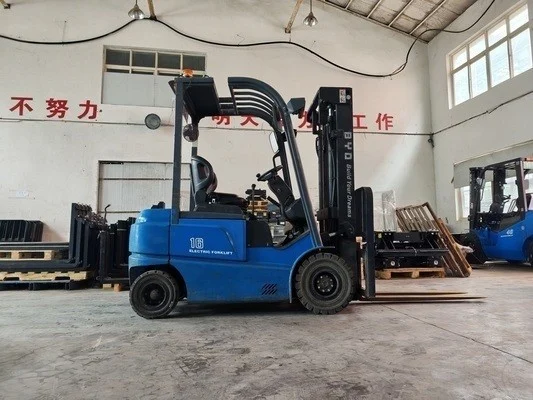
Truck design affects how much capacity drops. Units with longer wheelbases handle extended load centers better than shorter wheelbase models, but all electric forklifts follow this basic stability principle.
Common Safety Risks From Incorrect Load Center Placement
Unaddressed load center shifts create multiple avoidable safety hazards. Three of the most common issues operators face include:
Forward Tip-over Hazards
Forward center of gravity shifts increase risk of forward tip-over, especially when operators travel over uneven ground or raise loads to high mast positions. Even a non-fatal tip-over causes serious equipment damage and can lead to operator injury.
Reduced Brake Response
Shifts in weight distribution change how the forklift responds to braking. Overloaded front axles increase stopping distance and can cause premature wear on front brake components, boosting long term maintenance costs.
Excess Mast and Frame Stress
Unexpected leverage from mispositioned loads puts extra stress on the mast, lift chains and carriage. Over time this stress leads to premature component failure and unexpected downtime.
Practical Best Practices Operators Can Follow
You can maintain safe capacity and reduce risk with these simple steps when operating a 5 ton electric forklift:
- Check the nameplate before moving any non-standard load. Confirm the load center distance and adjust the maximum load weight accordingly.
- Position loads as close to the fork backrest as possible. This keeps the load center as far back as possible, preserving full rated capacity.
- Avoid extending loads beyond the fork tips unnecessarily. If you must carry longer loads, reduce the total load weight to match the new calculated capacity.
- Inspect load balance before lifting. Even if total weight falls within limits, unevenly distributed loads create shifted load centers that create hazards.
Always adjust travel speed when carrying loads with extended load centers. Slow down when turning and raising loads to reduce sudden shifts in center of gravity.
Frequently Asked Questions
Does load center placement affect all 5 ton electric forklift models equally?
No. Counterbalanced 5 ton electric forklifts are more sensitive to load center shifts than reach or stand-up models. Always check your specific model’s nameplate for capacity adjustments related to non-standard load center distances.
Can I modify my 5 ton electric forklift to handle extended load centers without losing capacity?
Adding extra counterweight can help offset forward load center shifts, but this modification changes the machine’s overall weight and rear stability. It also may void your manufacturer warranty and violate local workplace safety regulations. Any modification requires approval from a qualified material handling engineer.
How do I calculate the load center of an irregular shaped load?
For irregular loads, estimate the center of gravity based on the load’s shape and weight distribution. If you cannot get an accurate estimate, reduce your maximum load weight by at least 20 percent to account for uncertainty. When possible, split large irregular loads into smaller shipments that fit within standard load center limits.