The Impact of Fast Charging Protocols on Long-Term Electric Forklift Battery Health
News 10/10/2026
Electric forklift fleets increasingly adopt fast charging to reduce downtime and support extended operations. Many fleet managers question how these faster charging approaches affect their electric forklift battery lifespan and long term performance. Understanding connections between specific charging protocols and battery health helps operations make informed decisions that balance uptime needs with replacement cost management.
Core Fast Charging Protocol Types Used in Electric Forklift Batteries
Fast charging describes any approach that recharges a battery to 80% capacity within one hour or less. Different protocols use different current and voltage regulation methods, each with unique effects on battery cells.
Constant Current (CC) Fast Charging
This protocol delivers steady current to the battery through most of the charging cycle. It reduces total charge time, but pushes higher current through cells when capacity remains high. This can generate excess internal heat if current settings exceed battery manufacturer recommendations.
Constant Voltage (CV) Fast Charging
This protocol maintains a steady voltage through the charging cycle, with current dropping as the battery reaches full capacity. Most fast charging systems combine CC and CV stages, using constant current when the battery is nearly empty then switching to constant voltage as it fills. This combination reduces heat generation toward the end of the charge cycle.
Pulsed Fast Charging
This newer protocol delivers current in short controlled pulses instead of a steady stream. Proponents note this approach reduces internal heat buildup and limits crystal formation on cell electrodes. Commercial availability remains limited across many industrial electric forklift battery models, so adoption stays low across most warehouse operations.
Key Impacts on Long-Term Battery Health
Fast charging protocols interact with battery chemistry (most commonly lead-acid or lithium-ion used in electric forklifts) to change long term degradation patterns. Below are the most common documented effects.
Increased Heat Generation
Higher charging current directly increases internal battery temperature. Sustained high temperatures during repeated fast charging break down electrode materials and electrolytes faster than standard charging. In lead-acid batteries, excess heat accelerates water loss and plate corrosion. In lithium-ion batteries, it speeds up solid electrolyte interphase (SEI) layer thickening, which reduces available capacity over time.
Elevated Cell Degradation Rates
Fast charging forces faster ion movement between anode and cathode. Over hundreds of charge cycles, this increased stress creates tiny structural defects in electrode materials. These defects accumulate and reduce the battery’s total usable capacity, meaning the forklift can operate fewer hours between charges. Studies from industrial battery manufacturers show repeated unoptimized fast charging can reduce total battery lifespan by 10 to 30 percent, depending on battery type and charging frequency.
Imbalanced Cell Voltage Distribution
Battery packs contain multiple individual cells connected to deliver required voltage. Fast charging can cause uneven voltage accumulation across cells, especially in older packs. Over time, this imbalance forces some cells to endure more stress than others, leading to premature pack failure long before individual cells reach their natural end of life.
Practical Selection Guidance Based on Use Case
Choosing the right fast charging protocol depends on your operation’s specific needs and battery type. Below are common application scenarios and appropriate choices.
Single-shift small warehouse operations: Operations that run one 8-hour shift daily can use opportunity fast charging during breaks, even with basic CC-CV protocols. You only need one or two fast chargers to support multiple batteries, so initial investment stays low. This setup works well when overnight slow charging completes full cycles most days.
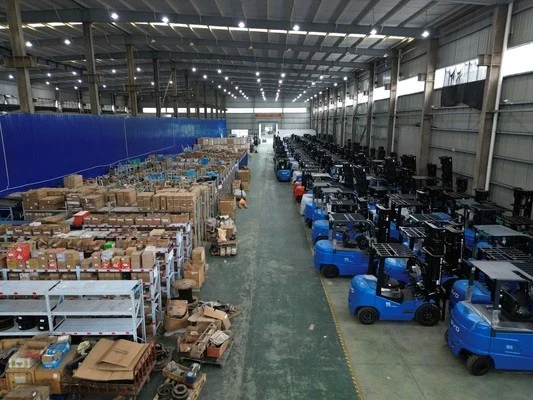
Multi-shift 24/7 operations: Continuous operations that require fast charging between shifts should prioritize batteries built specifically to handle fast charging, paired with pulsed or optimized CC-CV protocols. Add battery management systems (BMS) that monitor cell temperature and balance voltage across the pack to reduce long term degradation.
Lithium-ion vs lead-acid battery considerations: Lithium-ion electric forklift batteries tolerate optimized fast charging much better than traditional lead-acid flooded batteries. Lead-acid batteries require longer charge times to avoid degradation, so fast charging should only be used as an occasional backup, not a daily practice.
Actionable Steps to Mitigate Negative Health Effects
You can capture the uptime benefits of fast charging while protecting your electric forklift battery long term health with these simple steps:
- Follow all manufacturer current and temperature limits matching your battery model. Never exceed the maximum charging current published in your battery technical documentation.
- Install active temperature management in charging areas. Keep ambient temperatures between 10 and 30 degrees Celsius (50 to 86 degrees Fahrenheit) to reduce excess heat buildup during charging.
- Use a battery management system that balances cell voltage every 5 to 10 full charge cycles. This corrects imbalances that develop during repeated fast charging.
- Schedule monthly capacity checks to track degradation early. Catching excessive degradation allows you to adjust charging protocols before you experience unplanned downtime.
- Limit daily fast charging to only what your operation needs. If you can complete full slow charges overnight, use fast charging only as an occasional backup.
Frequently Asked Questions
Can all electric forklift battery models handle fast charging?
No. Only batteries specifically designed and rated to handle fast charging support daily repeated fast charging. Traditional flooded lead-acid batteries experience rapid degradation when subjected to daily fast charging. Always check your battery manufacturer rating before switching to a fast charging protocol.
How does fast charging change total battery replacement frequency?
Unoptimized daily fast charging reduces total lifespan, which increases replacement frequency. With proper optimization and battery management, the reduction in lifespan stays small, often under 10 percent over the battery’s full life. This small reduction is often offset by increased operational uptime.
Is pulsed fast charging worth the extra investment?
Operations that rely on daily fast charging see pulsed protocols deliver measurable health benefits compared to basic CC-CV. Operations that only use fast charging occasionally see the extra investment does not deliver enough benefit to justify the cost. Assess your charging frequency before you make your purchasing decision.
What temperature range keeps electric forklift battery healthy during fast charging?
Most manufacturers recommend keeping battery temperature between 15 and 25 degrees Celsius (59 to 77 degrees Fahrenheit) during charging. Temperatures above 40 degrees Celsius (104 degrees Fahrenheit) cause significant additional degradation, so add cooling if your charging area regularly exceeds this threshold.
Balancing fast charging uptime benefits with long term electric forklift battery health requires matching your protocol to your battery type and operational needs. Following manufacturer guidelines, adding basic battery management, and monitoring degradation early helps you reduce total cost of ownership while keeping your fleet running smoothly.