Proper Storage Protocols Preserve Electric Forklift Battery Performance During Off-Season Downtime
News 13/10/2026
Many operations face extended periods where forklifts sit idle, whether seasonal business shifts, temporary site shutdowns or planned equipment rotation. Poor storage practices cut an electric forklift battery service life by up to 50% in many cases, leading to thousands of dollars in unexpected replacement costs. This guide breaks down actionable protocols preserve battery capacity and performance when your equipment enters off-season downtime.
Why Off-Season Downtime Harms Unattended Electric Forklift Batteries
All rechargeable batteries experience self-discharge during idle periods. This natural process slowly lowers internal voltage over time, even when the battery connects no external loads. When voltage drops below critical thresholds, permanent chemical damage occurs inside cells. Lead-acid batteries, the most common type electric forklifts use, see low voltage trigger sulfate crystal growth on internal plate surfaces. Large, hardened crystals block electron flow and reduce overall capacity permanently.
Lithium-ion electric forklift batteries face deep discharge risk during long idle periods. Deep discharge damages internal cell chemistry and can trigger permanent protection mode that blocks recharging entirely. Extreme temperatures accelerate these processes. Hot environments double self-discharge rate, while cold conditions reduce active material reactivity inside cells. Even modern well-built batteries cannot recover from damage caused by unmonitored long-term idle.
Pre-Storage Preparation Steps
Clean And Inspect All Components
Start by removing any dirt, grease or corrosion from battery terminals and case surfaces. Use a weak baking soda solution neutralize any acid buildup on lead-acid units, then rinse and dry the entire battery completely. Inspect case for cracks, leaks, loose connections or damaged cables. Address any small issues you find before storage, because minor faults grow into major failures during months of idle time. Corroded terminals increase self-discharge rate and can cause unexpected power drain even when the system sits off.
Charge Battery To Optimal Levels
Charge requirements differ by battery chemistry. Lead-acid electric forklift batteries need a full 100% charge before entering storage. Avoid overcharging, because this practice increases water loss and grid corrosion that shorten service life. Lithium-ion electric forklift batteries need 50% to 70% charge before long-term storage. Full charge during extended idle accelerates cell degradation, while full discharge causes permanent cell damage.
Disconnect Parasitic Loads
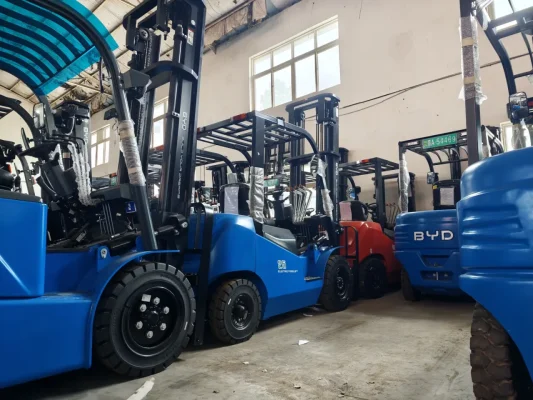
Disconnect the battery from your forklift’s main electrical system. Even when the forklift turns off, on-board electronics and safety systems draw small amounts of power continuously. This parasitic drain slowly drops voltage over months of downtime, pushing the battery into harmful low voltage ranges before you return to operation.
Select The Correct Storage Location
Electric forklift batteries need stable temperature conditions maintain health during off-season downtime. Ideal storage temperatures sit between 50°F and 70°F (10°C and 21°C). Avoid locations with direct sunlight, proximity to external heat sources or areas that freeze during winter months. If you must store batteries in unheated spaces during cold weather, add insulation maintain consistent internal temperatures.
Proper ventilation also matters. Lead-acid batteries release small amounts of gas during idle, so well-ventilated spaces prevent dangerous gas buildup. Keep storage areas completely dry, because excess moisture causes terminal corrosion and unexpected short circuits. Elevate batteries off concrete floors. Concrete draws heat away from batteries in cold weather, and also attracts condensation that builds up on battery cases over time.
Schedule Regular In-Storage Checks
Proper preparation reduces risk, but idle batteries still need periodic monitoring maintain safe voltage levels. Check open circuit voltage every 30 days throughout the off-season. Lead-acid batteries need a top-up recharge when voltage drops below 12.4V per 2V cell. Never let voltage drop below 12V, this threshold triggers irreversible sulfation. Lithium-ion batteries need top-up charging if voltage drops below 3.0V per cell.
Keep a simple log of all voltage readings. Unexpectedly fast discharge rates signal internal battery faults that need attention. If a battery loses 20% or more charge between 30-day checks, remove it from storage and complete a full inspection identify underlying issues before returning it to long-term idle. This practice catches small problems before they turn into costly failures.
Frequently Asked Questions
How long can an electric forklift battery sit idle without maintenance?
Battery chemistry and storage temperature change this timeline. A fully prepped lead-acid battery lasts 90 days between top-up charges in ideal temperature conditions. Lithium-ion batteries hold stable charge 4 to 6 months in ideal conditions. Colder or hotter environments cut this timeline roughly in half.
Do I need to remove an electric forklift battery from the forklift during storage?
Removal is not required when you follow proper storage protocols. Disconnecting the battery from the forklift’s electrical system delivers the same benefits as removal in most scenarios. If your storage space lacks temperature control, removing the battery lets you move it to a location with more stable conditions.
Can sulfation on a lead-acid electric forklift battery be reversed after storage?
Minor early sulfation can sometimes reverse through slow, controlled equalizing charging. Advanced sulfation that creates large, hard sulfate crystals causes permanent capacity loss no charging method can fix. Proper prevention through correct off-season storage remains the most effective approach.
What steps restore an electric forklift battery after off-season storage?
First, complete a full visual inspection check for leaks, corrosion or physical damage. Next, bring the battery up to full charge, then check open circuit voltage and specific gravity, a metric lead-acid units rely on, confirm performance meets operational requirements. Test the battery under light load before putting the forklift back into full daily service.
Proper off-season storage protocols protect your electric forklift battery investment and avoid premature capacity loss. These steps take minimal time and effort, but deliver long-term benefits that extend battery service life and reduce operational costs. Consistent preparation and regular monitoring keep your batteries ready when you need to bring forklifts back into operation.