Critical Site and Load Factors Drive Industrial Forklift Sizing and Selection
News 04/10/2026
Selecting the right industrial forklift depends on more than just maximum load weight. Site conditions and load characteristics combine to determine safe, efficient sizing that matches your operational needs. Ignoring either category of factors leads to safety risks, unnecessary costs and reduced productivity. Many operations teams initially focus exclusively on the nominal load capacity listed on manufacturer specifications, overlooking adjustments needed matching unique load and site conditions. This mistake leads to costly errors that impact daily operations long after purchase. This guide breaks down the most critical factors and answers common questions to support informed decision making.
Key Load Factors Affecting Industrial Forklift Selection
Core Load Characteristics
Forklift load capacity defines the maximum weight a unit can safely lift. Overloading causes tip-overs, premature component wear and safety violations. Always include the weight of any attachments added to the forks; this reduces the unit’s effective lifting capacity. Many teams forget to account for attachment weight when calculating required capacity, leading to unintended overloading during daily use.
Longer loads shift the center of gravity forward, so you need higher capacity even if total weight stays under the nominal rating. Loads with uneven weight distribution also require adjusted capacity calculations. Loads that extend far beyond the fork arms change stability dramatically, even when total weight stays within published limits. One common example involves moving oversized custom loads versus standard uniform pallets; center of gravity shifts vary widely even when total load weight matches.
Critical Site Factors That Shape Sizing Decisions
Key Site Operating Constraints
Aisle width is one of the most commonly overlooked site measurements. Narrow aisles common in modern warehouses require narrow-aisle forklift designs, while standard aisles accommodate larger counterbalance units. Many warehouses expand storage capacity by narrowing aisles after initial facility buildout, so existing aisles may measure far smaller than original blueprints indicate. Always measure your minimum aisle width before starting selection. Turning radius directly matches aisle width requirements, and larger units need more space to maneuver when turning with loaded forks.
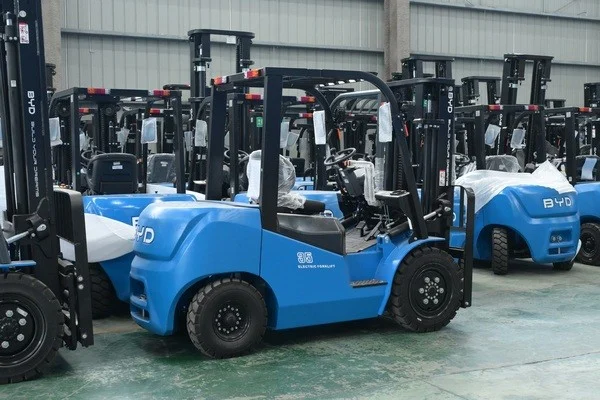
Floor surface and grade also alter forklift performance and capacity requirements. Uneven outdoor ground requires pneumatic tires and higher ground clearance, while smooth indoor concrete works well with cushion tires. Solid pneumatic tires add puncture resistance to outdoor sites with loose debris, an option many operations overlook during initial selection. Inclined ramps change effective load capacity, so you need to adjust your capacity selection if you move loads up or down steep grades. Soft or uneven ground also requires higher stability to prevent tip-overs during operation.
Maximum lift height affects mast design and load capacity. Higher lifts reduce maximum safe load, because longer masts change overall vehicle stability. Count all overhead clearance obstacles like door frames, sprinkler systems or racking when calculating required lift height. If your operation plans future racking height increases or uses double-deep storage configurations, you must account for maximum possible lift height during selection, even if current use does not require the full height. Even if you only lift heavy loads to lower heights, the mast length required to reach your maximum height still reduces your capacity rating.
Frequently Asked Questions
Common Sizing and Selection Questions
What problems come from an incorrectly sized industrial forklift?
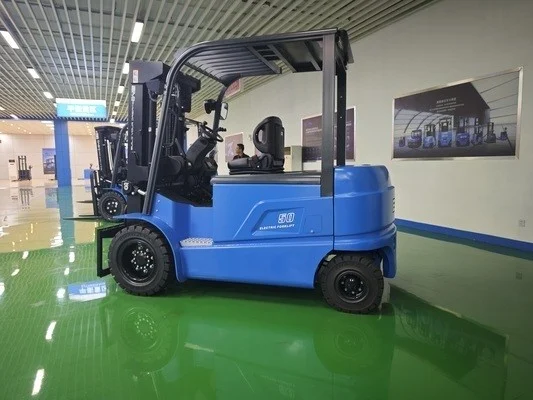
An undersized forklift creates major safety risks, including tip-overs and mast failure. It also accelerates wear on key components, leading to higher maintenance costs and shorter service life. An oversized forklift wastes capital, requires more storage space, and can damage warehouse floors or racking through unnecessary weight. Many operations choose oversized units to future-proof capacity, but this choice raises ongoing operating costs including higher fuel or electricity consumption and more frequent tire replacement.
Do I need to adjust capacity when using non-standard attachments?
Yes. Any attachment added to your forklift adds weight to the front end, shifts the center of gravity, and reduces the unit’s effective safe lifting capacity. Your forklift manufacturer or attachment supplier can provide updated capacity ratings covering your specific combination.
Can one industrial forklift work across multiple site environments?
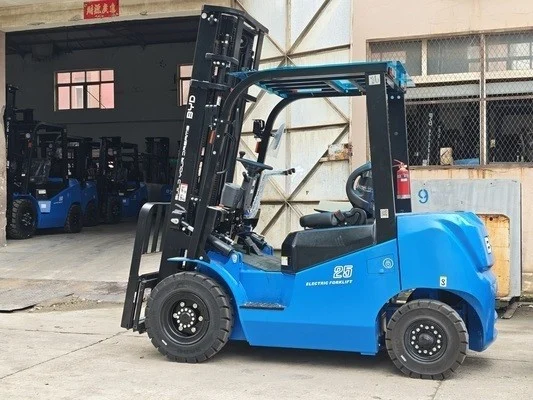
Some multi-purpose units handle both indoor and outdoor work, but they often require compromise on performance. A unit built to operate in narrow indoor aisles cannot handle large loads on uneven outdoor ground. Assess your most frequent use case first, then prioritize flexibility only if your operations require it.
What documentation confirms a forklift’s official capacity rating?
Every industrial forklift includes a manufacturer’s nameplate that lists official capacity ratings under standard conditions. Any modifications or attachment additions require an updated nameplate from a qualified technician to maintain accurate safety information.
Final Selection Takeaways
Successful industrial forklift sizing relies on accurate data covering both your load profiles and your site conditions. Start by compiling clear measurements of maximum load weight, load dimensions, aisle width, maximum lift height and your common operating environments. Never rely on nominal capacity ratings alone; always adjust capacity calculations to include attachments, site grades and lift height. Document all your requirements before comparing options, this helps you avoid safety risks, unnecessary costs and operational downtime that hurt your bottom line. Taking time to gather accurate data before comparing options eliminates guesswork and ensures your final choice delivers safe, reliable performance matching your long-term operational needs.