Key Specifications Industrial Operations Require In A Lithium Ion Forklift Battery
News 04/10/2026
Industrial operations across warehouses, manufacturing facilities, and distribution centers increasingly switch from lead acid to lithium ion batteries powering their forklift fleets. A wrong battery selection leads to unplanned downtime, reduced productivity, and unnecessary extra costs. Understanding the key specifications your operation needs helps narrow options and select a battery that matches your workflow, safety standards, and long term budget goals. This guide breaks down every critical specification you need to evaluate before purchasing.
Nominal Voltage And Capacity Matching
Nominal Voltage Compatibility
Every forklift design requires specific voltage to run its drive motor and on-board control systems. Common voltage ratings for lithium ion forklift batteries sit at 24V, 36V, 48V, and 80V, aligned with different forklift size and lift capacity ratings. A mismatched voltage causes permanent damage to the battery management system (BMS) or the forklift internal electronics. Always cross check your selected battery voltage against your forklift manufacturer official documentation before completing your purchase.
Amp-Hour (Ah) Capacity Matching Runtime Needs
The Ah rating measures total energy a battery can store during a full charge. Higher Ah capacity delivers longer runtime between charging sessions. Multi-shift operations need higher Ah ratings to avoid mid-shift battery swaps or charging delays. Note that total capacity also affects the battery physical size and weight, so you must balance runtime needs against available space within your forklift battery compartment.
Battery Management System (BMS) Core Specifications
Essential Protection Functions
The BMS regulates every individual cell within the lithium ion battery pack. It prevents overcharging, overheating, deep discharge, and cell imbalance that reduces overall pack performance. Low quality BMS shortens battery lifespan and creates avoidable safety risks in busy industrial facilities. Always look for BMS that includes automatic cell balancing to maintain consistent performance across all cells throughout the battery service life.
Connectivity And Monitoring Capabilities
Modern BMS units often include built-in telematics that tracks state of charge, cycle count, and internal temperature in real time. This data helps operation teams schedule proactive maintenance and predict when battery needs replacement, eliminating unexpected downtime that disrupts daily work. Facilities with large fleets gain the most value from connected BMS systems, as they let managers track performance across every unit from a central dashboard.
Physical Dimensions And Weight Compatibility
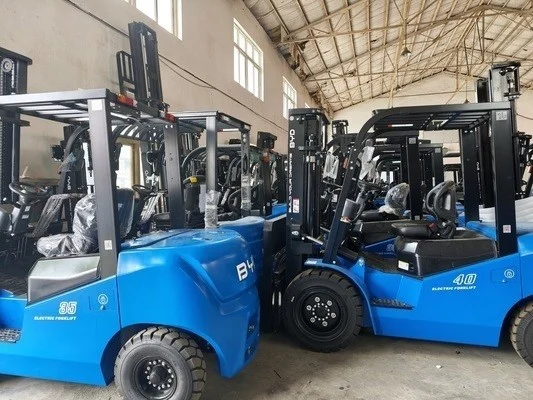
Most lithium ion batteries fit into existing forklift battery compartments designed originally to hold lead acid units. Compartment size varies across different forklift models, so always measure internal compartment length, width, and height before placing your order. Weight also plays a critical role in safe operation: forklift design relies on battery weight as counterbalance for lifted loads. Too light a battery reduces maximum lift capacity and creates tipping risks, while too heavy a battery strains the forklift suspension and drive systems. Most battery manufacturers provide weight specifications aligned with standard forklift counterbalance requirements, so confirm this match before completing your purchase.
Cycle Life And Warranty Coverage
Cycle Life Rating
Cycle life measures how many full charge-discharge cycles a battery completes before its total capacity drops below 80% of its original rating. High quality lithium ion forklift batteries typically deliver 2,000 to 5,000 cycles, far more than standard lead acid alternatives. Operations with heavy daily use should prioritize batteries with higher cycle life ratings to reduce long term replacement costs.
Warranty Terms
Warranty coverage outlines manufacturer responsibility for defects and premature performance loss. Look for warranties that cover full battery packs, BMS units, and capacity retention across multiple years. Avoid warranties with excessive exclusions that limit coverage applying to common industrial use cases.
Charging Capability And Compatibility
Lithium ion batteries use different charging protocols than lead acid batteries. Some operations can use existing chargers if they match voltage and communication protocols required by the lithium ion BMS. Most new lithium ion battery packs include recommendations or matching charger options built to maximize battery lifespan. Fast charging capability is another key specification: operations with short break periods benefit from batteries that support 1-2 hour full charging, versus slower 8+ hour charging standard with lower capacity units.
Hypothetical Application Example
A three-shift warehouse operating 12 5,000 lb capacity forklifts needs new battery packs. The facility existing compartments originally built to hold 48V lead acid batteries. The operation team reviews core specifications, selects 48V 800Ah lithium ion batteries with connected BMS monitoring, 4000 cycle life rating, and 1 hour fast charging capability. This selection eliminates daily battery swaps required under the previous lead acid system, reduces overall downtime, and aligns with the facility 24/7 operating schedule. The team also confirms battery weight matches the forklift counterbalance requirement, eliminating safety risks tied to incorrect weight specifications.
Frequently Asked Questions
Can lithium ion forklift batteries fit any existing forklift?
Not all lithium ion batteries fit every forklift model. You must confirm voltage, physical dimensions, and weight match your forklift original specifications before installation. Some modifications can accommodate minor size differences, but major mismatches create safety and performance issues that cannot be resolved easily.
What cycle life rating works best with single shift operations?
Most single shift operations see 250 working days annually, leading to roughly 250 full cycles each year. A 2000 cycle lithium ion battery delivers 8+ years of usable life in this use case, making it a cost effective choice. Heavy single shift operations with longer daily run times can upgrade to 3000+ cycle models gain longer service life.
Why does cell balancing matter in lithium ion forklift batteries?
Lithium ion battery packs include dozens of individual cells. Over time, small differences in charge levels between cells reduce total pack capacity and overall performance. Automatic cell balancing, a core BMS function, equalizes charge levels across all cells every charging cycle. This process extends overall battery lifespan and maintains consistent runtime across years of regular use.
Do lithium ion forklift batteries need special temperature management?
Most industrial lithium ion batteries operate safely between -4°F (-20°C) and 140°F (60°C). Extreme cold reduces temporary capacity, while extreme heat accelerates cell degradation. Facilities operating in outdoor or temperature extreme environments should select batteries with built-in temperature management systems included in the BMS to maintain consistent performance.
Final Selection Considerations
Selecting the right lithium ion forklift battery requires careful review of core specifications aligned with your operation unique demands. Start by confirming basic compatibility: voltage, dimensions, and weight must match your specific forklift model. Next, prioritize capacity, cycle life, and BMS features that align with your shift schedule and maintenance goals. Always cross check specifications against your forklift manufacturer guidelines to avoid costly mistakes and ensure safe, reliable performance across years of daily use.