Choosing the Right Forklift Battery Charger Location and Ventilation Setup When You Deploy a Lithium Forklift 3 Ton
News 12/11/2026
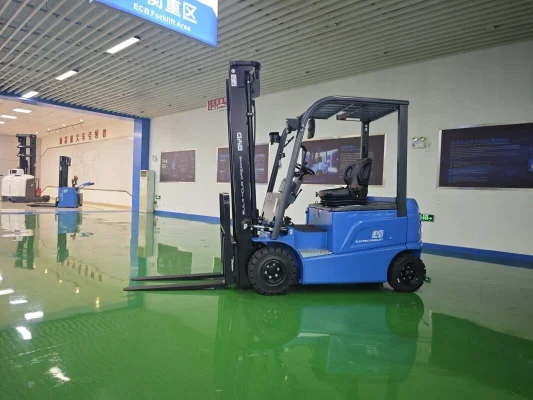
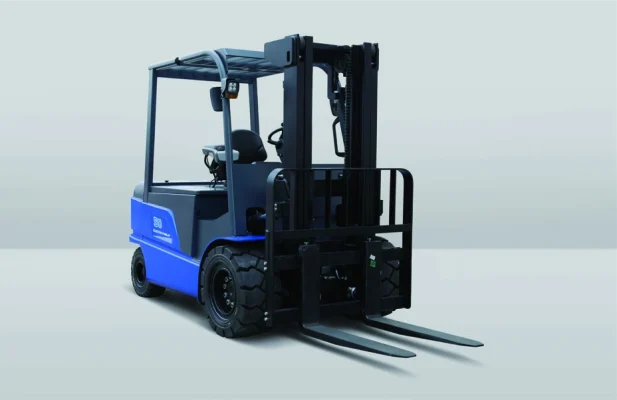
A lithium forklift 3 ton is a four-wheel counterbalance electric truck, and its charger placement and ventilation deserve attention before the truck arrives, not after. The practical answer: put chargers where the cable run stays short, the floor is level and dry, the area is protected from traffic and weather, and air can move freely around the charger and battery compartment. Confirm the exact charger rating, cable length, and ventilation requirements in the manufacturer’s technical documentation, because those values vary by model and configuration.
This guide walks through the decision points that shape a safe, workable layout: charger siting, airflow, cable routing, charging-zone access, and the documents you should request before installation.
Start with the Charger and Battery Data, Not the Floor Plan
The layout should follow the equipment data. Before marking a wall or floor position, collect the charger nameplate and the battery specification from the supplier. The table below lists the parameters that most often change a placement decision. Where a value is not yet available, treat it as an open item to confirm rather than assuming a number.
| Item to confirm | Why it affects location and ventilation |
|---|---|
| Charger input voltage and current | Determines the electrical supply and protection needed at the chosen point. |
| Charger output rating | Sets cable sizing and the heat load the area must tolerate. |
| Charger enclosure rating and installation type | Wall-mounted and floor-standing units have different clearance needs. |
| DC cable length and connector type | Limits how far the truck can park from the charger. |
| Battery voltage and capacity | Influences charge duration and how many trucks can share a charger. |
| Battery compartment ventilation guidance | Defines whether the truck needs open space around the battery area while charging. |
| Ambient temperature range | Chargers and batteries both have temperature limits that affect siting. |
| Local electrical and fire requirements | May dictate protection, signage, or separation distances. |
If your supplier cannot provide a data sheet, ask for the nameplate details and the installation manual. A charger placed on assumptions is a charger that may need to be moved later.
Choosing the Charger Location
The best position is usually a dedicated charging bay near the work area but out of the main traffic path. Work through the following conditions in order, since a failure at any one of them can outweigh the convenience of a short walk.
Floor, structure, and mounting
Choose a level, dry, load-bearing surface. Wall-mounted chargers need a structure able to carry the unit and the pull of the cable; floor-standing units need protection from impact. Keep the charger clear of standing water, washdown spray, and dust-heavy areas unless the enclosure rating supports that environment. Leave the clearance around the unit that the installation manual specifies, and do not box it into a tight cabinet.
Cable run and parking position
The DC cable should reach the truck’s charging connector without stretching, crossing a walkway under tension, or lying in a vehicle path. Short runs reduce voltage drop and trip hazards. If the cable must cross an aisle, consider overhead routing or a cable management arm rather than a floor-level crossing. Also check that the parked truck does not block fire exits, extinguishers, or pedestrian routes.
Electrical supply and protection
Confirm that the available supply matches the charger input and that suitable protection and isolation are installed by a qualified electrician. The charger should be easy to isolate in an emergency. Keep the charging point away from combustible storage and follow any local separation requirements. These are general planning points; the electrician and the installation manual govern the final design.
Access and housekeeping
A charging bay works best when it is clearly marked, kept tidy, and reserved for charging. Provide space to walk around the truck, connect the cable, and read the charger display. A simple checklist posted at the bay helps operators confirm the connector is seated and the area is clear before charging begins.
Ventilation and Heat Management
Ventilation serves two purposes: it removes heat from the charger and keeps the battery compartment within its operating range. The exact airflow requirement comes from the equipment documentation, so treat the points below as design questions to resolve with your supplier.
- Charger airflow: many chargers have intake and exhaust openings that must stay unobstructed. Do not stack boxes against them or enclose the unit in a closed cabinet.
- Room air movement: a charging area with still, hot air is a poor choice. Natural cross-ventilation or mechanical ventilation may be needed, depending on the heat load and the room.
- Battery compartment: follow the manufacturer’s guidance on leaving the compartment open or closed during charging, and on clearance around the truck.
- Ambient temperature: check both the charger and battery temperature limits. A bay next to a furnace, oven, or sun-exposed metal wall may exceed them.
- Contaminants: corrosive vapors, fine conductive dust, and excessive humidity can affect electrical equipment. Site the charger away from such sources or use equipment rated for the environment.
If the building has limited ventilation, ask whether a different charger location or a ventilated charging room is more suitable. Do not rely on guesswork about air changes; obtain the requirement in writing.
Matching the Setup to Your Operation
Charger location is also a scheduling decision. The number of chargers, their positions, and the charging window all affect how many trucks are available at peak times.
One truck, one charger
In a single-shift operation, a charger near the truck’s parking area is usually the simplest choice. Confirm that the charging window fits the shift pattern and that the battery can be fully charged before the next use. Avoid charging in a remote corner that operators are reluctant to visit.
Multiple trucks and shared chargers
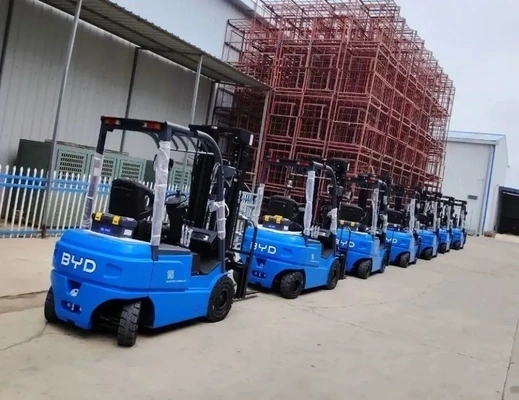
When several four-wheel counterbalance electric forklifts share a charging area, plan enough space between parking positions so trucks can enter and leave without cable conflicts. Decide whether charging happens during breaks, between shifts, or on an opportunity basis, and check that the charger count supports that pattern. A layout that forces trucks to queue can reduce availability even when the chargers themselves are adequate.
An illustrative scenario
Consider a hypothetical warehouse with a 3-ton truck unloading deliveries and moving pallets to racking. A charging bay beside the dispatch lane keeps the cable run short, but the bay must not narrow the aisle below the truck’s turning needs. If the bay sits under a mezzanine with poor air movement, heat may build up during summer charging. In that case, relocating the charger to a wall with cross-ventilation, or adding mechanical ventilation, may be more suitable than accepting a hot, still corner. This is an example of how to weigh the trade-offs, not a report of a tested installation.
Checks Before You Approve the Layout
Before installation, walk the proposed bay with the electrician and the equipment supplier. Confirm the charger model and rating against the truck’s battery specification, verify the cable reaches the parking position without strain, and check that ventilation openings will stay clear. Record the ambient conditions and any local requirements that apply. Then ask the supplier to confirm the installation clearances and ventilation guidance in writing.
If you are still selecting the truck and charger combination, share your actual duty cycle, load weight, lift height, aisle width, floor conditions, and charging schedule with the supplier. Those inputs determine whether a lithium forklift 3 ton configuration and a given charger layout suit your site. Where documentation is silent on a value, keep it as an open question rather than filling the gap with an assumption.
Frequently Asked Questions
Can a lithium forklift 3 ton charger be placed outdoors?
Only if the charger’s enclosure rating and the manufacturer’s instructions permit it. Outdoor placement also raises questions about weather protection, cable condition, and temperature extremes. Check the documentation and local electrical requirements before choosing an outdoor position.
How much space should I leave around the charger?
The installation manual should state the required clearances. As a planning rule, keep intake and exhaust openings unobstructed and leave enough room to connect cables and read the display. Do not substitute a guessed distance when the manual provides one.
Is dedicated ventilation always required?
Not necessarily. The need depends on the charger’s heat output, the room’s air movement, ambient temperature, and the battery guidance. A well-ventilated open area may be sufficient, while a small, closed room may need mechanical ventilation. Confirm the requirement with the equipment supplier.
Can two trucks share one charger position?
They can share a charger if the charging schedule and cable reach allow it, but each truck needs a safe parking position that does not block aisles or exits. Check charge duration and shift patterns to see whether one charger supports both trucks without reducing availability.