Lithium Ion Forklift Battery Acceptance Testing: What to Check on a Four-Wheel Counterbalance Electric Forklift Before Sign-Off
News 08/11/2026
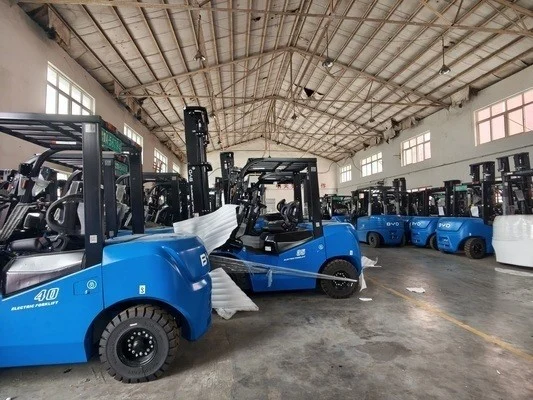
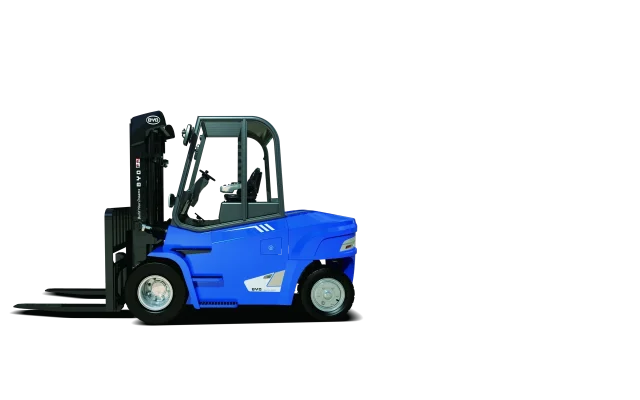
Acceptance testing a lithium ion forklift battery is not the same as signing the delivery note and driving away. On a four-wheel counterbalance electric forklift, the battery, charger and battery management system form one integrated system, and the handover inspection should confirm that this system matches the agreed configuration and behaves correctly under the conditions the truck will actually face. This article sets out a practical, document-led acceptance routine: what to verify, which records to request, and which items must stay open until the supplier confirms them in writing.
The guidance below applies to four-wheel counterbalance electric forklifts supplied with lithium batteries. It does not cover other truck classes, and it deliberately avoids quoting capacity, runtime or temperature figures, because those values must come from the manufacturer’s technical documentation specific to the model and configuration you ordered.
Why acceptance testing deserves its own checklist
Lead-acid trucks are often handed over with a battery that can be inspected physically: electrolyte levels, terminal condition, charger settings. A lithium pack hides most of its state inside the BMS, so the visible evidence at delivery is thinner. The acceptance test therefore shifts toward three questions: does the delivered configuration match the purchase specification, are the protection limits appropriate to your duty cycle, and is the charging arrangement safe and workable on your site?
This matters most in general manufacturing and warehouse transfer work, where a counterbalance truck may run multiple shifts, share chargers, and move between indoor floors and yard aprons. In those settings, a mismatch between the pack, the charger and the shift pattern usually shows up as unplanned downtime rather than a dramatic failure, which is exactly the kind of problem an acceptance checklist is meant to catch early.
What to check before sign-off
Work through the items below in order. Each one should produce a document, a reading, or a written statement from the supplier. Where the supplier cannot provide a figure, record it as an open item rather than accepting a verbal estimate.
1. Confirm the delivered configuration against the order
Start with identity, not performance. Record the truck model, serial number, battery model designation, pack serial number, charger model and charger serial number. Check that the battery voltage and pack configuration stated on the labels match the order confirmation, and that the connector type and keying are the ones specified. A connector that physically fits but is not the agreed type is a configuration error, not a convenience.
Also confirm which items are standard, which were selected as options, and which capabilities the supplier lists as available only on request. Typical examples include battery heating, cold-store protection packages, telemetry or fleet monitoring, opportunity-charging arrangements and specific connector standards. Do not assume any of these are included unless they appear on the order documents.
2. Verify the BMS protection limits and what the display reports
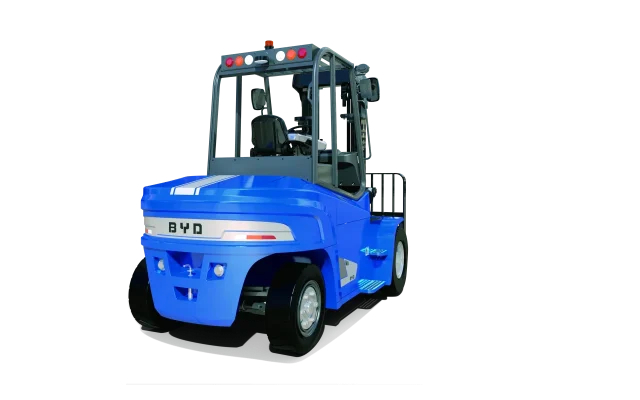
The BMS governs charge and discharge limits, cell balancing and fault handling. During acceptance, ask the supplier to walk through the configured limits and to state the conditions under which the truck will derate or stop. Confirm how faults are annunciated: warning on the display, audible alarm, restricted travel or lift speed, or full shutdown. Then observe the display during a short operational check and confirm that state of charge, fault codes and warning icons are legible from the operator position.
Ask for the BMS fault code list and the recommended operator response to each code. This is one of the most useful handover documents and one of the most frequently missing.
3. Match the charger to the pack and to your shift pattern
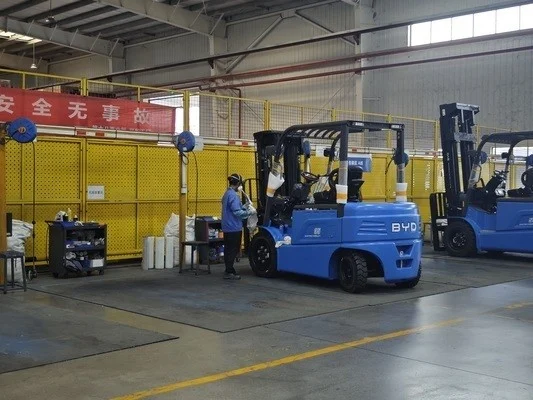
Charging is where acceptance often uncovers problems. Confirm that the charger is the model specified with the truck, that its output is configured to the pack, and that the charging profile was set by the supplier rather than left at a default. Check the connector, cable length and cable routing at the intended charging position, and confirm whether the installation requires a dedicated circuit, ventilation or other site provisions.
Then test the practical side: with the truck at the charging bay, confirm that the cable reaches without strain, that the connector engages fully, and that the charger starts and reports charging status. Note the time charging begins and the state of charge at that moment. Do not treat a single charge event as proof of runtime capability; it is a functional check only.
4. Check the battery’s operating envelope against your real conditions
This is the item most often left vague. Ask the supplier, in writing, to state the permitted ambient temperature ranges for operation, storage and charging, and to describe how the BMS behaves outside those ranges. If the truck will work in a cold store, on a refrigerated dock, or outdoors in winter, confirm whether the configuration includes any cold-condition measures and what limitations apply. If it will work in hot conditions, confirm the upper limits and any derating.
Where the supplier cannot confirm a value, write it down as unresolved. An acceptance sheet that says “temperature range to be confirmed by manufacturer” is more honest and more useful than a number copied from a different product.
5. Confirm residual capacity with the actual load and attachment
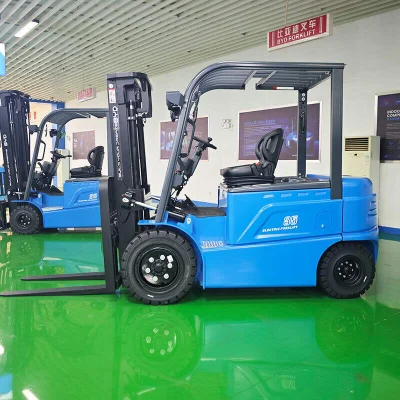
Rated capacity applies to a defined load centre and lift height, and attachments change the calculation. Before sign-off, confirm the rated capacity shown on the truck’s data plate, the load centre it assumes, and the residual capacity with any attachment fitted. Then verify that the loads you intend to handle, at the heights you intend to stack, fall within those limits. This is a truck-level check, but it belongs in the battery handover because battery position and counterweight arrangement affect the truck’s stability data.
6. Review safety, documentation and training
Ask for the battery and charger documentation set: safety information, installation requirements, maintenance instructions, emergency procedures and the warranty terms, including what conditions affect coverage. Confirm that the operators who will use the truck have been briefed on charging procedure, connector handling, warning indicators and who to contact when a fault appears. Record the names and the date.
Acceptance comparison table
| Check area | Why it matters on a counterbalance truck | Document or evidence to request | Typical status |
|---|---|---|---|
| Configuration identity | Confirms the pack, charger and connector match the order | Order confirmation, labels, serial numbers | Standard |
| BMS limits and fault codes | Defines when the truck derates or stops | Configured limits summary, fault code list | Standard |
| Charger setup | Prevents mismatch between charger and pack | Charger model, profile setting record | Standard |
| Temperature envelope | Determines suitability for cold stores, docks or outdoor work | Written operating, storage and charging ranges | Supplier confirmation required |
| Cold-condition measures | Affects usability in chilled or frozen areas | Specification of any heating or protection package | Optional / confirm availability |
| Residual capacity with attachment | Prevents overloading at height | Data plate values, attachment derating statement | Standard |
| Telemetry or monitoring | Supports fleet oversight and fault follow-up | Feature description and subscription terms | Optional |
A short functional check before you sign
With the supplier present, carry out a brief operational sequence: power up, confirm display readings, raise and lower the forks through the working range with a representative load within the rated capacity, travel forward and reverse, and apply the service brake. Then connect the charger and confirm it starts. Record any warning that appears. This sequence verifies function; it does not verify runtime, cycle life or performance under extreme temperatures, which require longer observation and manufacturer data.
Frequently asked questions
Can I accept the truck if the temperature range is still unconfirmed?
You can accept it conditionally, provided the open item is written on the acceptance record with a date by which the supplier will confirm the figures. If your operation depends on cold-store or outdoor work, treat the missing confirmation as a hold point rather than a formality, because the suitability of the configuration cannot be judged without it.
How long should a functional test run?
Long enough to exercise the main functions under a representative load and to observe the display and any warnings. A single short session confirms that the truck and charger operate, but it cannot establish runtime, charging behaviour over a full shift, or performance at temperature extremes. Plan a longer observation period if those points are critical to your operation.
What if the delivered charger differs from the one ordered?
Raise it before sign-off. Charger and pack must be treated as a matched pair, and a substitute charger may have a different profile setting. Ask the supplier to confirm compatibility in writing or to exchange the unit, and record the outcome on the acceptance sheet.
Should the acceptance record include operator training?
Yes. Note who was trained, on what date, and which topics were covered: charging procedure, connector handling, warning indicators and fault reporting. Training records are useful evidence if a warranty question arises later.
Closing the handover with a complete data set
Before you sign, assemble the following: the order confirmation and delivery documents; battery and charger serial numbers; the configured BMS limits and fault code list; written operating, storage and charging temperature ranges; the residual capacity statement covering your attachments; the charger installation requirements; and the training record. Any item you cannot obtain should appear on the acceptance sheet as an open point with an owner and a due date.
If you are still specifying the truck, the most useful step is to describe your actual duty cycle: loads and load centres, lift heights, aisle widths, floor and ramp conditions, shift pattern, charging windows and ambient conditions. Those details let a supplier confirm which four-wheel counterbalance electric forklift configuration and lithium battery arrangement fit your site, and which parameters still need verification against the manufacturer’s technical data.