Lithium Ion Forklift Battery Warranty Terms: What Buyers Should Confirm About Cycle Life Coverage on a Four-Wheel Counterbalance Electric Forklift
News 12/11/2026
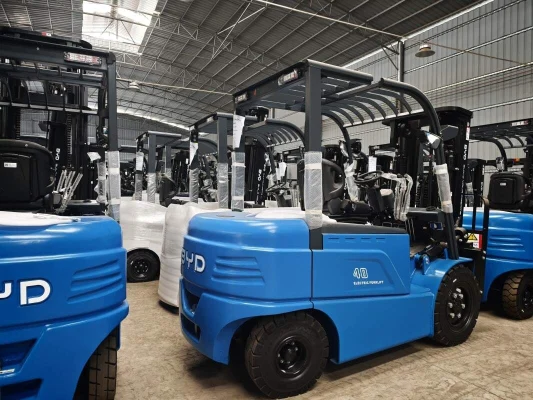
When you buy a four-wheel counterbalance electric forklift, the lithium ion forklift battery is often the most expensive single component. Its warranty can determine your long-term operating cost. Cycle life coverage is where buyer expectations and warranty terms most often diverge. This guide explains what to confirm before signing, focusing on the questions that affect real procurement decisions.
Why Cycle Life Coverage Deserves Scrutiny
Lithium ion batteries degrade gradually with each charge and discharge cycle. Manufacturers warrant a certain number of cycles or a calendar period, whichever comes first. The warranty may promise that the battery will retain a minimum percentage of its original capacity at the end of that term. However, the definition of a cycle, the test conditions, and the remedies available all vary. Without clear terms, you may find that a capacity shortfall falls outside coverage.
Confirm these points before comparing suppliers:
- Cycle definition: Is a cycle counted as a full discharge from 100% to 0%, or does a partial discharge count as a fraction? Some warranties count only full cycles, while others use a throughput-based method.
- Capacity retention threshold: What percentage of original capacity is guaranteed at the end of the cycle life? Common figures range from 70% to 80%, but the exact value must be stated.
- Test conditions: At what temperature, charge rate, and depth of discharge is the cycle life measured? A warranty that does not specify these conditions is difficult to enforce.
- Remedy: Does the manufacturer repair, replace, or prorate the battery if capacity falls below the threshold? Understand whether replacement is with a new or refurbished unit.
Warranty Terms to Confirm in a Procurement Checklist
Use this checklist when reviewing a lithium ion forklift battery warranty. It applies to four-wheel counterbalance electric forklifts, where battery capacity and duty cycle directly affect productivity.
Coverage period and cycle limit
Identify both the calendar term (e.g., 5 years) and the cycle limit (e.g., 2,000 cycles). The warranty typically ends when either limit is reached. Ask how cycles are recorded—via the battery management system (BMS) or manual logs—and whether you can access that data.
Exclusions and conditions
Most warranties exclude damage from misuse, improper charging, or operation outside specified temperature ranges. Confirm the acceptable ambient temperature range and whether the warranty requires use of a specific charger. Also check if the warranty is void if the battery is discharged below a certain voltage or left unused for long periods.
Transferability and registration
If you plan to sell the forklift or transfer it between sites, check whether the warranty transfers to a new owner. Some manufacturers require registration within a set time after delivery. Keep proof of purchase and commissioning records.
Service and support
Ask about the process for making a warranty claim: who performs the capacity test, what equipment is used, and how long the evaluation takes. Clarify whether labor and transportation costs are covered. For a four-wheel counterbalance electric forklift, downtime can be costly, so response time matters.
How to Verify Capacity Retention and Handle Disputes
Capacity retention is the core of cycle life coverage. To avoid disputes, agree on a test method before purchase. A common approach is a controlled discharge test at a specified temperature and rate, using calibrated equipment. The warranty should state who bears the cost of testing if the battery passes (i.e., meets the threshold) versus fails.
During operation, monitor the battery management system data. Many systems log cycle count, depth of discharge, and temperature history. This data can support a warranty claim. If you notice reduced runtime, document the change and contact the supplier early. Some warranties require notification within a certain period after a defect appears.
If a dispute arises, refer to the warranty document and any agreed test protocol. Keep records of charging habits, maintenance, and operating conditions. Without such evidence, enforcing a cycle life claim can be difficult.
Frequently Asked Questions
What does cycle life mean in a lithium ion forklift battery warranty?
Cycle life is the number of charge and discharge cycles a battery can undergo before its capacity falls to a specified percentage of the original value. The warranty defines how cycles are counted and the test conditions. Always read the definition carefully, as it affects when coverage ends.
Does the warranty cover capacity loss over time?
Many warranties cover capacity loss only if it falls below a stated threshold within the cycle or time limit. Gradual capacity loss above that threshold is considered normal degradation and is not covered. Confirm the threshold and the remedy offered.
Can I transfer the battery warranty if I sell the forklift?
Transferability varies by manufacturer. Some warranties are tied to the original purchaser, while others allow transfer with proper documentation. Check the terms before resale or fleet reassignment.
What maintenance is required to keep the warranty valid?
Typical requirements include using the specified charger, avoiding deep discharges, and operating within the recommended temperature range. Some warranties require periodic inspections or firmware updates. Follow the manufacturer’s maintenance schedule and keep records.
Before finalizing a purchase of a four-wheel counterbalance electric forklift, request the full warranty document and compare cycle life terms across suppliers. If you share your duty cycle, load weight, lift height, and charging infrastructure, we can help you identify the information needed to evaluate a lithium ion forklift battery warranty and select a configuration that matches your operation. No warranty terms should be assumed—always confirm them in writing.