Lithium Ion Forklift Battery BMS Data Review: What Telemetry Buyers Should Examine on a Four-Wheel Counterbalance Electric Forklift
News 09/11/2026
A battery management system (BMS) report is only as useful as the questions asked of it. On a four-wheel counterbalance electric forklift, the BMS governs how the lithium ion forklift battery is charged, discharged, balanced and protected, so its telemetry is the closest thing to a record of how the truck has actually been treated. Buyers reviewing this data should treat it as a set of conditions to verify rather than a scorecard, and should ask which parameters the supplier can export, over what period, and under what test conditions.
This guide sets out the fields worth requesting, the ambiguities to resolve before comparing packs, and the points to confirm in a quotation.
Why BMS Telemetry Matters in a Counterbalance Purchase
A counterbalance truck lifts and travels with load, so the battery sees repeated high-current demand during lifting and acceleration, plus regenerative current during deceleration. The BMS records these events as current, voltage and temperature traces. That record helps a buyer judge whether a pack has been operated inside its intended window and whether the protection thresholds suit the duty cycle.
Telemetry does not by itself prove remaining service life. It shows operating history and the limits the system enforced. Any interpretation of state of health depends on the algorithm used, the reference capacity, and whether the pack has been fully cycled before the report was generated. Ask the supplier to state these conditions rather than accepting a single percentage.
Fields to Request in a BMS Data Export
A useful export is structured and time-stamped. The exact field names vary by supplier, so map them to the questions below rather than insisting on a fixed template.
Pack and cell identification
- Pack part number, nominal voltage and rated capacity, matched to the quotation.
- Cell chemistry and configuration, stated by the supplier rather than inferred.
- Firmware and BMS hardware version, since thresholds and reporting can change between versions.
- Commissioning date and total operating hours, so the data window is known.
Usage history
- Charge and discharge cycle count, with the counting rule explained (full equivalent cycles versus partial events).
- Cumulative energy charged and discharged, if the BMS logs it.
- Depth-of-discharge distribution, which shows whether the pack is routinely run to low state of charge.
- Maximum and average discharge current over the reporting period.
Protection events and alarms
- Counts and timestamps of over-voltage, under-voltage, over-current and over-temperature events.
- Whether each event was a warning or a protective cutoff, and how the truck behaved afterwards.
- Cell balancing activity and any persistent imbalance between cell groups.
- Communication faults between BMS, charger and truck controller.
Temperature and state estimates
- Temperature extremes recorded at cell level, not only pack level.
- State of charge and state of health values, with the method and reference conditions disclosed.
- Charging temperature at the start of each session, which matters where shifts end in a warm battery bay.
Reading the Data Without Overreaching
Several traps appear when buyers compare exports from different packs.
- Different windows. A one-month export and a three-year export are not comparable. Normalize by operating hours or energy throughput.
- Undisclosed algorithms. State of health figures from different BMS platforms may use different baselines. Treat them as trend indicators, not absolute ratings.
- Missing context. A high over-temperature count may reflect a hot charging area rather than a faulty pack. Ask what ambient conditions prevailed.
- Silent resets. Confirm whether service events or firmware updates clear historical logs, which would make a clean report misleading.
An honest supplier will say which values are measured, which are estimated, and which are unavailable. Where a parameter cannot be exported, note it as an open item rather than assuming a favourable value.
What to Confirm Before and After the Quotation
Use the BMS discussion to firm up the technical requirement, not just to audit a used pack.
In the enquiry
- Your duty cycle: load weight, lift height, load centre, shift pattern and ramp or floor conditions.
- Charging arrangement: opportunity charging, full-shift charging, available power supply and charging location temperature.
- Required data access: on-truck display, export file, or remote monitoring, and who owns that data.
- Whether the BMS integrates with the truck controller and charger, and which protocols are supported.
At acceptance
- Compare the delivered pack identification and firmware version against the quotation.
- Request a baseline export at commissioning, then agree a review interval.
- Confirm the alarm list, cutoff behaviour and restart procedure with the person who will operate the truck.
- Record the warranty terms covering BMS components and the conditions that void them.
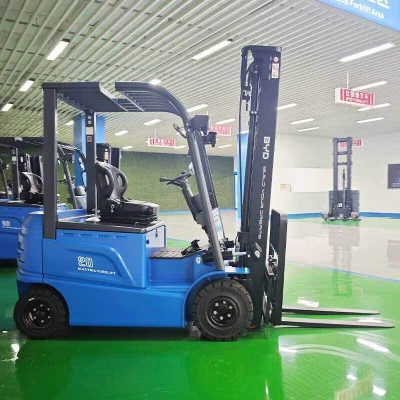
Where a specification is not documented in the supplier’s technical material, ask directly. Do not fill gaps with assumed figures. Our team can review your load, lift height and charging conditions and discuss suitable configurations of our four-wheel counterbalance electric forklifts.
Frequently Asked Questions
Does a clean BMS report guarantee a healthy battery?
No. A clean report shows that recorded protection events are absent or few over the logged period. It does not confirm capacity retention unless the supplier also provides a defined capacity test and the conditions under which it was run.
How far back should the telemetry go?
Ask for data covering the full operating period since commissioning, or as much as the BMS retains. If logs are limited, request the retention period in writing so you know what future reviews will show.
Can I compare state of health between two suppliers?
Only cautiously. Different algorithms and reference capacities can produce different figures from similar usage. Compare the disclosed method and test conditions first, and treat the numbers as indicative until a common test is agreed.
What if the BMS cannot export the fields I want?
List the missing parameters as open items and ask whether a firmware or gateway option provides them. If not, decide whether the remaining data supports your acceptance criteria before committing to the order.