Lithium Ion Forklift Battery Storage: Required Safety Protocols Industrial Facilities
News 07/10/2026
Lithium ion powered forklifts gain widespread adoption across industrial facilities thanks to high energy density, long cycle life, and low maintenance needs. However, improper storage of these high-capacity batteries creates serious safety hazards, including thermal runaway, short circuits, and unplanned fires. This guide outlines required safety protocols any facility storing lithium ion forklift batteries must follow to mitigate risk and meet regulatory expectations.
Common Risks Improper Lithium Ion Forklift Battery Storage Creates
Lithium ion chemistry carries inherent fire risk when batteries suffer physical damage, exposure to extreme temperatures, or manufacturing defects. At industrial facilities, risks amplify because operations often store multiple high-capacity units in one location. A single failing battery can ignite adjacent units, leading to large-scale structure fires, workplace injuries, and costly operational downtime. Common hazards from poor storage include:
- Thermal runaway triggered by high ambient temperatures or damaged cell casings
- Short circuits caused by moisture buildup or exposed terminal connections
- Blocked emergency egress routes from incorrectly stacked batteries
- Uncontrolled fires that standard suppression systems cannot extinguish quickly
Core Required Safety Protocols Governing Lithium Ion Forklift Battery Storage
These protocols align with general industry safety guidelines and most regional fire safety regulations. Always cross-check rules with local authorities and your battery manufacturer’s specific guidance.
Storage Location and Layout Requirements
Select storage locations away from high-traffic employee areas, open flame sources, heat-generating equipment, and flammable materials. The space must have adequate mechanical ventilation to disperse any flammable gases released from failing cells. Floors must be non-conductive, spill-resistant, and sloped to contain any potential electrolyte leaks. Never block emergency exits, fire sprinklers, or pull stations with stored batteries.
Temperature and Humidity Control
Most lithium ion forklift battery manufacturers recommend storage between 10°C and 25°C (50°F and 77°F). Avoid long-term storage in areas that exceed 30°C (86°F) or drop below 0°C (32°F), as extreme temperatures accelerate cell degradation and increase thermal runaway risk. Maintain relative humidity between 30% and 50% to prevent moisture buildup that can cause short circuits across battery terminals.
Physical Separation and Stacking Limits
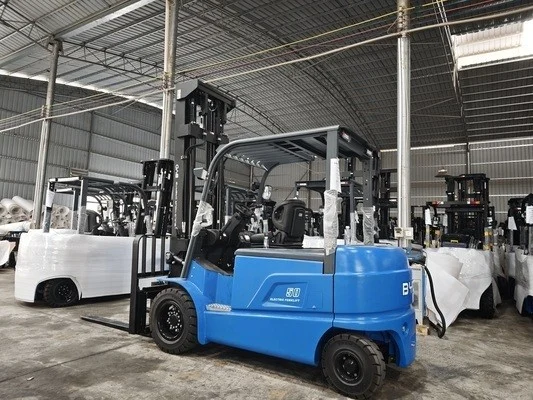
Separate batteries by state: new unused units, fully charged ready-to-use units, partially discharged idle units, and damaged units must each occupy distinct zones. Damaged or recalled batteries must move immediately into fire-rated containment cabinets positioned away from main storage areas. Never stack batteries higher than the maximum height specified by the battery or storage cabinet manufacturer, as excess weight can crack casings and damage internal cell structures.
Specialized Fire Protection
Install early warning heat detection systems built specifically to monitor lithium ion battery storage areas, as standard smoke detectors often trigger too late. Equip the space with appropriate fire suppression: water mist systems work well for lithium ion battery fires, as they cool adjacent cells and stop fire spread. Keep Class D fire extinguishers positioned within easy reach of storage zones to address small, contained battery fires.
General Handling and Maintenance Practices
Regular Inspection Schedules
Implement weekly visual inspections all stored lithium ion forklift batteries. Trained staff must check each unit for signs of swelling, cracked casings, leaking electrolyte, or unusual temperature increases. Document all inspection results and tag any damaged units for immediate removal to containment.
Separation Between Charging and Storage Zones
Many facilities combine charging and storage operations, which increases overall site risk. Maintain a minimum 3-meter (10-foot) clear separation between active charging areas and long-term battery storage zones. Never leave a charging battery unattended, and move fully charged units to storage only after they cool to ambient temperature.
Limitations and Selection Guidance
Not all storage setups work for every facility. Follow these key guidelines when planning your storage space:
- Long-term outdoor storage is not recommended for lithium ion forklift batteries. If temporary outdoor storage becomes necessary, use shaded, weather-proof enclosures with active temperature control.
- Select storage cabinets certified by recognized safety bodies (such as UL) to hold lithium ion forklift batteries. Standard industrial storage cabinets do not provide adequate fire containment.
- Facilities storing 10 or more full-size lithium ion forklift batteries must schedule annual fire safety inspections to confirm compliance with local codes.
Hypothetical application example: A 3PL distribution center operates 18 lithium ion powered forklifts. Facility managers implement the protocols above, separate damaged batteries into a fire-rated cabinet, maintain 22°C storage temperature, and schedule weekly inspections. This setup reduces risk of unplanned fire events and meets local fire marshal requirements.
Frequently Asked Questions
Can I store lithium ion forklift batteries next to lead acid units?
Most industrial safety guidelines recommend physical separation between the two battery chemistry types. Different failure modes and fire suppression needs make shared storage areas higher risk, especially when storing multiple full units at one location.
What should I do with a damaged lithium ion forklift battery during storage?
Move damaged units (those with swollen casings, cracked housing, or leaking electrolyte) immediately to a Class D fire-rated containment container, positioned away from main storage and occupied areas. Contact your battery supplier or licensed hazardous waste disposal provider toward proper removal.
Are there any specific distance requirements between stored batteries and building exits?
Most regional fire codes require stored lithium ion batteries sit at least 3 meters (10 feet) from any emergency exit, stairwell, or egress route. Always confirm local fire marshal rules applicable to your facility location.
Do fully charged batteries need different storage conditions than partially discharged units?
Yes. Fully charged lithium ion batteries carry higher thermal runaway risk when exposed to high temperatures. Keep fully charged units in temperature-controlled areas, and separate them from partially discharged units held in long-term storage.
Following consistent, documented safety protocols reduces fire and injury risks associated with lithium ion forklift battery storage at industrial facilities. Align your practices with local fire codes, manufacturer guidance, and workplace safety regulations applicable to your site. Regular training for staff helps maintain compliance and catch potential hazards before they escalate.