On-Site Floor Load Limits Constrain Electric Forklift Truck Chassis Design And Unit Capacity Selection
News 09/10/2026
Many industrial facilities operate with fixed floor load limits defined during original construction. Facility managers and equipment planners often overlook these limits when selecting new material handling equipment, especially electric forklift trucks. Unmatched equipment weight and floor capacity create unnecessary safety risks, costly structural damage and premature equipment failure. This guide breaks down how floor load limits shape chassis design and capacity selection, helping you make informed decisions that align with your facility’s constraints.
Core Connections Between Floor Load Limits And Electric Forklift Truck Design
What Are Floor Load Limits?
Floor load limits describe the maximum weight a building floor can support safely. Two common measurements apply to industrial spaces: uniform distributed load, which measures total weight across a large area, and concentrated point load, which measures maximum weight applied to a small contact area. Limits vary based on building age, construction materials, floor location (ground level versus upper floors) and original design intent. Most facilities keep these values on original construction blueprints or can obtain them from building management.
Why Electric Forklift Trucks Face Unique Constraints
Electric forklift trucks carry large, heavy energy storage systems to power operations. Lead-acid or lithium-ion batteries add significant dead weight to the truck’s total mass, compared to internal combustion forklift trucks with the same rated lifting capacity. This extra dead weight increases axle loads and tire contact pressure, putting more stress on facility floors. Even compact models meant for narrow aisles carry enough extra weight to exceed load limits in older or upper-floor facilities.
Key Design Constraints Imposed By Floor Load Limits
Chassis Weight And Material Selection
Chassis designers targeting facilities with low floor load limits must prioritize weight reduction without sacrificing structural strength. Traditional steel chassis deliver low cost and high strength, but add significant dead weight. Many designers now use high-strength aluminum alloys or advanced composites to cut overall chassis weight. This change reduces total truck operating weight, bringing contact pressure in line with lower floor load limits, but increases upfront production costs. Designers must also balance weight reduction with long term durability, because electric forklift trucks see thousands of load cycles each year.
Axle Spacing And Load Distribution
Wider axle spacing spreads the truck’s total weight across a larger area of the floor, reducing peak pressure on any single section of the slab. Adjusting axle spacing helps meet uniform load requirements in facilities with tight limits. However, wider axles increase the truck’s overall turning radius, reducing maneuverability in narrow aisles. This creates a common tradeoff between floor compliance and operational efficiency, which designers must resolve based on target use cases.
Battery Placement Tradeoffs
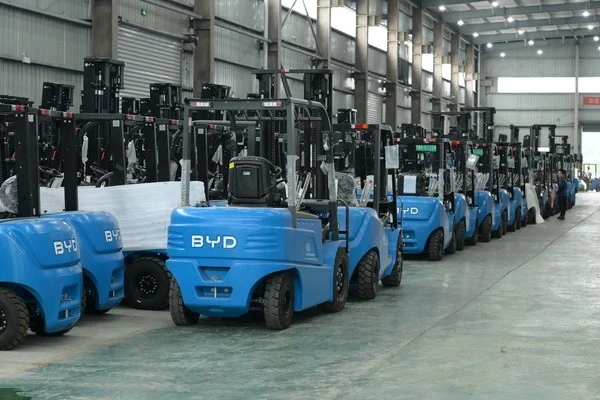
Battery placement directly impacts weight distribution across the chassis. Centering the battery between both axles creates equal weight distribution, reducing peak point loads on front and rear axles. This placement aligns well with low floor load limits, but requires careful engineering to preserve operator space and maintain a low center of gravity for safe load handling. Moving the battery closer to one axle can create more operator space, but increases peak point load on that axle, which may exceed floor limits in some facilities.
Practical Guidance For Unit Capacity Selection
Start By Confirming Your Facility’s Load Limits
Before you evaluate any electric forklift truck model, obtain official load limit data from your building management or original construction documents. Never guess or rely on general estimates. Ground floor slabs typically support higher loads than upper floors, and facilities built before 1980 often have lower published limits than newer construction. Document both uniform distributed load and point load values to use during your selection process.
Calculate Actual Contact Pressure For Your Candidate Model
Rated lifting capacity does not tell the whole story. You need the truck’s full operating weight (including battery) and total tire contact area to calculate point pressure, then compare that value against your facility’s point load limit. You also need to calculate total truck weight divided by its overall footprint to compare against the uniform distributed load limit. Many buyers skip this step and only compare lifting capacity, leading to incorrect selection that damages floors.
Adjust Your Capacity Selection To Match Constraints
If your facility has low floor load limits, you may need to select a model with a lower rated lifting capacity than your initial target. Lower capacity models have lower total operating weight, which brings contact pressure within acceptable limits. You can also select models specifically built with lightweight chassis designs to meet low load requirements, even with moderate lifting capacity. Another option involves adding extra tires to spread weight across more contact area, reducing point pressure.
Add A Safety Margin For Dynamic Loads
Dynamic loads from acceleration, braking and full-load lifting change weight distribution across axles. Peak point loads during these operations can be 10-20% higher than static resting loads. Always leave an appropriate safety margin between your calculated truck pressure and your floor’s published limit. This accounts for dynamic load shifts and gradual floor wear over time.
Frequently Asked Questions
Can I modify an existing electric forklift truck to meet lower floor load limits?
Yes, adding extra wheels is one common modification that spreads total weight across a larger contact area, reducing point pressure on the floor. Always work with a certified technician to complete any modification, because incorrect changes alter the truck’s center of gravity and create serious safety hazards. You also need to re-test total weight and pressure after modifications to confirm compliance with your floor’s limits.
Do all electric forklift trucks weigh more than internal combustion models with the same lifting rating?
Most do, because large batteries add significant dead weight needed to balance lifting loads. A small number of modern lightweight design models narrow this weight gap through advanced materials. Always check the full operating weight of any candidate model before making a purchasing decision, do not rely on general rules about weight differences.
What outcomes come from using an electric forklift truck that exceeds my floor’s load limit?
Common issues include gradual cracking, surface spalling and permanent deflection of the floor slab. In extreme cases, especially on upper floors of older buildings, serious structural damage can create life-threatening safety hazards. Repairing structural floor damage costs far more than investing in a correctly sized electric forklift truck, making proactive selection the most cost-effective approach.
Do lightweight electric forklift trucks sacrifice lifting capacity to meet lower floor load limits?
Not always. Advances in high-strength chassis materials let manufacturers cut unnecessary dead weight without reducing rated lifting capacity. Most tradeoffs affect upfront purchase costs, not functional capacity. You need to compare long term operational savings against higher initial investment when evaluating lightweight models.
Conclusion
On-site floor load limits play a critical role in both electric forklift truck chassis design and end user capacity selection. Ignoring these limits leads to unnecessary costs, safety risks and permanent structural damage. Designers balance weight reduction, material strength and operational efficiency to create models that meet low floor load requirements. When selecting a unit for your facility, always start with official load limit data, calculate actual contact pressure and leave a safety margin for dynamic loads. This approach helps you select a unit that meets your material handling needs while protecting your facility’s structural integrity.