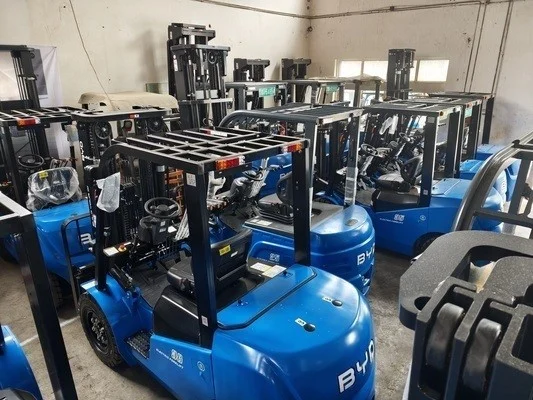
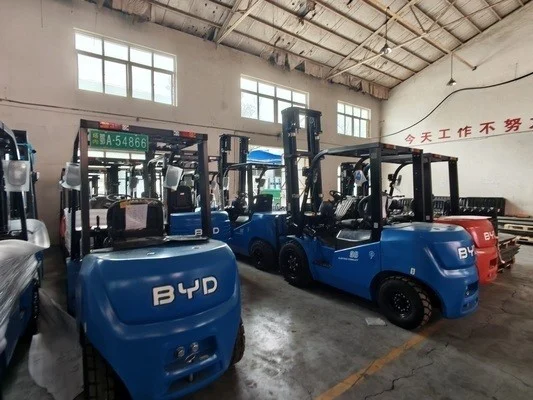
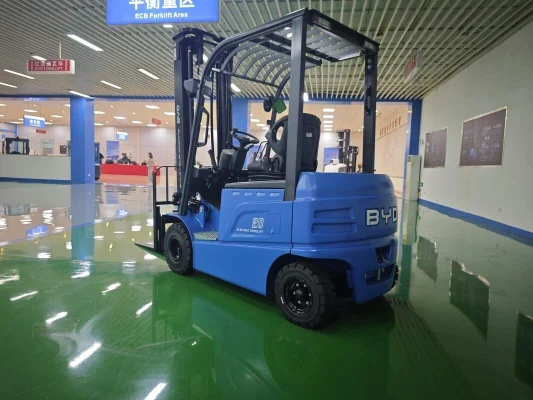
Selecting 2.5 Ton Electric Forklift: Align Technical Specifications Your Facility’s Load and Space Requirements
News 05/10/2026
Many warehouse and industrial operations rely 2.5 ton electric forklifts to move goods efficiently. These units balance lifting capacity and maneuverability, making them popular across multiple sectors. This guide walks through key steps align technical specifications your facility unique load and space requirements, so you can invest in equipment that matches your operational needs.
Understand Core Load Requirements Your Operation
Before you review any forklift models, document the specific load characteristics your operation handles on a daily basis. This step eliminates guesswork and helps you avoid investing in a unit with insufficient or excess capacity.
Maximum Load Weight and Load Center Gravity
A 2.5 ton rated electric forklift handles maximum loads 2500 kilograms, or 5500 pounds, at a standard 600 millimeter (24 inch) load center. If your operation regularly moves loads with extended load centers, such as long lumber, large pipes, or oversized crates, your effective lifting capacity drops significantly. Always adjust your required capacity based on the load center common across your most frequent shipments to avoid safety issues or equipment damage.
Common Load Types and Attachment Compatibility
Some operations need specialized attachments like side shifters, fork positioners, or clamps to handle unique loads. Adding any attachment reduces the forklift’s net available lifting capacity. Confirm your selected model supports the attachment types you need, and account for this capacity reduction during final selection.
Match Lift Height and Mast Specifications Your Facility Layout
Mast specifications directly impact how your forklift fits within your facility and accesses storage. Getting these wrong leads to units that cannot reach your top racks or fit through low entry points.
Maximum Lift Height Requirements
If your facility uses high racking, you need a mast that reaches your top storage level plus enough clearance for safe load handling. Standard 2.5 ton electric forklifts offer maximum lift heights ranging from 3 meters (10 feet) up to 8 meters (26 feet). Extra height adds mast weight, which reduces effective capacity and increases overall unit dimensions. Only select the lift height you actually need to avoid unnecessary cost and oversized dimensions.
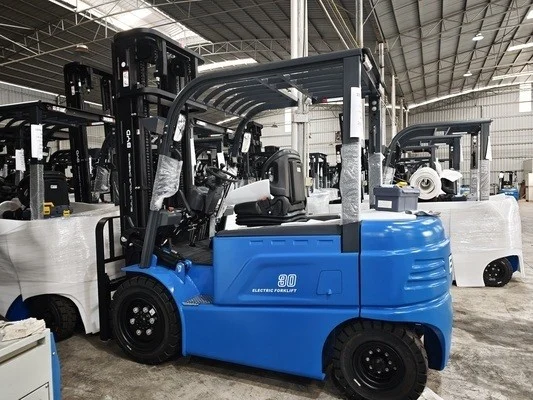
Mast Type and Clearance Constraints
Triplex masts provide higher lift without increasing overall collapsed height, making them ideal facilities with low ceiling clearances. Single and duplex masts work well lower lift applications. Collapsed mast height matters if your forklift needs to navigate low doorways or mezzanine levels, so always measure entry points before final selection.
Evaluate Space Requirements Your Facility Aisles
Aisle width is one of the most overlooked selection factors, and a mismatch leads to constant maneuvering issues or damaged inventory. Measure your actual working aisles before comparing models.
Minimum Turning Aisle Width
Different steering configurations change the amount of space a 2.5 ton electric forklift needs to complete a full turn. Standard counterbalance models require 11 to 13 feet (3.35 to 4 meters) of clear aisle space. Narrow aisle models, including reach-type 2.5 ton units, operate in aisles as narrow as 8 to 10 feet (2.4 to 3 meters). Very narrow aisle (VNA) models fit in aisles under 8 feet, but come with higher purchase and maintenance costs. Measure your actual working aisle width, subtract any space taken up by stored pallets that protrude into aisles, and select a unit that fits your available space with extra room for error.
Operation Location Limitations
Most 2.5 ton electric forklifts designed primarily indoor use on smooth concrete surfaces. Some models feature sealed batteries and enhanced traction control for limited outdoor use, such as moving loads between connected warehouse buildings. Electric units do not handle uneven terrain, mud, or steep grades as well as diesel or LPG alternatives, so confirm your application fits within the manufacturer stated operating limits.
Key Power and Maintenance Considerations
2.5 ton electric forklifts use either lead-acid or lithium-ion batteries, each with distinct advantages matching different operational needs.
Lead-acid batteries cost less upfront, require regular maintenance including scheduled watering, and need 8 hours of charging time plus 8 hours of cooling between shifts. If you run multiple shifts, you will need to purchase extra swap-out batteries to cover all operating hours.
Lithium-ion batteries cost more initially, support opportunity charging during breaks, require minimal maintenance, and fit multi-shift operations without extra battery swaps. Calculate your daily operating hours to match battery capacity your shift needs.
Frequently Asked Questions
Are 2.5 ton electric forklifts suitable multi-shift operations?
Yes, with correct power configuration. Multi-shift operations can use either multiple swapped lead-acid batteries or a single high-capacity lithium-ion battery that supports opportunity charging during breaks. Matching battery power to your daily run time eliminates unplanned downtime between shifts.
What is the typical turning radius a 2.5 ton counterbalance electric forklift?
Standard counterbalance 2.5 ton electric forklifts usually have a turning radius between 1.9 meters (75 inches) and 2.3 meters (90 inches). This translates to the minimum working aisle width of 3.3 to 4 meters (11 to 13 feet) noted earlier. Always confirm turning radius specifications from your manufacturer before purchase, as dimensions vary between mast and tire options.
Do I need special infrastructure support 2.5 ton electric forklifts?
Yes, you need dedicated charging space matching your battery type. Lead-acid batteries require well-ventilated charging areas with appropriate safety equipment. Lithium-ion chargers can be installed in most indoor warehouse spaces, but require appropriate electrical service matching charger output. Confirm your facility electrical system supports the charger requirements before delivery.
How does a 2.5 ton electric forklift compare internal combustion models?
Electric models produce zero on-site emissions, have lower operating noise, and lower long-term fuel and maintenance costs. They are ideal enclosed indoor facilities. Internal combustion models offer better outdoor performance and faster refueling in remote locations without reliable electrical infrastructure.
Actionable Final Selection Steps
Start by documenting your maximum load weight, average load center, maximum required lift height, and actual working aisle width. Cross-reference these measurements against manufacturer specifications for any 2.5 ton electric forklift you consider. Test the unit in your facility if possible, to confirm maneuverability and capacity match your real-world needs.
Avoid overbuying extra capacity or lift height you do not need, as this adds unnecessary upfront and operating costs. Prioritize power configurations that match your daily operating hours to avoid unexpected downtime. Following this process helps you select a 2.5 ton electric forklift that delivers reliable performance aligned to your facility needs.